
Sardar Vallabhbhai Patel Biography – The Iron Man Who United a Nation

Patel’s leadership ensured India’s political integration and strengthened the foundations of the Republic.

Quick Summary

Born: 31 October 1875
Known As: The Iron Man of India
Role: India’s first Deputy Prime Minister & Home Minister
Key Contribution: Integration of 560+ princely states
Awards: Bharat Ratna (posthumous)

Early Life and Childhood

Sardar Vallabhbhai Patel was born on October 31, 1875, in a small town called Nadiad in the state of Gujarat. His family belonged to the Leva Patidar caste and was self-sufficient, owning land and working on it with great care. But despite having some land, the family was not very rich or highly educated like others. Patel was one of six children born to his parents, Jhaverbhai Patel and Ladba.

Growing up, Patel spent much of his childhood in the countryside, especially in the village of Karamsad, where he worked in the fields and helped his family. His early education was not in big schools but often in small village settings. To learn more, especially the English language which was important at that time, he moved to the nearby village of Petlad to study for his 4th and 5th standards.

Though his family didn’t have a strong tradition of formal education, Patel worked hard and dreamed big. He later went on to study law and became a successful lawyer and barrister. His time as a law student opened his eyes to the problems faced by ordinary Indians under British rule. While initially doubtful about joining the freedom fight, Patel changed his mind after meeting Mahatma Gandhi. Gandhi’s powerful ideas about non-violence and fighting against British rule inspired Patel to join the struggle for India’s independence.

Journey in Pictures
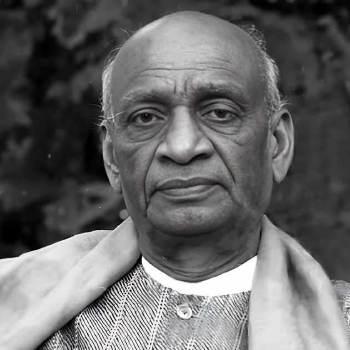
Sardar Patel Portrait

1875–1890s

Early Life - Born on 31 October 1875 in Nadiad, Gujarat.
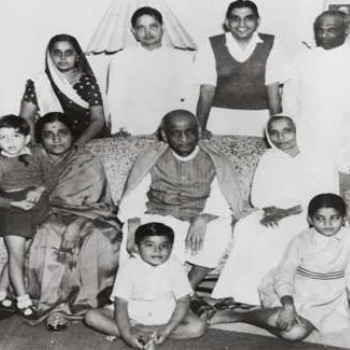
Sardar Patel with family

Early 1900s

Sardar Vallabhbhai Patel balanced family responsibilities with his legal career
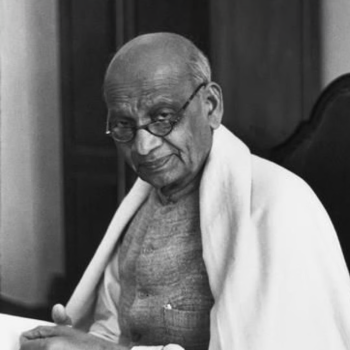
Sardar Vallabhbhai Patel

1910s–1920s

Leader Emerges - After returning from England as a barrister.
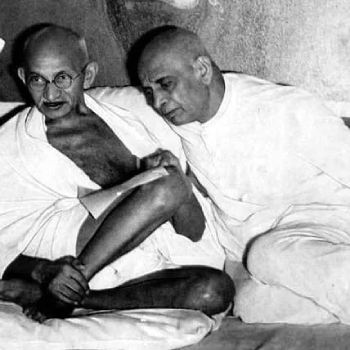
Sardar Vallabhbhai Patel and mahatma gandhi

1920s–1930s

With Mahatma Gandhi - A close associate of Mahatma Gandhi
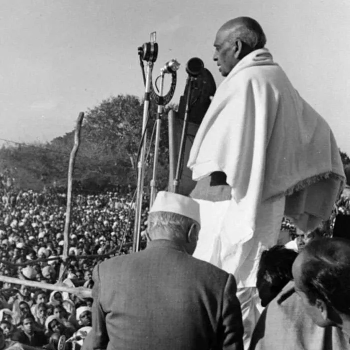
Sardar Vallabhbhai Patel in public meeting

1930s–1940s

Addressing Public Meetings - Known for his powerful oratory and decisive tone
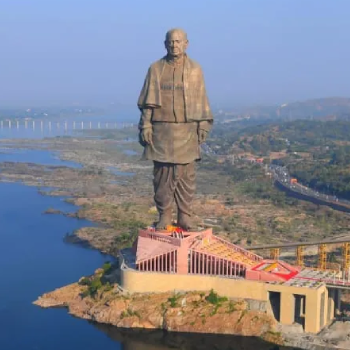
Statue of unity

2018

Statue of Unity – World’s Tallest Statue - Unveiled in 2018 in Gujarat

Rising Through the Ranks: Career Journey

After finishing his law studies, Sardar Vallabhbhai Patel started his career as a lawyer. He set up his legal practice and became quite successful. He was known for solving cases with skill and fairness, which earned him respect in the courts. But even while practicing law, Patel could not ignore the growing call for India’s freedom.

In 1918, his life changed forever when Mahatma Gandhi trusted him to lead the Kheda Satyagraha, a movement where farmers protested against unfair taxes during a famine. Patel’s leadership here made him famous as a man who could stand up for the people. This earned him the title “Sardar,” meaning leader or chief. Over time, he led other important protests like the Bardoli Satyagraha in 1928, where he helped farmers win their rights.

His political career grew stronger as he joined the Indian National Congress and became a chief organizer in the freedom struggle. Patel was known for his practical approach and strong decision-making skills. When India finally became independent in 1947, Patel brought this same determination to his new role as the first Deputy Prime Minister and Home Minister of the country. These were very important jobs because he had to help build the government and keep the country united.

One of Patel’s biggest challenges was uniting over 560 princely states that were independent before British rule ended. Many of these states could have chosen to remain separate, which might have broken India into many smaller countries. But Patel used clever negotiations, firmness, and sometimes gentle persuasion to bring all these states into the Indian Union. Because of this great achievement, he earned the lifelong nickname “Iron Man of India.”

Building India: Major Achievements and Contributions

Sardar Vallabhbhai Patel’s contributions to India’s history are many, but a few stand out as truly remarkable.

First and foremost was his role in uniting the princely states after independence. Imagine a country with more than 560 small kingdoms, each with its own ruler and different interests. Patel’s job was to convince these rulers to join India so that the new country would be strong and not break apart. With wisdom and courage, Patel made sure all these states became part of India, a task many thought impossible. This helped avoid chaos and made India one of the largest democratic nations in the world.

Secondly, Patel’s leadership in the Kheda and Bardoli Satyagrahas showed his deep commitment to the people, especially farmers and villagers. These movements were not just about freedom from the British but also about justice and fairness for common people. In Bardoli, Patel’s work was so respected that people called him “Sardar,” recognizing him as a true leader.

Third, Patel’s vision extended beyond politics. He imagined enormous infrastructure projects like the Sardar Sarovar Dam on the Narmada River, which aimed to bring water and electricity to many parts of India. Though finished many years after his time, the dam still carries his name and his dream of progress.

Lastly, his dedication to law and order helped build a stable India. As the first Home Minister, Patel established strong police and administrative systems that protected the nation during its early fragile years. Today, the Sardar Vallabhbhai Patel National Police Academy stands as a symbol of his lasting impact on India’s security.

These achievements show us Patel’s qualities: hard work, practical thinking, and above all, love for the country and its people.

A Nation’s Pride: Awards and Recognition

Sardar Vallabhbhai Patel’s life and work were honored in many ways, both during his life and after his death. India’s highest civilian award, the Bharat Ratna, was given to him posthumously in 1991, recognizing his unmatched role in shaping independent India.

Many institutions carry his name, like the Sardar Vallabhbhai Patel University in Gujarat and the Sardar Vallabhbhai Patel Institute of Technology. These places keep his memory alive by educating new generations who learn about his work and leadership.

The most famous tribute to Patel is the Statue of Unity in Gujarat, which is the tallest statue in the world. This huge statue not only honors the Iron Man of India but also reminds people every day about his incredible contribution to India’s unity. In 2019, the Statue of Unity was named one of the “100 Greatest Places in the World” by Time magazine, showing how Patel’s legacy is respected worldwide.

Awards named after Patel, like the Sardar Patel National Unity Award, celebrate those who work for India’s unity and peace, continuing his spirit in today’s world.

Leading the Way: Recent Activities

Even near 75 years after his passing, Sardar Vallabhbhai Patel’s legacy is more alive than ever. The Government of India is celebrating his 150th birth anniversary from 2024 to 2026 with grand events across the country. On his birthday, October 31st, National Unity Day is observed with great pride, where people from every corner of India remember his message of peace and unity.

Leaders like the Prime Minister regularly pay respects at the Statue of Unity and speak about Patel’s vision for a strong, united India. Indian communities abroad also organize events to honor him, showing how his story crosses borders and inspires Indians everywhere.

Institutions named after Patel continue their work in education, law enforcement, agriculture, and technology. The growth of these centers is a living tribute to the values Patel stood for: knowledge, discipline, and growth for all Indians.

Vision for the Future: Philosophy and Legacy

Sardar Vallabhbhai Patel believed that India’s strength comes from its unity. He worked tirelessly not just to free India from British rule but also to make sure that after independence, India would remain a single, strong nation where people live peacefully.

His leadership style was practical and firm. He planned carefully, stayed calm in difficult times, and always put the nation’s interest first. Patel also believed in empowering people through law and order, respecting their rights, and encouraging women’s participation in society.

To the youth of India, Patel’s life teaches the importance of unity, hard work, and dedication to one’s duties. He showed that with determination and the spirit of teamwork, even the biggest challenges can be overcome.

His legacy remains a beacon of hope and strength for India, encouraging every citizen to contribute towards building a better and stronger nation.

Conclusion

Sardar Vallabhbhai Patel’s journey from a small village boy to the Iron Man of India is a tale full of courage, dedication, and unwavering love for the nation. He showed us that no matter where we come from, with hard work and a strong heart, we can achieve great things. His role in uniting India and building a strong government makes him a true India Ki Shaan— a pride of our country.

Today, as we see his towering statue and celebrate his memory, let us remember Patel’s message: Unity is strength. Let us all pledge to keep India united, strong, and prosperous, just as Sardar Vallabhbhai Patel dreamed. His life is a shining example, inspiring every Indian to work hard for the nation’s progress and harmony.

FAQ's

Due to his firmness, leadership, and role in unifying India.

Integration of princely states into the Indian Union.

Yes, he played a key role alongside Gandhi.

Bharat Ratna in 1991.

A 182-meter statue built in his honor, the tallest in the world.
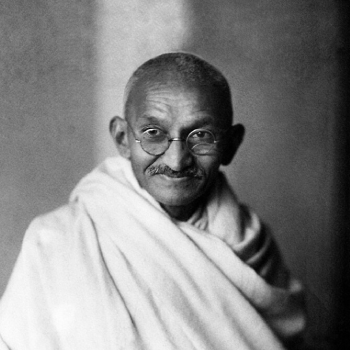
Mahatma Gandhi biography – The Father of India’s Freedom Through Peace

Gandhi’s philosophy of truth and non-violence reshaped India’s fight for independence and inspired the world.
Quick Summary

Full Name: Mohandas Karamchand Gandhi
Born: 2 October 1869
Known As: Father of the Nation
Role: Leader of India’s freedom struggle
Ideology: Non-violence & Satyagraha

Early Life and Childhood

Mohandas Karamchand Gandhi was born in 1869 in Porbandar, Gujarat, to a principled family. His mother, Putlibai, was known for her deep religious faith and moral strength, teaching him early lessons in honesty and self-discipline. His father, Karamchand, served as the diwan (chief minister) of Porbandar, instilling in young Gandhi a respect for duty and order. Gandhi grew up in a traditional Hindu household, where spiritual values guided daily life.

Though not marked by material hardship, his childhood was a quiet struggle with inner doubts, especially about truth and courage. It was his personal battles to uphold honesty even in small matters that shaped his character. Later, he moved to London to study law, where adjusting to a new culture and the loneliness of a foreign land deepened his resolve. Returning to India as a lawyer, he found little success and often questioned his path. Yet the slow grind of daily failure forged a strong inner will that would prove crucial in his future.

Journey in Pictures

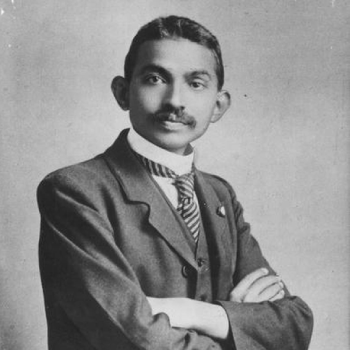
Portrait of Gandhi as a young man

Late 1880s – Early 1890s

Young Mohandas Gandhi

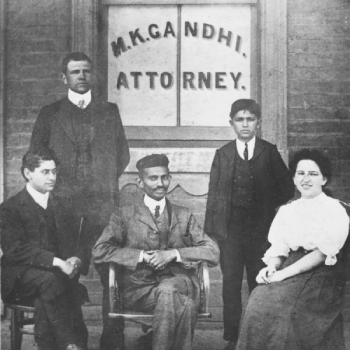
Mohandas Gandhi in center sits with coworkers at his Johannesburg law office

1893–1914

Lawyer in South Africa

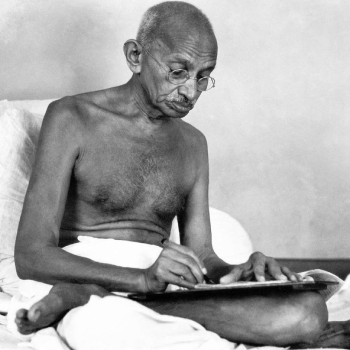
Mohandas Gandhi writing

1910s–1920s

The Thinker and Writer

Mahatma Gandhi and charkha

Early 1920s

Symbol of Swadeshi and Self-Reliance

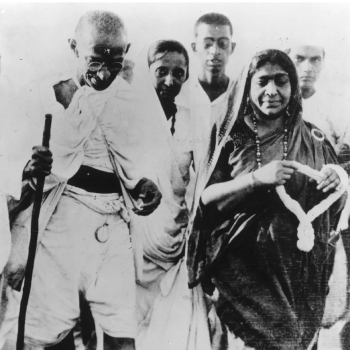
Mohandas Gandhi Salt March

1930

The Historic Salt March

Mahatma Gandhi Portrait

1940s

The Mahatma of the Masses

Career Journey

In 1888, Gandhi went to London for legal studies and spent five years there, grappling with cultural and professional challenges. After returning to India, his law practice struggled, and he felt uncertain about his directions. A critical turning point came in 1893 when he accepted a legal case in South Africa — a decision that was to change his life.

In South Africa, Gandhi faced the harsh reality of racial discrimination. For 21 years, he fought for justice for the Indian community using a unique method called Satyagraha—resistance through non-violence and truth. He founded the Phoenix Settlement in 1904 as a community experiment grounded in his growing philosophy. Around 1906, he took a personal vow of Brahmacharya (celibacy) to strengthen self-discipline. These years were filled with family sacrifices, protests, imprisonments, and tireless activism.

Gandhi returned to India in 1915, bringing with him the lessons and experience from South Africa. He began his campaigns in Champaran and Kheda, standing with farmers against oppressive policies. Rising through the ranks of the Indian National Congress, he chose to live simply and lead by example. His nationwide campaigns, culminating in the Salt March of 1930 and the Quit India Movement of 1942, tested his perseverance through multiple imprisonments and widespread unrest. Yet, his moral courage never wavered.

The Impact

Gandhi’s achievements changed the course of Indian history and inspired the world. The Salt March, also called the Dandi Satyagraha, was a 387-km protest over 24 days in 1930 against the British salt tax. Its symbolic power led to the arrest of 60,000 Indians and global attention to India’s struggle for freedom. This nonviolent resistance inspired civil rights movements worldwide.
He fought fiercely against untouchability, working to integrate the oppressed communities into social life. The Poona Pact ensured better representation for Dalits, and his fasts in Yerwada jail highlighted the need for social reform. His efforts shaped the values that found expression in the Indian Constitution, promoting equality and dignity for all.

Gandhi also championed the Khadi and Swadeshi movements, urging Indians to spin their own cloth and rely on local goods. This economic self-reliance aimed to weaken British economic control and build empowerment from the grassroots. These campaigns fostered pride and unity across India and connected economic freedom to political freedom.

The Glory

Gandhi’s global and national recognition reflected the depth of his impact. The title ‘Mahatma’ (Great Soul) was first conferred upon him in South Africa in 1914, acknowledging his spiritual and moral stature. After his assassination in 1948, India honored him as the ‘Father of the Nation,’ a testament to his role in India’s independence.

Internationally, the United Nations declared October 2, Gandhi’s birthday, the International Day of Non-Violence in 2007. His birthday is celebrated annually as Gandhi Jayanti, a national holiday that reflects the country’s respect. Although Gandhi never received a Nobel Peace Prize, he was nominated multiple times, showing global admiration for his message and actions.

The Present

Though Gandhi passed away in 1948, his legacy lives on vibrantly. Across India and the world, educational institutions, fellowships, and scholarships bear his name, nurturing generations in his spirit of truth and service. Events and commemorations in 2024-25 celebrate his timeless principles, inviting youth and citizens alike to draw strength from his journey.

His name remains a beacon of hope, courage, and moral clarity, inspiring ongoing efforts for justice, peace, and harmony in India and beyond.

Legacy

At the heart of Gandhi’s philosophy were core beliefs that remain guiding lights today: Ahimsa (non-violence), Satyagraha (truth-force), simplicity, self-reliance (Swadeshi), equality, and religious harmony.

His words carry timeless wisdom: “Be the change that you wish to see in the world,” challenges each individual to act for betterment. “An eye for an eye will only make the whole world blind,” warns against revenge. “You must not lose faith in humanity. Humanity is an ocean; if a few drops of the ocean are dirty, the ocean does not become dirty,” teaches compassion and hope.

He spoke directly to youth about building strong character, courage in service, and active participation in nation-building. Gandhi’s life is a message of personal and national transformation through steadfast moral courage and perseverance.

Conclusion

Mahatma Gandhi’s journey from a young, uncertain lawyer to the Father of the Nation is a story of quiet perseverance and immense moral courage. His struggles, achievements, and philosophy did not just lead India to freedom—they offered a beacon of hope and truth to the entire world. Today, his legacy continues to inspire India’s soul and the hearts of millions who believe in the power of truth, love, and non-violence. His life reminds us that ordinary individuals, with integrity and courage, can indeed change the course of history.

FAQ's

For leading India’s freedom movement through non-violent resistance.

Gandhi’s principle of truth-force and peaceful protest.

  • At Inner Temple, London.

  •  

Non-Cooperation, Salt March, Quit India Movement.

On 30 January 1948.

Bhagat Singh Biography – The Fearless Revolutionary Who Ignited a Nation

Bhagat Singh’s courage, intellect, and sacrifice made him a symbol of India’s youthful revolution.

Quick Summary

Born: 28 September 1907
Known As: Shaheed Bhagat Singh
Role: Revolutionary Freedom Fighter
Major Acts: Lahore Conspiracy Case, Assembly Bombing (1929)
Martyrdom: Executed at age 23 (1931)

Early Life and Childhood

Bhagat Singh was born in 1907 in the quiet village of Banga, in Punjab. His family carried the proud legacy of fighting against British rule. Stories of heroes and martyrs filled his childhood, planting seeds of patriotism in his young heart. The turning point came in 1919 when he was only 12 years old: the tragic Jallianwala Bagh massacre. Witnessing the brutal killing of innocent protesters left an indelible mark on him. This painful sight was not just an event; it was the moment that shaped his lifelong determination to break free from colonial chains.

Educated first at Dayanand Anglo-Vedic High School, Bhagat Singh later joined National College in Lahore. This school, founded by the great nationalist Lala Lajpat Rai, was a place where nationalist ideals flourished. These halls nurtured Bhagat Singh’s growing commitment to India’s freedom. Even as a young man, Singh made a personal sacrifice by rejecting an arranged marriage. He chose instead to dedicate his whole life to India’s independence, showing how deeply he prioritized the nation’s cause over personal happiness.

Journey in Pictures

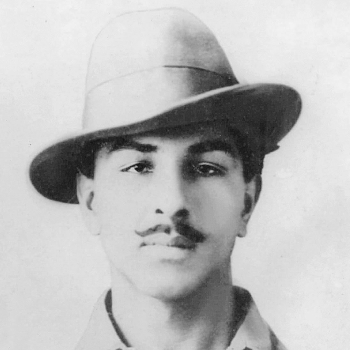
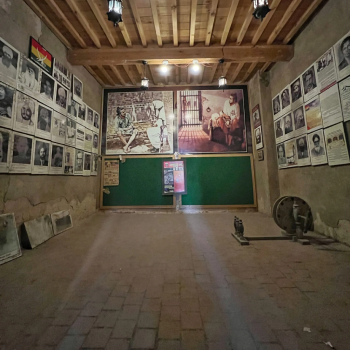
Bhagat Singh Birthplace

1907

Birthplace of a Revolutionary

Bhagat Singh Biography Portrait

Late 1920s

The Iconic Revolutionary Portrait

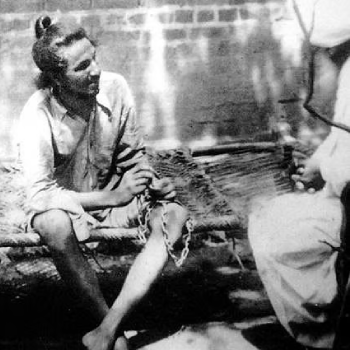
Bhagat Singh rare pictures

1928–1931

Rare Glimpses of a Martyr

Career Journey

Bhagat Singh’s path to becoming a legendary freedom fighter was marked by steady learning, courage, and bold actions. Joining various youth organizations allowed him to develop leadership skills and to inspire others. His vision was not just freedom from the British but a better, fairer society. This led him to join the Hindustan Socialist Republican Association (HSRA), where he and like-minded comrades worked to build a movement centered on social justice as well as political independence.

One of the most talked-about events in his life was the killing of police officer Saunders in December 1928. This was done as a form of protest against the death of Lala Lajpat Rai, who was severely injured by police during a protest and later died. Although Saunders was mistakenly targeted, the act was intended to send a strong message to the British government: the revolution was coming, and it would not be silenced.

In April 1929, Bhagat Singh, along with Batukeshwar Dutt, threw non-lethal bombs in the Central Legislative Assembly in Delhi. This was not an act of terrorism but a carefully planned protest meant to awaken the public to the urgent need for freedom. The bombing was intended to cause no casualties but to arouse political unrest and public debate. After their arrest, Bhagat Singh’s hunger strike in prison became a powerful symbol of resistance, highlighting the rights of political prisoners and exposing colonial injustice to the world.
The Impact

Three major milestones define Bhagat Singh’s monumental impact on India’s freedom struggle. First, the 1929 Assembly bombing gained international attention. It spread awareness of India’s fight for independence beyond its borders and inspired millions of Indian youth to join the nationalist movement. The courage to act boldly and publicly demonstrated the passion and seriousness of young Indians in demanding freedom.

Second, Bhagat Singh’s ideological leadership transformed the HSRA. He infused it with socialist ideas, extending the freedom struggle beyond political independence to include social and economic equality. This broadened the movement’s appeal and laid the foundation for future political developments in India, where justice and equality became integral parts of the nation’s vision.

Third, his hunger strike in jail drew significant public sympathy and highlighted the harsh conditions political prisoners faced. This act of self-sacrifice captivated the nation and international observers alike. Finally, his martyrdom on March 23, 1931, at the age of 23, sparked huge protests across India. Millions mourned his death and took courage from his unwavering spirit, cementing his legacy as Shaheed Bhagat Singh, a hero whose ideas continue to influence India’s path toward justice and freedom.

The Glory

Bhagat Singh did not receive any formal awards during his lifetime, as he died young and before India achieved independence. Yet, there is a continuing and powerful public demand for the Bharat Ratna, India’s highest civilian honor, to be bestowed upon him posthumously as recognition of his unparalleled dedication and sacrifice.

His true honors, however, reside in the memories of millions. Statues and memorials stand all over India, and his name is invoked as a symbol of courage, resistance, and patriotism. Schools, colleges, and public places bear his name, reminding every generation of the price paid for freedom and the sacrifices made by our forebears.

The Present

Though Bhagat Singh passed away in 1931, his legacy is kept alive through ongoing commemorations and cultural tributes. Every year on his birth and martyrdom anniversaries, ceremonies honor his life and ideals. Across India, new statues continue to be unveiled in his memory. Institutions and places named after him serve as centers of learning and nationalism, inspiring young Indians to dream of a just and free society.

In 2024 and beyond, Bhagat Singh’s spirit remains a guiding light for those committed to India’s progress and justice.

Legacy

Bhagat Singh believed deeply in revolutionary idealism, socialism, and justice. His famous slogan, “Inquilab Zindabad” (Long live the revolution), captured his vision of a free and fair India. He was an atheist who valued rational thought and believed that ideas must be stronger than violence. One of his most powerful quotes remains, “They may kill me, but they cannot kill my ideas,” which continues to inspire youth to stand firm for what is right.

Through his life and sacrifice, Bhagat Singh challenged Indian youth to use education for independent thinking and to unite courageously against oppression. He taught that true freedom comes not just from independence from foreign rule, but through building a society based on justice and equality for all. His philosophy remains a beacon for India’s future.

Conclusion

Bhagat Singh’s life is a testament to bravery, sacrifice, and unwavering commitment to freedom. From a young boy deeply moved by injustice to a national hero whose ideals shaped the course of India’s independence movement, his journey embodies the true spirit of revolution and patriotism. The story of Shaheed Bhagat Singh is not just history; it is a call to every Indian to remember, honor, and carry forward the fight for justice. His legacy endures in every heart that beats for a free and fair India.

FAQ's

For his bold acts against British rule and his ideological writings.

He was martyred at just 23.

Saunders assassination and Assembly bombing.

Socialism and complete independence.

It marks the martyrdom of Bhagat Singh, Rajguru, and Sukhdev.

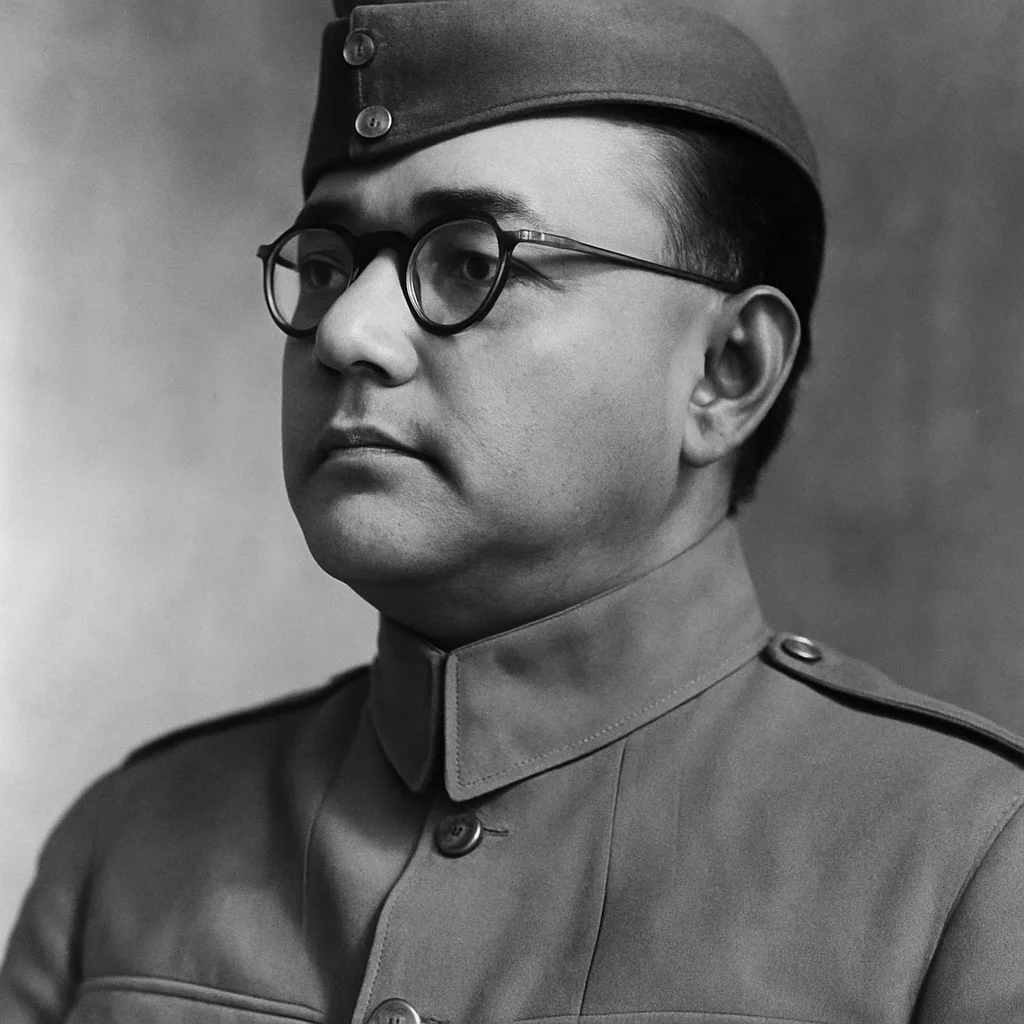
Subhas Chandra Bose Biography – The Leader Who Fought for India’s Freedom with Fire

Netaji’s uncompromising courage and leadership reshaped India’s fight with the INA’s military resistance.

Quick Summary

Born: 23 January 1897
Known As: Netaji
Role: Leader of the Indian National Army (INA)
Key Contribution: Azad Hind movement for armed independence
Legacy: “Give me blood, I will give you freedom!”

Early Life and Childhood

Subhas Chandra Bose was born in 1897 in the city of Cuttack, which is now in Odisha. His family brought together two rich cultures: Bengali and Odia. This mix gave Bose a deep sense of cultural pride and a broad vision of Indian identity. His father was a well-respected man who worked in the government, and his mother was known for her strong values and care. Their home was full of love for tradition and country.

From a young age, Bose experienced the contradictions of colonial education. British schools taught loyalty to the Empire, but his family and surroundings whispered courage and patriotism. He struggled with the idea of serving a foreign rule while loving his own land deeply. Stories from his childhood show a boy who was brilliant but also restless, eager to learn yet eager to fight injustice. His family instilled honesty, discipline, and respect for India’s greatness.

This mix of influences shaped a young Subhas who dreamed not just of success but of freedom for every Indian. He faced early schooling challenges under the British system, often questioning the fairness of colonial rule. These early experiences planted the seeds of his nationalist awakening—a strong desire to serve India beyond personal success.

Journey in Pictures

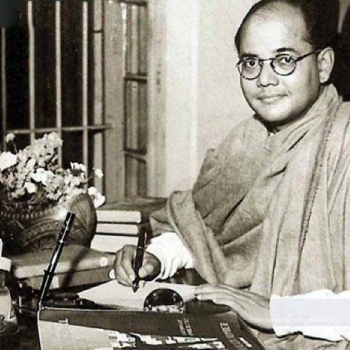
Subhash Chandra Bose writing

1920s–1930s

Early Intellectual & Revolutionary Phase

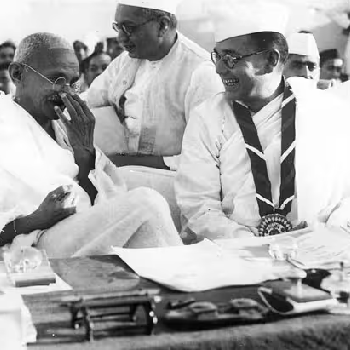
Subhash Chandra Bose and Mahatma Gandhi

1930s

Working with Mahatma Gandhi

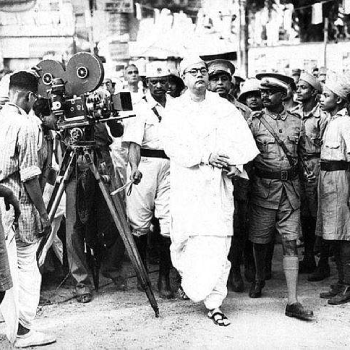
Subhash Chandra Bose arrest

Late 1930s–Early 1940s

Arrest by British Authorities

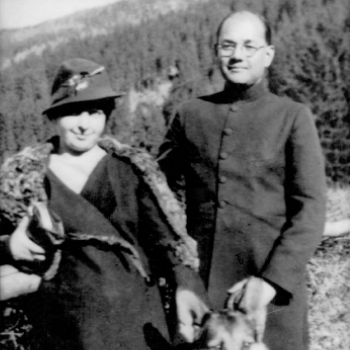
Subhas Chandra Bose with his wife Emilie

1930s–1940s

Personal Life & Emilie Schenkl

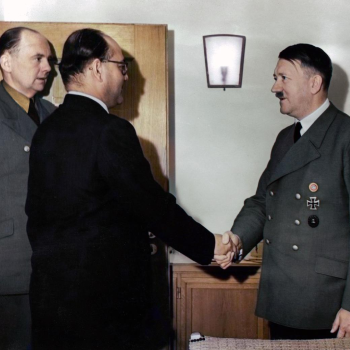
Subhash Chandra Bose with Hitler

1941–1943

Seeking International Support

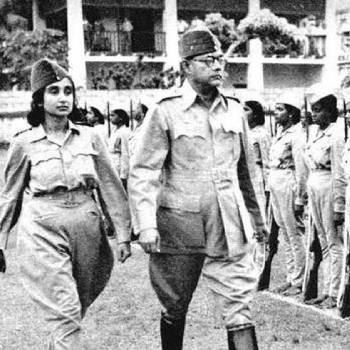
Subhash Chandra Bose with INA Soldier

1943–1945

Supreme Commander of the INA

Career Journey

Bose’s decision to refuse the Indian Civil Service exam final step in 1921 was a turning point. He entered politics, joining the Indian National Congress, where he quickly made a mark for his fierce patriotism and energy. By the late 1930s, Bose had risen to become the Congress President. However, his views on how to achieve freedom often clashed with those of Mahatma Gandhi. Whereas Gandhi favored non-violent resistance, Bose believed in militant nationalism and was ready to use every possible means—including armed struggle—to attain independence.

Due to these differences, Bose resigned as Congress President in 1939 but did not quit the freedom struggle. Instead, he formed the Forward Bloc to unite those who supported a more aggressive fight against the British. His journey took a daring turn in 1941 when he escaped house arrest in India and traveled secretly overseas. Bose reached Germany and then Japan, building alliances with Axis powers during World War II to gain support for India’s independence.

This period of his life was filled with constant danger. He was arrested and imprisoned multiple times, but Bose never gave up. His relentless spirit showed in every decision he made—refusing compromise, always choosing action over passivity. His courage inspired many Indians to believe that freedom was within reach if only they dared to fight for it.

The Impact

Among Bose’s many achievements, three stand out for their historic importance and lasting impact.

First, he took charge of the Indian National Army (INA) from 1943 to 1944. With thousands of Indian soldiers and volunteers fighting alongside Japanese forces, the INA launched military campaigns at Imphal and Kohima against British troops. This was the first time Indians were leading an armed force explicitly to regain their own country. The INA’s courage boosted the morale of Indians across the country and shook the confidence of the British Empire in India.

Second, Bose established the Provisional Government of Free India in 1943. This government operated symbolically from abroad but was recognized by several countries. It showed the world that Indians demanded and deserved complete independence, not just limited reforms. This government issued currency, formed an army, and worked like a real administration for free India.

Third, within India and Congress, Bose ignited a spirit of militant nationalism. He pushed for immediate independence and inspired countless youth and activists to join the independence movement. His famous speech lines, like “Give me blood, and I shall give you freedom!” became rallying cries for the movement’s more assertive stand.

His audacious escape from British surveillance and his diplomatic efforts abroad were themselves great achievements. They represented not just bravery but strategic skill in expanding India’s fight on a global stage. These actions helped change the course of history by challenging the British hold over India from multiple fronts.

The Glory

Netaji Bose received several honors recognizing his work and leadership. In 1942, Indian soldiers in Germany gave him the title “Netaji,” meaning respected leader. This title reflected the deep respect he earned among Indian troops and supporters overseas.

In 1992, the Government of India posthumously awarded Bose the Bharat Ratna, the country’s highest civilian award, recognizing his supreme sacrifice and leadership in the independence struggle. This award holds great symbolic power by honoring a patriot who put country before self.

From 2019 onwards, the government instituted the Subhas Chandra Bose Aapda Prabandhan Puraskar. This annual award recognizes excellence in disaster management, linking Bose’s spirit of courage and leadership to modern India’s efforts to protect its people during crises.

Each award speaks about his lasting influence—not only as a freedom fighter but as a symbol of patriotism and duty for every Indian.

The Present

Although Subhas Chandra Bose passed away in 1945, his spirit lives strongly in the present.

The Subhas Chandra Bose Aapda Prabandhan Puraskar continues to honor brave individuals and organizations, celebrating leadership in times of difficulty. Educational institutions named after Bose carry forward his values by teaching new generations about patriotism and courage. The Netaji Subhas Chandra Bose International Airport is a vital infrastructure hub, bearing his name and serving millions while expanding to meet growing needs.

Commemorative events like “Parakram Divas” celebrate his birth anniversary with speeches, seminars, and cultural programs. The 2025 anniversary of his mysterious disappearance has sparked fresh interest in his life and message through publications and talks.

His speeches and writings continue to be studied and released for public learning, keeping his ideals alive. These activities show that the quest for freedom Bose championed is still relevant today and inspires Indians to build a stronger, more united nation.

Legacy

At the heart of Subhas Chandra Bose’s life were values that remain important for India’s future. His patriotism was unwavering, rooted in deep love for the country. He believed courage was essential to face challenges and that true freedom came from discipline and unity across India’s many cultures and religions.

Bose’s famous quote, “Give me blood, and I shall give you freedom!” captured his demand for sacrifice to achieve Swaraj (self-rule). Another saying, “Freedom is not given, it is taken,” stresses that independence requires active struggle, not waiting. His message to youth was clear: patriotism means putting the nation first and working hard to serve it without fear.

His visionary leadership combined strategic thinking and bold action. He never accepted half-measures or compromise in the fight for complete freedom. His call for unity among Indians to work together across differences still resonates, reminding the nation that strength lies in working as one.

Conclusion

Subhas Chandra Bose’s life was a remarkable journey of sacrifice, courage, and unyielding love for India. From choosing patriotism over a secure career, to leading armies and governments for free India, his legacy teaches us the cost and value of freedom. His story remains a beacon for millions who dream of a just and independent nation. Subhas Chandra Bose will always be remembered as Netaji—the revered leader who fought relentlessly for India’s absolute freedom and inspired generations to follow in his footsteps.

FAQ's

It means "Respected Leader" - given to him by INA soldiers.

Leading the INA for armed struggle against the British.

Yes, mainly on the use of non-violence vs armed action.

Allegedly in a plane crash in 1945 (still debated).

The Indian National Army formed to fight British rule.

Homi Bhabha Biography – The Visionary Who Powered India’s Nuclear Future

Bhabha’s genius and leadership established India’s atomic research and shaped its scientific destiny.

Quick Summary

Born: 30 October 1909
Known As: Father of India’s Nuclear Programme
Profession: Nuclear Physicist
Institutions Built: TIFR, BARC
Legacy: Laid India’s scientific and atomic foundation

Early Life and Influences

Born on October 30, 1909, in Mumbai, Homi Bhabha was raised in a family that stood tall in the world of business and culture. His father, Jehangir Bhabha, was a well-known lawyer with progressive views. The Bhabha home was one where intellectual curiosity and cultural appreciation flourished side by side.

Among the earliest influences on young Homi was his aunt, Meherbai Tata, who nurtured his love for western classical music. It was in this fusion of art and science that Bhabha’s distinctive personality took shape. His early years saw remarkable precocity, from building Meccano models—a kind of mechanical toy inspiring his scientific curiosity—to diving into advanced scientific concepts like Einstein’s general relativity by the age of 15.

Bhabha’s artistic talent was evident too. He won an art society prize for a self-portrait during his school years, a reflection of his remarkable ability to blend meticulous observation with creative expression. This unique blend of arts and sciences laid the foundation for his holistic vision of what science should be—rooted in creativity and rigorous thought.

Journey in Pictures

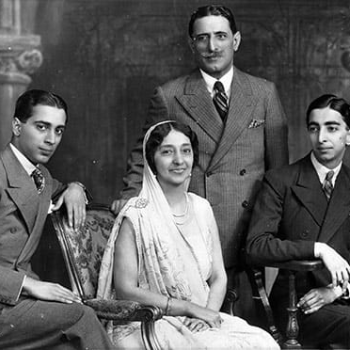
1910s–1920s

Early Life & Family

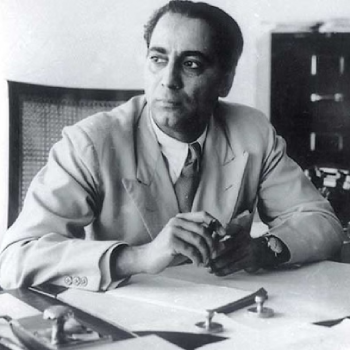
Homi Bhabha

1930s

Begins Training at Gopichand Academy

1940s

Collaboration with World Scientists

1950s

Architect of India’s Nuclear Vision

1950s–1960s

Nation Building With Leadership

1960s

Final Years & Legacy

Academic Pursuits and Early Career

Homi Bhabha’s academic journey was marked by excellence and critical choices. After excelling in Senior Cambridge examinations, he enrolled at the prestigious Elphinstone College in Mumbai, where science began to take center stage in his life. A pivotal moment came from a lecture by Nobel laureate Arthur Compton, which awakened a deeper passion for physics.

Despite family plans steering him towards mechanical engineering and eventually taking a role in the Tata Steel dynasty, Homi was resolute. Upon his arrival at Cambridge University in England, he initially pursued mechanical engineering per his family’s wishes. But soon, faced with the compelling world of theoretical physics, he wrote to his father with clarity and courage, stating his firm decision to switch fields. In his words, “I know quite clearly what I want out of my life. Life and my emotions are the only things I am conscious of. I love the consciousness of life and I want as much of it as I can get.”

This emotional yet rational letter marked the turning point in Bhabha’s life and career. Immersed in the vibrant scientific environment of Cambridge, he worked closely with eminent physicists like Niels Bohr and Enrico Fermi. His research in cosmic rays and quantum theory earned international attention and laid the groundwork for his global reputation.

But the outbreak of World War II called Bhabha home. In 1939, with deep emotional and intellectual grit, he returned to India not merely as a scientist, but as a nation-builder. He shifted his focus from personal academic endeavors to serve the scientific needs of an emerging India.

Major Achievements and Nation Building

Homi Bhabha’s contributions to Indian science are monumental, shaped by his exceptional capacity to build institutions and inspire generations of scientists. His work is divided into three pivotal areas:

1. Founding the Tata Institute of Fundamental Research (TIFR) (1944-45)
In the challenging colonial context, where scientific research had limited support, Bhabha envisioned and founded the Tata Institute of Fundamental Research. His aim was clear—to create a world-class institution that nurtured scientific talent and fostered a culture of inquiry in India. Despite obstacles, TIFR became a beacon for researching nuclear physics and other fundamental sciences. It trained generations of scientists who would carry forward India’s scientific legacy.

2. Establishing the Atomic Energy Establishment, Trombay (1954), later BARC
Bhabha’s vision reached new heights with the creation of the Atomic Energy Establishment at Trombay, now known as the Bhabha Atomic Research Centre (BARC). This high-tech facility became the hub of India’s nuclear research and development. Under his leadership, Asia’s first research reactor, Apsara, was started. He laid out India’s unique three-stage nuclear program, leveraging the country’s abundant thorium reserves for a sustainable energy future. This blueprint was crucial for India’s long-term energy security and independence.

3. Leadership in Atomic Energy Commission and Department of Atomic Energy
As the first Chairman of the Indian Atomic Energy Commission and Secretary of the Department of Atomic Energy, Bhabha shaped the policies that guided Indian nuclear science for decades. His visionary leadership ensured that India’s nuclear program was built on strong scientific foundations, focused on peaceful applications and self-reliance. He also recognized the importance of space science, fostering early collaborations that tied atomic research to India’s ambitions in space exploration.

These achievements underscore Bhabha’s role not just as a scientist but as a farsighted leader who understood the interplay between science, technology, and national progress.

The Glory

The brilliance of Homi Bhabha’s scientific work was recognized both in India and internationally. His awards include:

  • Adams Prize (1942): Awarded for his pioneering research on cosmic ray showers and electron scattering, this prestigious prize marked his entry into the elite global circle of physicists.
  • Multiple Nobel Prize Nominations (1951, 1953-56): Although he never received the Nobel Prize, repeated nominations underscored the high regard in which the international scientific community held him.
  • Padma Bhushan (1954): One of India’s highest civilian awards, it recognized his distinguished service and foundational contributions to Indian science.
  • Fellowship of the Royal Society: This elite fellowship symbolized global scientific recognition of Bhabha’s exceptional work and leadership in physics.

These honors were more than personal achievements; they signified India’s emergence on the global scientific map through Bhabha’s relentless pursuit of excellence.

The Present - Bhabha’s Enduring Legacy in 2024-2025

Though Homi Bhabha passed away tragically in 1966, his legacy remains vibrant and alive. Institutions bearing his name continue to inspire:

  • Dr. Homi Bhabha State University, Homi Bhabha National Institute, and Homi Bhabha Centre for Science Education are actively involved in research, education, and outreach. These centers host important academic events, including the 2024-25 Mathematical Olympiads, fostering young talent.
  • The Dr. Homi Jahangir Bhabha Scholarship Scheme encourages postgraduate engineering students to pursue excellence, ensuring a future generation of skilled scientists and engineers.
  • Recent biographies and academic reviews (2023-24) have rekindled public interest in Bhabha’s life and work, connecting the younger generation to his inspiring story.
  • The Bhabha Atomic Research Centre continues cutting-edge research in nuclear science, upholding the high standards Bhabha set. Memorial events and lectures commemorate his contribution to India’s scientific advancement.

This ongoing activity ensures that Bhabha’s vision and values guide new frontiers of Indian science and technology.

The Legacy: Philosophy and Core Values

Homi Bhabha’s philosophy was rooted in deep conviction and practical vision. His core values included:

  • Self-Reliance and Indigenous Innovation: Bhabha believed that India’s progress depended on mastering scientific knowledge and technology internally, rather than depending on external forces.
  • Visionary Institution Building: He saw institutions as the backbone of sustained scientific growth, creating structures that fostered research and training.
  • A Holistic Vision Combining Science and Arts: Crediting science and arts as “two sides of the same coin,” Bhabha championed a balanced growth of intellect and creativity.
  • National Unity and Pride Through Science: Bhabha viewed collective scientific achievement as a source of national strength and pride, essential for India’s self-confidence on the world stage.

His profound words from the letter to his father resonate still: _“I know quite clearly what I want out of my life. Life and my emotions are the only things I am conscious of. I love the consciousness of life and I want as much of it as I can get.”_ This call to pursue true passion and contribute meaningfully to nation-building echoes as a guiding light for India’s youth today.

Conclusion

Homi Jehangir Bhabha’s life story is not just a biography of a great scientist; it is a testament to India’s journey toward scientific self-reliance and visionary progress. At a time when the world was grappling with war and scientific challenges, Bhabha chose to return to his homeland and build from scratch an Indian nuclear program capable of securing the nation’s future. His intellectual rigor, leadership, and unyielding resolve established the foundations of modern Indian science.

As India marches forward, the legacy of Homi Bhabha remains a beacon, inspiring generations to pursue knowledge, persevere through struggle, and contribute to the nation’s pride and progress through science and innovation. His life teaches us that true achievement is born from passion, perseverance, and a steadfast vision for the future.

FAQ's

He pioneered India’s nuclear energy and research programs.

TIFR (1945) and BARC (1954).

No - he was also a painter, administrator, and visionary.

In a plane crash (1966).

For laying the scientific and institutional foundations of atomic research.

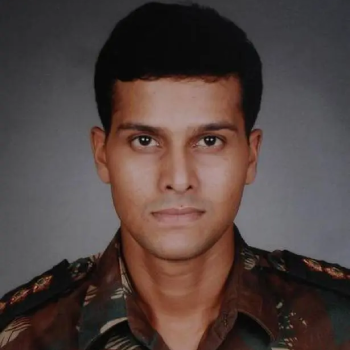
Major Sandeep Unnikrishnan Biography – The Braveheart Who Gave His Life to Save Others

Major Sandeep’s courage during the 26/11 siege embodies the highest ideals of duty and sacrifice.

Quick Summary

Born: 15 March 1977
Role: NSG Commando, Indian Army Major
Known For: Heroic sacrifice in 26/11 Mumbai attacks
Honor: Ashoka Chakra (posthumous)

Early Life of a Future Hero

Born on March 15, 1977, Sandeep Unnikrishnan hailed from a Malayali Nair family rooted in Kozhikode but settled in Bangalore. His upbringing was steeped in a blend of cultural richness and disciplined values. His father worked at the Indian Space Research Organisation (ISRO), a prestigious and demanding career that brought a scientific temper and grounded outlook to their household. This environment fostered in young Sandeep a balance of intellectual curiosity and deep-rooted patriotism.

Sandeep’s schooling at The Frank Anthony Public School in Bangalore was marked by early indications of his desire to serve the nation. He was inspired by interactions with defense personnel who visited his school during events and celebrations, planting the first seeds of his dream to join the armed forces. Though a comfortable environment, his journey toward military service involved overcoming significant challenges. The transition to the National Defence Academy (NDA) introduced him to a world far removed from his familiar surroundings. Confronted with new cultures, languages, and strict regimens, he faced bullying, which tested his resolve. However, true to his nature, these hardships only strengthened his determination. He confronted adversity head-on, displaying resilience and a steadfast commitment to his purpose.

Journey in Pictures

1970s–1980s

Childhood Pic

1980s-1990s

School & NCC Training

Major Unnikrishnan

2000-2004

Joining the Indian Army & Early Career

Mid-2000s

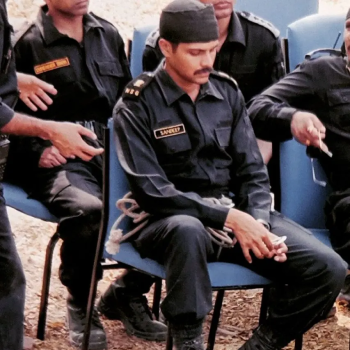
NSG Commando Training

2007-2008

Serving as NSG Officer

2009

Posthumous Honour: Ashoka Chakra

The Journey: A Life of Discipline and Courage

In 1995, Sandeep Unnikrishnan embarked on the rigorous path of the National Defence Academy. The NDA’s training is famously tough—physically grueling and emotionally demanding. It is designed not just to build soldiers but leaders who can inspire and endure. Sandeep’s time at NDA and later at the Indian Military Academy (IMA) was characterized by hard work, discipline, and a pursuit of excellence.

Commissioned into the Bihar Regiment in 1999, he soon faced the realities of warfare during Operation Vijay in Kargil. The harsh terrains and hostile conditions of Kargil demanded not only physical stamina but mental toughness and tactical acumen. These early battles were formative, molding him into a soldier respected by peers and commanders alike. His steady promotions to Captain in 2003 and then Major in 2005 reflected not just seniority but demonstrated merit and leadership.

Sandeep’s training milestones stand out as well. Twice topping the prestigious Ghatak course—a program that tests infantry commandos’ elite skills—he also trained at the High Altitude Warfare School. These rigorous courses prepared him for diverse environments, be it the icy heights of Siachen, the tricky terrains of Jammu & Kashmir, or the riot-prone zones in Gujarat. His postings across Rajasthan and Hyderabad further added to his broad experience. This varied exposure sharpened his tactical expertise and broadened his adaptability.

The pinnacle of his career was his selection into the National Security Guard (NSG), India’s elite counter-terrorism unit. His specialist training there polished his skills in hostage rescue, urban warfare, and rapid response. Throughout, Major Unnikrishnan displayed a ceaseless zeal for learning and improving, reflecting his personal creed of excellence and duty.

The Impact: Heroism During the 26/11 Mumbai Attacks

On November 26, 2008, when terrorists launched coordinated attacks across Mumbai, Major Sandeep Unnikrishnan’s moment of destiny arrived. Leading an NSG team, he was tasked with securing the Taj Mahal Palace Hotel, a key site where innocent hostages faced mortal danger. The operation, code-named Black Tornado, was one of the most complex and prolonged hostage-rescues ever undertaken in India.

Major Unnikrishnan’s team entered the hotel under fierce gunfire and chaos. Over 15 grueling hours, they moved floor to floor, clearing rooms and helping evacuate about 14 hostages to safety. His leadership shone brightest when he personally rescued two injured commandos stuck under heavy fire, risking life without hesitation. His calm command and strategic focus inspired his team as they fought relentlessly against heavily armed terrorists.

Each step was a battle against fear and uncertainty, yet Major Unnikrishnan moved with resolve. On November 28, after a fierce shootout, he was fatally wounded. His last words to his commanders—“Do not come up, I will handle them”—reflected his ultimate sacrifice. He chose to protect his team over his own safety, embodying true selflessness and leadership. Through his actions, he saved countless lives and became a beacon of courage against terror.

The Glory: Honours and Recognition

In recognition of his extraordinary valor and sacrifice, Major Sandeep Unnikrishnan was posthumously awarded the Ashoka Chakra on January 26, 2009, India’s highest peacetime gallantry award. The award citation spoke of his exemplary leadership, exceptional bravery under fire, and selfless service to the nation.

The Ashoka Chakra is a symbol not just of his heroic acts on 26/11 but of a life dedicated to the highest ideals of duty and patriotism. It places him among a revered group of soldiers who have shown supreme courage in protecting India’s sovereignty and citizenry during peace times, a tribute to his unparalleled fighting spirit.

The Present: Legacy and Remembrance

Major Sandeep Unnikrishnan’s legacy is very much alive today. The ongoing Major Sandeep Unnikrishnan Memorial Inter Forces Swimming & Diving Championship, held annually, honours his memory by promoting physical fitness and camaraderie among defense personnel.

On every 26/11 anniversary, candlelight marches and tributes are held across the nation, ensuring that his story remains etched in the public consciousness. The Major Sandeep Unnikrishnan Memorial Trust works tirelessly to keep his ideals alive and support families of martyrs. The recent popular movie, “Major,” further spreads awareness of his life and sacrifice, inspiring a new generation of Indians to aspire toward courage and service.

His family’s continued pursuit of justice stands as a reminder of the ongoing fight against terrorism and the importance of national vigilance.

The Legacy: A Life Philosophy of Duty and Courage

Major Unnikrishnan’s life and final moments teach us that true leadership demands placing the mission and safety of others above oneself. His words—“Do not come up, I will handle them”—have become emblematic of responsible leadership, courage, and sacrifice.

His core values—duty above self, courage in the face of danger, responsibility to comrades and country, and unity in action—are ideals that every Indian can aspire to. His story reminds young people that greatness is achieved not through comfort but through service and sacrifice. Protecting the nation’s unity and security is the highest form of patriotism.

Major Sandeep Unnikrishnan’s memory is a guiding light for India’s citizens. It urges each one of us to embrace courage, responsibility, and above all, love for our motherland. His legacy is not just of a soldier but of a true Indian hero whose life continues to inspire generations.

Conclusion

Major Sandeep Unnikrishnan’s journey from a disciplined schoolboy in Bangalore to a revered NSG commando is a story of unwavering patriotism and extraordinary bravery. His actions during the 26/11 Mumbai attacks showcased the finest qualities of leadership, valor, and sacrifice. Honoured with the Ashoka Chakra, his legacy continues to live through memorials, stories, and a nation’s gratitude. As India remembers him, his story serves as a timeless reminder that the greatest heroes are those who protect the nation with relentless courage and selfless love.

FAQ's

An NSG commando who led rescue operations in 26/11.

He saved multiple hostages before being martyred.

Don’t come up, I will handle them!

The Ashoka Chakra - India’s highest peacetime gallantry award.

In the Bihar Regiment of the Indian Army.

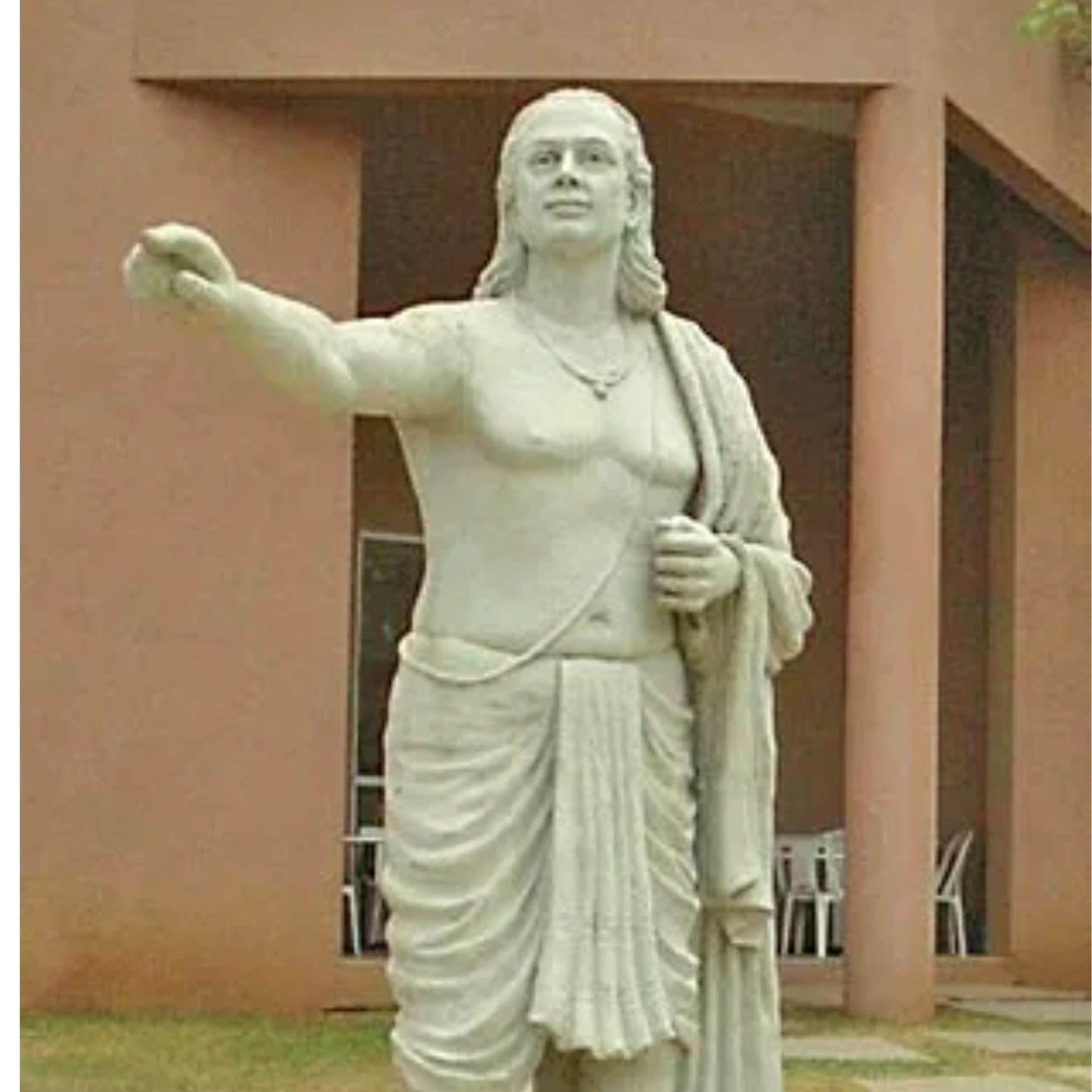
Aryabhata Biography – The Genius Who Gave Zero to the World

Aryabhata revolutionized mathematics and astronomy, laying the foundation for modern science.

Quick Summary

Full Name: Aryabhata
Born: 476 CE, Kusumapura (modern-day Bihar, India)
Died: 550 CE (approx.)
Profession: Mathematician, Astronomer
Known As: “Father of Indian Mathematics”
Career Span: 5th – 6th century CE
Key Contributions:

  • Authored Aryabhatiya, a seminal text on mathematics and astronomy.

  • Introduced the concept of zero and place value system.

  • Calculated the value of π (pi) accurately.

  • Proposed the Earth’s rotation and heliocentric ideas centuries before Galileo.

Quote:
“Knowledge is that which liberates.” — Aryabhata

Introduction

Aryabhata (476–550 CE) was one of the greatest mathematicians and astronomers of ancient India. His pioneering contributions transformed the scientific understanding of mathematics and astronomy during the classical age. At a time when Europe was still in the early medieval period, Aryabhata was calculating the value of pi, proposing that the Earth rotates on its axis, and accurately describing eclipses. His ideas went far beyond his time and laid the foundation for centuries of advancements in both Indian and global science.

Early Life and Education

Aryabhata was born in 476 CE, most likely in Kusumapura (modern-day Patna, Bihar), which was a hub of learning under the Gupta Empire, known as India’s golden age. Although detailed records of his personal life are scarce, scholars believe that Aryabhata pursued his studies at the renowned Nalanda University, a global center of knowledge.

From a young age, Aryabhata displayed an extraordinary ability in mathematics and observation of celestial bodies. His education combined Sanskrit scholarship, mathematical training, and astronomical studies, giving him a holistic foundation to pursue original discoveries.

Aryabhata’s Major Works

The most important text attributed to Aryabhata is the “Aryabhatiya”, written in 499 CE when he was just 23 years old. This masterpiece is a compact yet profound collection of 121 verses divided into four sections:

  1. Gitikapada – Large numbers and astronomical constants.
  2. Ganitapada – Arithmetic, algebra, geometry, and trigonometry.
  3. Kalakriyapada – Methods of calculating time and planetary periods.
  4. Golapada – The spherical astronomy, eclipses, and Earth’s rotation.

The Aryabhatiya is considered one of the earliest surviving texts that systematically presents advanced mathematical and astronomical knowledge.

Contributions to Mathematics

Aryabhata’s contributions to mathematics were groundbreaking and influenced Indian and later Islamic and European mathematics.

  • Place Value System and Zero: Although the exact invention of zero is debated, Aryabhata’s works clearly demonstrate the use of the place value system, paving the way for the decimal system widely used today.
  • Trigonometry: Aryabhata introduced sine functions (jya) and their relationships. His work laid the foundation for trigonometry as used in modern mathematics.
  • Quadratic Equations: He solved quadratic equations and provided methods for solving linear and indeterminate equations.
  • Geometry: Aryabhata calculated the area of a triangle, circle, and sphere with remarkable accuracy, anticipating formulas that remain standard.
  • Value of Pi (π): Aryabhata provided an approximation of pi as 3.1416, which was astonishingly close to the modern value (3.14159). He explained that pi was an irrational number, centuries before it was formally recognized.

Contributions to Astronomy

Aryabhata revolutionized astronomy with his forward-thinking ideas:

  • Earth’s Rotation: Aryabhata was among the first to declare that the Earth rotates on its axis, explaining the apparent daily movement of stars. This was revolutionary in a world that largely believed the Earth was stationary.
  • Heliocentric Concepts: Though not fully heliocentric like Copernicus, Aryabhata hinted at the motion of planets relative to the sun.
  • Eclipses: Aryabhata explained solar and lunar eclipses scientifically, rejecting the myth of celestial demons. He described how eclipses occur due to the shadow of the Earth or Moon.
  • Planetary Positions: He gave methods to calculate planetary positions with astonishing accuracy for his era.
  • Length of the Year: Aryabhata calculated the length of a solar year as 365.358 days, which is remarkably close to today’s accepted value of 365.256 days.

The Aryabhatiya: His Magnum Opus

The Aryabhatiya became a cornerstone text for Indian mathematicians and astronomers for centuries. Scholars like Brahmagupta, Bhaskara I, and later Islamic mathematicians studied and expanded upon Aryabhata’s principles. Translations of his work into Arabic during the Abbasid Caliphate introduced Aryabhata’s genius to the Islamic world and eventually to Europe.

The Aryabhatiya’s compact style, with its poetic Sanskrit verses, ensured that it could be memorized and transmitted across generations.

Aryabhata and the Value of Pi

Aryabhata’s most celebrated mathematical contribution was his calculation of pi (π). His approximation π = 3.1416 was far ahead of his time. He also emphasized that pi is irrational, meaning it cannot be expressed as a finite fraction—a concept modern mathematics confirmed much later.

His calculation was not just theoretical but had practical applications in astronomy, geometry, and architecture.

Earth’s Rotation and Solar System Theories

Aryabhata boldly stated that the Earth rotates on its axis, causing the apparent rising and setting of the sun. This insight, almost a thousand years before Galileo and Copernicus, demonstrates his visionary thinking.

He also discussed the geocentric model with rotating Earth, bridging traditional beliefs with advanced observation. His theories significantly shaped Indian astronomy and inspired later debates worldwide.

Aryabhata’s Legacy and Global Influence

Aryabhata’s influence extended far beyond India:

  • In India: His work shaped generations of Indian scholars and formed the basis of medieval Indian mathematics.
  • In the Islamic World: His texts were translated into Arabic during the 8th–9th centuries, influencing scholars like Al-Khwarizmi and Al-Biruni.
  • In Europe: Aryabhata indirectly contributed to the Renaissance scientific revolution through preserved Islamic translations.

Modern tributes include:

  • The first Indian satellite launched in 1975 was named Aryabhata.
  • Numerous research centers, schools, and awards bear his name.

Recognition in Modern India

Aryabhata remains a symbol of India’s scientific heritage. His portrait is often displayed in science institutions, and his discoveries are celebrated in school curricula. The Indian government continues to honor his contributions through stamps, space missions, and educational initiatives.

Conclusion

Aryabhata was not just a mathematician or astronomer—he was a visionary who thought beyond his era. His theories on the Earth’s rotation, eclipses, pi, and planetary motion reveal a scientific mind centuries ahead of the rest of the world.
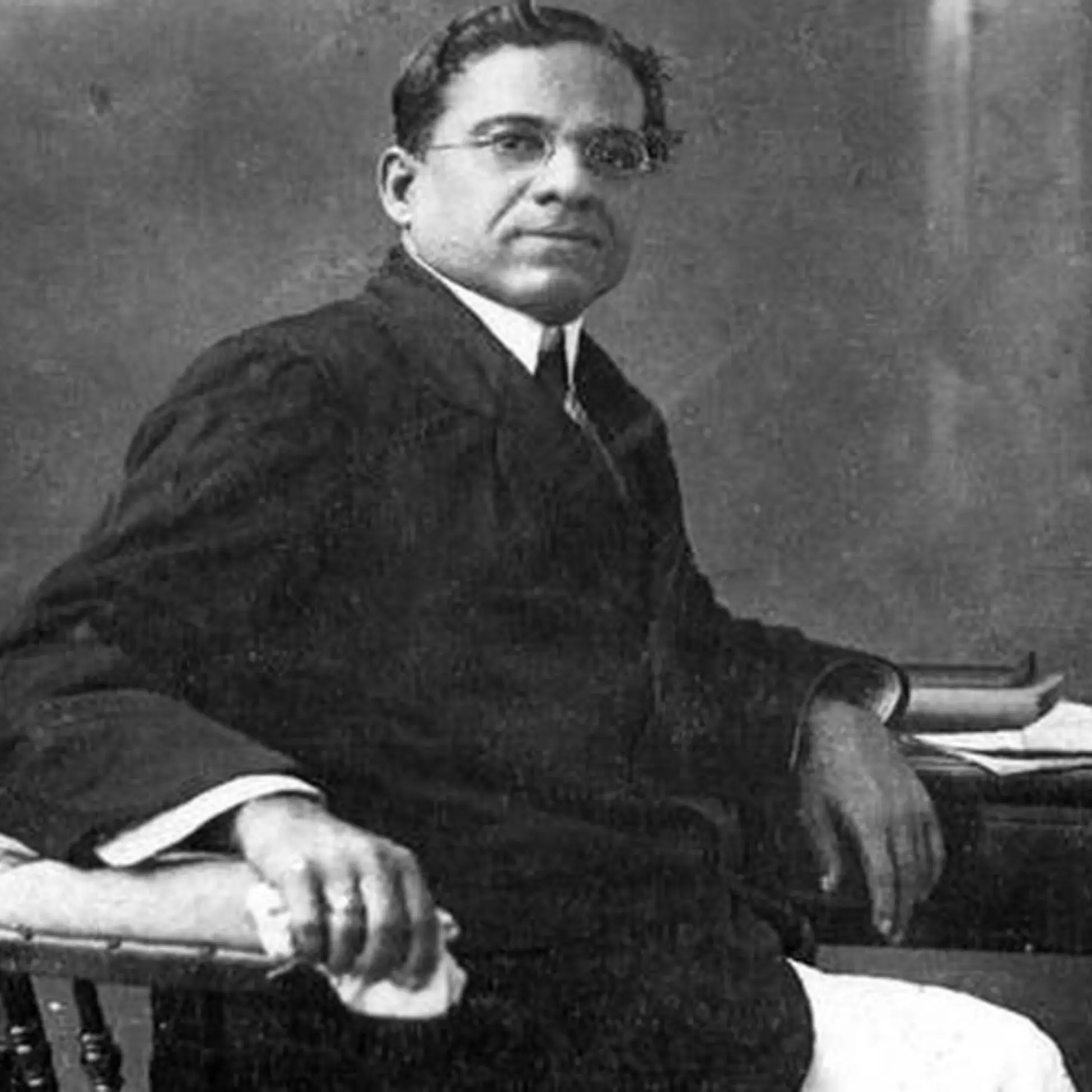
By combining mathematics, astronomy, and logic, Aryabhata left behind a legacy that still resonates in modern science and space exploration. His life and works remind us that India’s intellectual heritage is rich with pioneers who shaped the course of human knowledge.

FAQ's

For pioneering mathematics and astronomy, including the concept of zero.

Aryabhatiya.

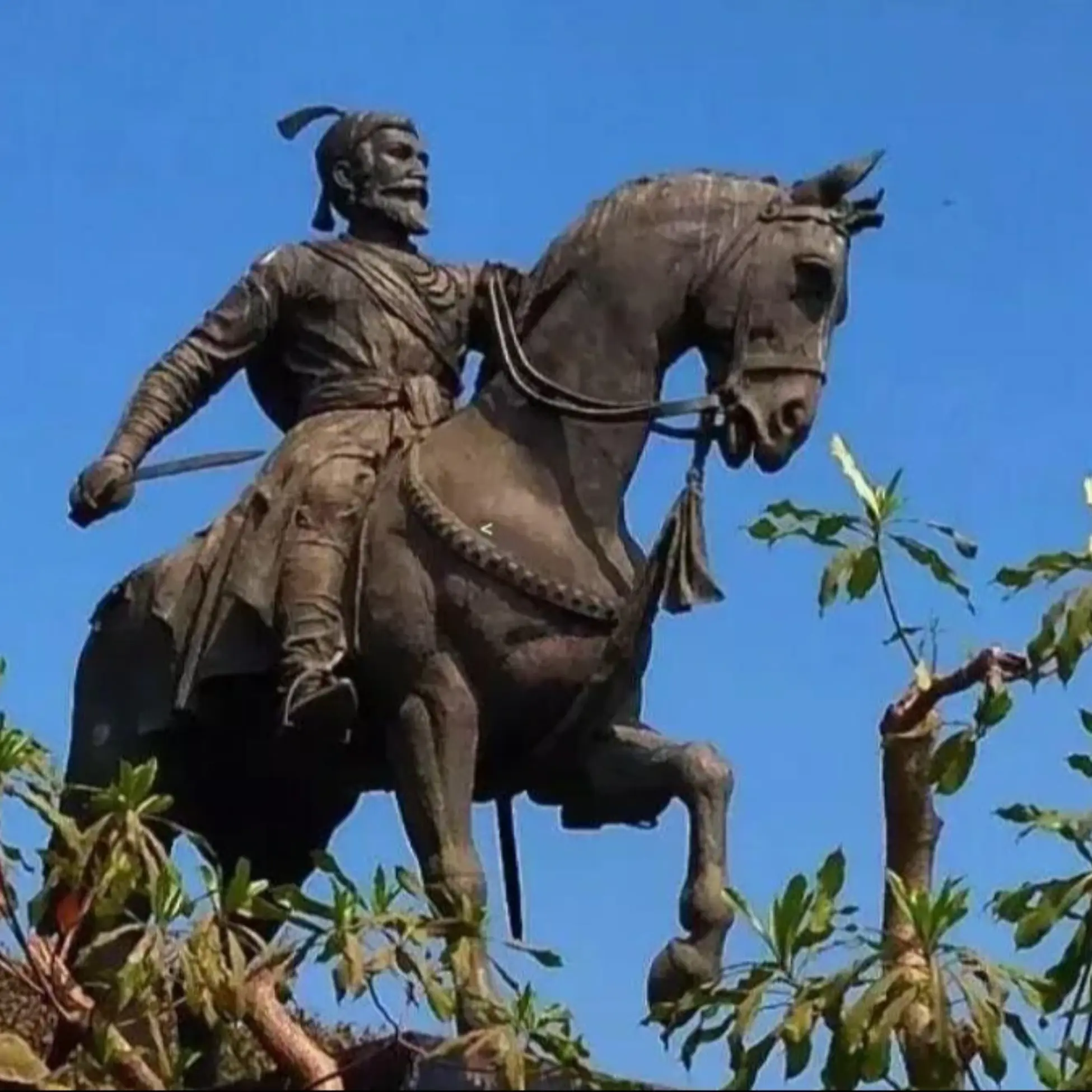
Chhatrapati Shivaji Maharaj Biography – The Great Maratha King Who Fought for Swarajya

Chhatrapati-Shivaji

Shivaji Maharaj established a fearless Maratha kingdom with vision, valor, and justice.

Quick Summary

Full Name: Shivaji Bhonsle
Born: 19th February 1630, Shivneri Fort, Maharashtra, India
Died: 3rd April 1680, Raigad Fort, Maharashtra, India
Profession: Warrior King, Founder of the Maratha Empire
Known As: “Chhatrapati Shivaji Maharaj”
Career Span: 1645 – 1680
Key Contributions:

  • Founded the Maratha Empire, challenging the Mughal Empire.

  • Known for guerrilla warfare tactics, naval power, and administrative reforms.

  • Promoted religious tolerance and welfare governance.

  • Crowned as Chhatrapati (sovereign) in 1674.

Quote:
“Freedom is my birthright, and I shall have it!” — Shivaji Maharaj

Introduction

Chhatrapati Shivaji Maharaj (1630–1680) is one of the most revered and celebrated figures in Indian history. Known as the founder of the Maratha Empire, Shivaji Maharaj was a visionary king, fearless warrior, and master strategist whose leadership reshaped the socio-political landscape of 17th-century India. His emphasis on swaraj (self-rule), justice, military innovation, and people-centric governance continue to inspire generations.

Early Life

Shivaji Maharaj was born on 19 February 1630 at the Shivneri Fort near Junnar in present-day Maharashtra. He was the son of Shahaji Bhosale, a Maratha general who served the Deccan sultanates, and Jijabai, a deeply religious and determined woman who played a crucial role in shaping young Shivaji’s character.

From a very young age, Shivaji was exposed to the teachings of the epics like the Ramayana and Mahabharata, as well as stories of valor and dharma. Jijabai instilled in him a strong sense of pride in his culture, love for his land, and a belief in justice. These early influences planted the seeds of leadership in Shivaji’s heart.

Shivaji’s upbringing in the rugged Sahyadri mountains, amidst hill forts and natural defenses, gave him firsthand experience of terrain that later became crucial in his guerrilla warfare strategies.

Founding of the Maratha Empire

Shivaji Maharaj’s political career began at the young age of 15 when he captured Torna Fort in 1645. Over the next few years, he continued to seize forts like Purandar, Rajgad, and Kondana (later named Sinhagad), steadily building a stronghold in the Western Ghats.

His approach was not to directly confront mighty empires like the Mughals or the Adilshahi Sultanate in open battle, but to gradually carve out independent territory. This careful yet bold expansion marked the birth of the Maratha Empire.

By 1674, Shivaji had consolidated his power to such an extent that he crowned himself Chhatrapati (sovereign king) at Raigad Fort. This coronation was not merely symbolic but a declaration of independence and self-rule, establishing the Marathas as a legitimate power in India.

Military Strategies & Guerrilla Warfare

One of Shivaji’s greatest contributions to Indian history was his mastery of guerrilla warfare, known as Ganimi Kava. Instead of engaging in large, direct battles, Shivaji used swift and surprise attacks, leveraging the rugged terrain of the Western Ghats to his advantage.

He emphasized:

  • Speed & Mobility: Small, well-trained forces could move quickly and strike unexpectedly.
  • Fortress Defense: His network of forts acted as secure bases for retreat and regrouping.
  • Local Support: Shivaji built strong relationships with villagers and locals, ensuring a steady flow of information and supplies.

These tactics made him nearly invincible against much larger armies, earning him admiration even from his enemies.

Naval Power & Forts

Shivaji Maharaj was a pioneer in recognizing the importance of naval power in India. To protect the Konkan coastline from Portuguese, Siddis, and other threats, he built a formidable navy. Forts such as Sindhudurg, built in the Arabian Sea, symbolized his maritime vision.

Shivaji’s empire boasted around 300 forts, each strategically placed. From Raigad to Pratapgad, these forts were more than military outposts – they were centers of administration, economy, and culture.
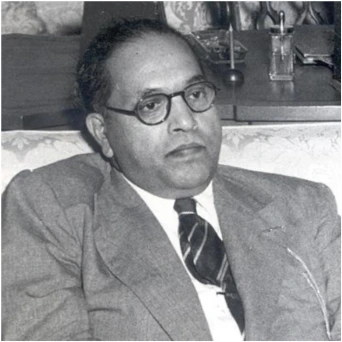
Administration & Governance

Beyond the battlefield, Shivaji Maharaj was a brilliant administrator. His governance system was just, inclusive, and people-oriented. Some key features included:

  • Ashta Pradhan Mandal (Council of Eight Ministers): A well-structured cabinet to manage various aspects of administration.
  • Revenue System: He reformed land taxation to be more equitable, ensuring farmers were not overburdened.
  • Religious Tolerance: Though a devout Hindu, Shivaji respected all religions. He protected mosques and employed Muslims in his army and administration.
  • Justice: He established strict codes against harassment of women and promoted ethical governance.

This progressive governance set a benchmark for future rulers in India.

Relationship with the Mughals

Shivaji Maharaj’s relationship with the Mughal Empire, particularly Emperor Aurangzeb, was complex and often confrontational.

In 1666, Shivaji was invited to the Mughal court in Agra, where he famously resisted humiliation and later escaped in a daring manner. This incident cemented his image as a fearless and cunning leader who refused to bow before imperial authority.

Over time, Shivaji’s continuous resistance weakened Mughal dominance in the Deccan, laying the groundwork for future Maratha expansion against the empire.

Coronation as Chhatrapati

On 6 June 1674, Shivaji was formally crowned as Chhatrapati at Raigad Fort. The grand coronation was performed with full Vedic rituals by Pandit Gaga Bhatt from Varanasi, emphasizing Shivaji’s status as a sovereign Hindu ruler.

This coronation was a turning point, transforming Shivaji from a regional leader into a king with divine sanction. It also boosted morale among his followers and legitimized the Maratha Empire in the eyes of other kingdoms.

Final Years & Death

Shivaji Maharaj continued to expand and consolidate his kingdom until his death on 3 April 1680 at Raigad Fort. His passing left a deep void, but the empire he founded became the foundation for Maratha dominance in the 18th century.

Legacy & Inspiration

Chhatrapati Shivaji Maharaj’s legacy is timeless. He is remembered not just as a conqueror, but as a builder of a just and inclusive society. His principles of swaraj, swadharma, and justice continue to resonate in modern India.

Key aspects of his enduring legacy include:

  • Establishing the Maratha Empire, which later became a major force in Indian politics.
  • Setting an example of ethical leadership and people-first governance.
  • Inspiring freedom fighters like Bal Gangadhar Tilak, Mahatma Gandhi, and Bhagat Singh.
  • Remaining a symbol of pride, courage, and self-rule for millions of Indians.

Even today, his statues, forts, and stories keep his memory alive, making him one of the greatest heroes in Indian history.

Conclusion

The story of Chhatrapati Shivaji Maharaj is not just history; it is an epic of vision, bravery, and leadership. From his childhood dreams of swaraj to his coronation as a sovereign king, every aspect of his life continues to ignite patriotism and inspire new generations.

His emphasis on people’s welfare, military brilliance, and self-rule ensures his place in the Hall of Fame of world leaders who transformed their nations.

FAQ's

For founding the Maratha Empire and his military and administrative genius.

"Swarajya is my birthright, and I shall have it."

Dadasaheb Phalke Biography – The Father of Indian Cinema Who Made History

Dadasaheb Phalke introduced motion pictures to India, igniting the country’s cinematic journey.

Quick Summary

Full Name: Dhundiraj Govind Phalke
Born: 30th April 1870, Nashik, Maharashtra, India
Died: 16th February 1944, Nashik, India
Profession: Filmmaker, Producer, Screenwriter
Known As: “Father of Indian Cinema”
Career Span: 1913 – 1937
Key Contributions:

  • Directed India’s first full-length feature film, Raja Harishchandra (1913).

  • Laid the foundation of Indian cinema.

  • Pioneered filmmaking techniques in India.

  • Honored with the Dadasaheb Phalke Award instituted in his memory.

Quote:
“Cinema is a powerful medium to reach the soul of people.” — Dadasaheb Phalke

Early Life and Education

Dhundiraj Govind Phalke, popularly known as Dadasaheb Phalke, was born on 30 April 1870 in Trimbak, near Nashik, Maharashtra. Coming from a modest Maharashtrian family, Phalke grew up with a natural curiosity for art, culture, and technology. His father was a Sanskrit scholar and a professor, which meant young Phalke was surrounded by India’s rich mythological heritage from childhood.

Phalke showed a deep interest in drawing, painting, and photography at an early age. After completing his schooling, he joined the Sir J.J. School of Art in Bombay, where he studied sculpture, engineering, and photography. Later, he pursued specialized training in lithography, half-tone printing, and architecture — all of which would eventually influence his cinematic journey.

His multidisciplinary skills and artistic outlook shaped him into a visionary who would later combine art, storytelling, and technology to give birth to Indian cinema.

Inspiration to Enter Filmmaking

The turning point in Phalke’s life came in 1910 when he watched the silent film The Life of Christ. The movie left a deep impression on him. He wondered why India, with its vast mythology, stories, and cultural epics, could not produce films of its own.

He envisioned bringing Indian gods, epics, and tales alive on the screen — not just as entertainment but as a way to instill pride and preserve India’s cultural heritage. This idea sparked the beginning of his remarkable journey.

Determined to learn the craft of filmmaking, Phalke traveled to London in 1912, where he trained under Cecil Hepworth, one of the pioneers of British cinema. He learned the nuances of camera operation, film processing, and special effects, skills he would bring back to India to start his cinematic experiments.

The Making of Raja Harishchandra

In 1913, Dadasaheb Phalke created Raja Harishchandra, India’s first full-length feature film.

The making of the film was not easy:

  • There were no professional actors available; men had to play female roles due to societal restrictions.
  • Financial resources were scarce; Phalke sold his wife’s jewelry to fund the film.
  • Equipment and film reels were imported at high costs.
  • He had to personally train actors, handle the camera, manage lighting, and oversee editing.

Despite these challenges, the film premiered at Coronation Cinema in Mumbai on 3 May 1913, marking the birth of Indian cinema. The silent film, based on the mythological story of King Harishchandra, received tremendous appreciation from audiences.

Raja Harishchandra proved that films could become a powerful medium of storytelling in India, and Phalke earned the well-deserved title of “Father of Indian Cinema.”

Challenges in Early Indian Cinema

Phalke’s journey was filled with struggles:

  • Societal resistance: Acting was not considered a respectable profession; many actors faced ridicule.
  • Financial difficulties: Cinema was a new, untested industry with little investment.
  • Technical limitations: Everything from film reels to cameras had to be imported.
  • Conservative mindset: Many critics questioned why films should be made in India at all.

Yet, Phalke’s determination broke barriers and laid the foundation of a billion-dollar industry.

Later Works and Contribution

After the success of Raja Harishchandra, Phalke continued to make films inspired by Indian mythology, folklore, and epics. Some of his significant works include:

  • Mohini Bhasmasur (1913) – the first Indian short film.
  • Satyavan Savitri (1914) – a film based on the legendary tale of Savitri saving her husband’s life.
  • Lanka Dahan (1917) – based on the Ramayana; immensely popular.
  • Shri Krishna Janma (1918) – another mythological hit.

Phalke directed over 95 feature films and 26 short films in his career, pioneering the use of storytelling, special effects, and visual narratives in Indian cinema.

Recognition as Father of Indian Cinema

Phalke’s tireless efforts, creativity, and vision earned him the title of Father of Indian Cinema. His contribution was not merely in making films but in establishing cinema as an art form in India.

He demonstrated that films could be used not just for entertainment but for educating society, preserving culture, and inspiring patriotism.

Personal Life and Struggles

Behind the camera, Phalke’s life was filled with personal sacrifices. His wife, Saraswati Phalke, was his biggest supporter. She not only encouraged him but also actively assisted in his filmmaking journey, from managing costumes to supporting production.

Despite his contributions, Phalke faced financial difficulties in his later years. As commercial filmmakers began dominating the industry, Phalke struggled to keep up with the changing times and lost much of his recognition during his lifetime.

He passed away on 16 February 1944 in Nashik, leaving behind a monumental legacy.

Awards, Honors, and Dadasaheb Phalke Award

To honor his contribution, the Government of India instituted the Dadasaheb Phalke Award in 1969, the highest honor in Indian cinema. This prestigious award is presented annually to individuals who have made an outstanding contribution to Indian films.

Recipients include legendary actors, directors, and musicians such as Satyajit Ray, Lata Mangeshkar, Amitabh Bachchan, and Rajinikanth. The award ensures that Phalke’s name remains immortalized in the history of Indian cinema.

Legacy and Influence on Modern Cinema

Phalke’s vision continues to influence filmmakers even today. The Indian film industry, often called Bollywood, has grown into one of the largest in the world, producing over 2,000 films annually in multiple languages.

Modern filmmakers credit Phalke as the pioneer who proved that India could tell its stories on screen. His emphasis on mythological and cultural themes paved the way for India’s unique cinematic identity.

Remembering Dadasaheb Phalke Today

Today, Dadasaheb Phalke is remembered not just as a filmmaker but as a visionary, dreamer, and cultural reformer. His journey inspires entrepreneurs, artists, and creators to believe in their vision, no matter how impossible it may seem.

Film schools across India study his works as foundational texts. Statues, memorials, and film festivals have been dedicated in his honor. His birthplace and workstations are preserved as cultural landmarks.

Every time a new film lights up Indian cinema halls, it is a tribute to the man who dared to dream in 1913.

Conclusion

The biography of Dadasaheb Phalke is the story of one man’s relentless pursuit of a dream that gave birth to an entire industry. From creating India’s first feature film Raja Harishchandra to establishing cinema as a cultural movement, Phalke’s contributions remain unmatched.

Though he faced struggles and died in relative obscurity, his legacy shines brighter than ever. The Indian film industry, worth billions today, owes its roots to his vision. Through the Dadasaheb Phalke Award, his name continues to inspire generations of filmmakers.

Truly, Dhundiraj Govind Phalke will always be remembered as the Father of Indian Cinema — a pioneer whose passion gave India the magic of movies.

FAQ's

Because he made India’s first full-length film, Raja Harishchandra, in 1913.

India’s highest honor in cinema, named after him.

Dr. Babasaheb Ambedkar Biography – The Architect of India’s Constitution and Social Justice Champion

Dr. B. R. Ambedkar reshaped modern India with his fight for equality, justice, and constitutional reforms.

Quick Summary

Full Name: Bhimrao Ramji Ambedkar
Born: 14th April 1891, Mhow, Central Provinces, British India (now Madhya Pradesh, India)
Died: 6th December 1956, New Delhi, India
Profession: Jurist, Economist, Social Reformer, Politician, Author
Known As: “Father of the Indian Constitution”
Career Span: 1913 – 1956
Key Contributions:

  • Principal architect of the Indian Constitution.

  • Champion of social justice, fought against caste discrimination and untouchability.

  • Founded political parties and movements to uplift marginalized communities.

  • Served as India’s first Law and Justice Minister.

  • Posthumously awarded Bharat Ratna (1990).

Quote:
“Cultivation of mind should be the ultimate aim of human existence.” — B. R. Ambedkar

Early Life of Dr. Babasaheb Bhimrao Ramji Ambedkar (B.R. Ambedkar)

Dr. Bhimrao Ramji Ambedkar, popularly known as Babasaheb Ambedkar, was born on 14 April 1891 in Mhow, Central Provinces (now in Madhya Pradesh). He was the fourteenth child of Ramji Maloji Sakpal and Bhimabai Sakpal.

Belonging to the Mahar caste, considered “untouchable” at the time, Ambedkar grew up facing harsh discrimination and social exclusion. Despite these challenges, his father, an army officer, valued education and encouraged his children to study.

Ambedkar’s early school years were marked by social humiliation. He was often forced to sit separately from upper-caste students, denied access to basic facilities, and made to endure untouchability. These experiences profoundly shaped his resolve to fight against caste-based inequalities.

Education – From Struggles to Excellence

Ambedkar’s thirst for knowledge was extraordinary. After completing his early education in Bombay (now Mumbai), he was among the few “untouchables” allowed to attend Elphinstone High School, where he excelled academically.

  • In 1907, Ambedkar became the first from his community to pass the matriculation exam, marking a historic milestone.
  • Supported by the progressive ruler of Baroda, Maharaja Sayajirao Gaekwad, he received a scholarship to pursue higher studies abroad.
  • He earned a Bachelor’s degree in Economics and Political Science from Bombay University in 1912.
  • Later, he went to Columbia University, New York, where he completed his M.A. in 1915 and a Ph.D. in Economics in 1927. His thesis, The Evolution of Provincial Finance in British India, showcased his deep economic insight.
  • Ambedkar also studied at the London School of Economics (LSE), earning a D.Sc. in Economics. Additionally, he trained as a barrister at Gray’s Inn, London.


His academic brilliance made him one of the most highly educated Indians of his time.

Journey in Pictures

Dr-Babasaheb-Bhimrao-Ramji-Ambedkar-with-leaders

1889

Born into untouchability: Facing severe caste discrimination.

Dr-Babasaheb-Bhimrao-Ramji-Ambedkar-in-England

1907

Highly educated scholar: Pursuing degrees in law, economics

Dr-Babasaheb-Bhimrao-Ramji-Ambedkar-giving-speech

1930

Leader of Dalits: Fighting for their rights.

Dr-BR-Ambedkar

1947

Drafted Indian Constitution: Ensured social justice, equality

Dr Babasaheb Ambedkar

1955

First Law Minister: Advocating for legal reforms.

Dr-Babasaheb-Bhimrao-Ramji-Ambedkar (2)

1964

Bharat Ratna (posthumous): India's highest civilian award.

Ambedkar’s Fight Against Social Discrimination

Returning to India in 1917, Ambedkar faced discrimination despite his prestigious degrees. He was denied basic respect and employment opportunities due to his caste identity.

Determined to fight caste oppression, Ambedkar started movements and organizations:

  • Bahishkrit Hitakarini Sabha (1924): To promote education, socio-economic upliftment, and rights for the marginalized.
  • Mahad Satyagraha (1927): A historic movement asserting Dalits’ right to access public water tanks, challenging untouchability.
  • Temple Entry Movement: Advocated Dalits’ right to enter Hindu temples, a revolutionary demand at the time.

Through his fiery speeches, writings, and activism, Ambedkar became the most prominent leader of Dalits and oppressed communities in India.

Role in Indian Politics

Ambedkar’s political journey was deeply tied to the Indian freedom struggle, though his focus extended beyond independence – he envisioned social equality, justice, and human rights.

  • In 1936, he founded the Independent Labour Party (ILP), which contested elections and gained representation in the Bombay Legislative Assembly.
  • Ambedkar championed workers’ rights, women’s empowerment, and labor reforms.
  • He was also a fierce critic of caste-based oppression within Indian society, urging that political freedom must be accompanied by social democracy.

His relationship with Mahatma Gandhi was marked by both ideological differences and eventual compromises, most notably during the Poona Pact of 1932, which negotiated political representation for Dalits.

Architect of the Indian Constitution

One of Ambedkar’s most historic contributions was as the Chairman of the Drafting Committee of the Indian Constitution after independence.

Ambedkar’s vision shaped India’s identity as a democratic republic based on equality, justice, and liberty. His key contributions included:

  • Abolition of Untouchability (Article 17): A landmark provision granting dignity and equality to marginalized communities.
  • Fundamental Rights: Ensuring equal rights irrespective of caste, religion, or gender.
  • Reservation System: Advocating affirmative action for Scheduled Castes and Scheduled Tribes in education, jobs, and politics.
  • Federal Structure: Designing a balance of powers between the Union and State governments.
  • Social Justice Principles: Embedding equality as a core constitutional value.

On 26 January 1950, when India adopted the Constitution, Ambedkar’s role was celebrated as that of the principal architect of modern India.

Economic and Social Vision

Ambedkar was not only a social reformer but also a visionary economist. His writings and policies reflected a deep concern for inclusive growth:

  • Advocated for industrialization to end India’s dependence on agriculture.
  • Supported land reforms to improve rural livelihoods.
  • Suggested banking reforms, labor protections, and women’s participation in the workforce.
  • His paper Small Holdings in India and Their Remedies highlighted agricultural challenges that remain relevant today.

Ambedkar’s economic foresight placed him far ahead of his contemporaries.

Conversion to Buddhism – Spiritual Awakening

Towards the end of his life, Ambedkar grew increasingly disillusioned with Hinduism’s rigid caste system. After years of studying various religions, he found Buddhism to embody equality, compassion, and rationality.

On 14 October 1956, Ambedkar, along with over 500,000 followers, embraced Buddhism at a historic ceremony in Nagpur. This event, known as the Dalit Buddhist Movement, marked one of the largest mass conversions in history.

Ambedkar’s conversion was not just spiritual but also political – a declaration of liberation from caste oppression.

Writings and Publications

Writings and Publications

Ambedkar was a prolific writer, using his pen as a weapon against social injustice. His notable works include:

  • Annihilation of Caste (1936): A revolutionary critique of Hindu orthodoxy.
  • The Problem of the Rupee (1923): Influenced India’s financial policies.
  • Thoughts on Linguistic States (1955): Advocated for reorganization of states on linguistic lines.
  • Buddha and His Dhamma (1957): His final work, presenting Buddhist philosophy for modern times.

These writings continue to inspire scholars, activists, and social reformers across the globe.

Legacy in Frames

Published influential books.

Influenced the RBI's formation.

Advocated for women's rights.

Led movements against discrimination.

Awards and Achievements

  • Bharat Ratna (1990): Posthumously awarded India’s highest civilian honor.
  • Recognized globally as a champion of human rights, equality, and social justice.
  • Revered as the “Father of the Indian Constitution.”
  • His birthday, 14 April, is celebrated as Ambedkar Jayanti, a national holiday and a day of pride for millions.

The Legacy of Jawaharlal Nehru

Dr. Ambedkar passed away on 6 December 1956, leaving behind a legacy of courage, vision, and social justice.

His influence extends beyond India – he is celebrated as one of the greatest social reformers in world history. His fight against casteism resonates with global struggles against discrimination, inequality, and racism.

Today, statues of Ambedkar stand tall across India, libraries and universities are named in his honor, and his ideas continue to inspire movements for equality and justice.

Ambedkar’s legacy is not confined to history; it lives in the Constitution of India, in every movement for social justice, and in the dreams of millions who strive for dignity and equality.

Conclusion

The Dr. B. R. Ambedkar biography is the story of a man who rose from oppression to shape the destiny of a nation. A jurist, economist, political leader, and social reformer, Ambedkar devoted his life to building a just and inclusive India.

From drafting the Constitution to leading a mass spiritual revolution, his work continues to define the principles of democracy and equality. Dr. Ambedkar remains an eternal inspiration for those who believe in justice, liberty, and human dignity.

FAQ's

Because he was the Chairman of the Drafting Committee that framed the Indian Constitution.

He fought against caste discrimination and promoted education, equality, and human rights.

Yes, posthumously in 1990.