1640s
Fort Expansion
Built an early territorial base around strategic hill forts.
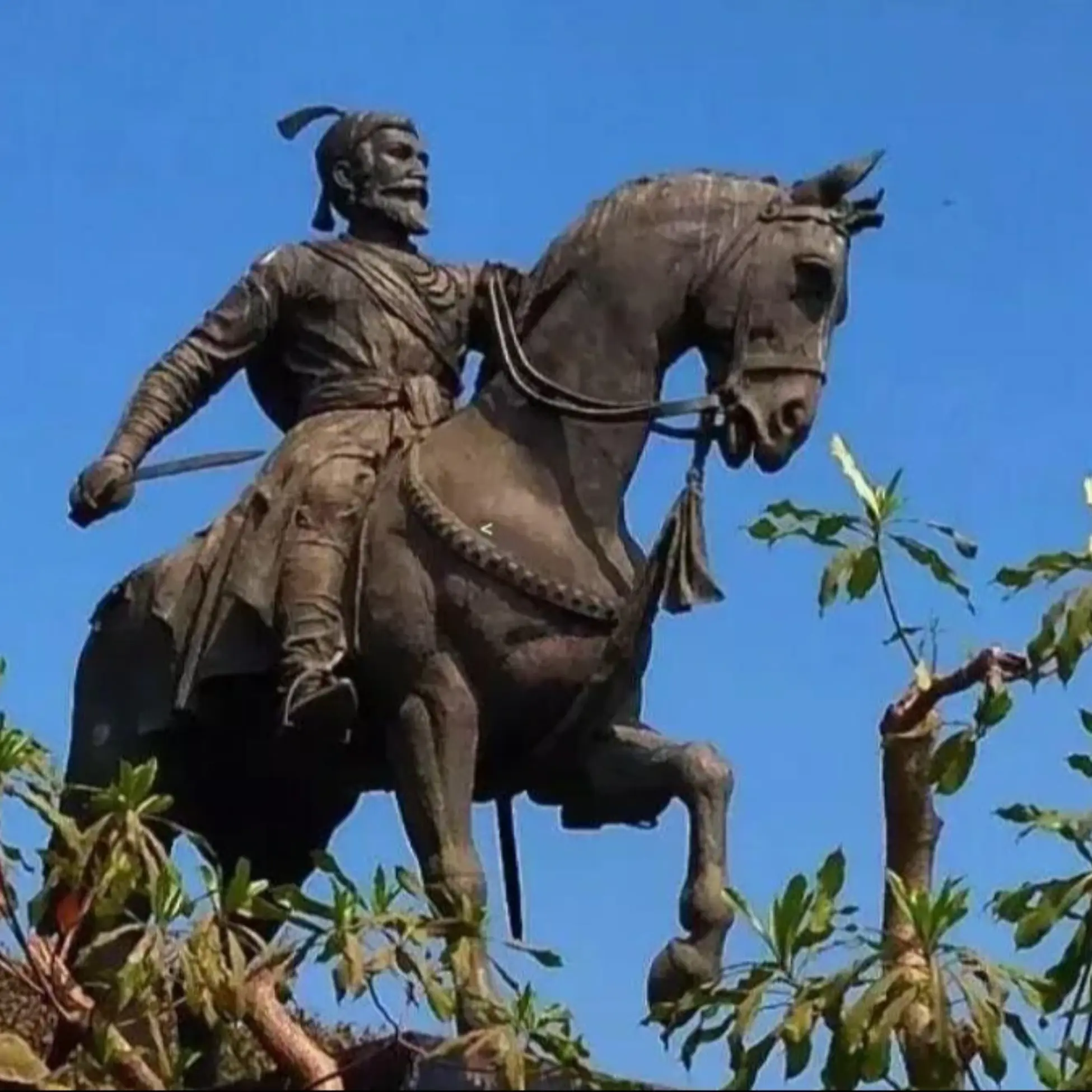
Seventeenth-century Maratha ruler whose fort strategy, administration, military innovation and political vision established an independent kingdom in western India.
Chhatrapati Shivaji Maharaj was born at Shivneri Fort to Shahaji Bhonsle and Jijabai during a period of intense political competition in the Deccan. From a young age, he built a territorial base through forts, local alliances and disciplined military organisation.
His rise depended on mobility, intelligence networks, careful use of terrain and a growing system of administration. Conflicts with the Adilshahi state and the Mughal Empire made him one of the most important political figures in seventeenth-century India.
In 1674 he was formally crowned Chhatrapati at Raigad. By the time of his death in 1680, he had established a kingdom whose institutions, fort network and political memory continued to shape the later growth of Maratha power.
Selected milestones that place the biography in its wider historical setting.
Shivaji was born at Shivneri Fort in the western Deccan.
He began taking control of forts and surrounding territories.
The encounter became one of the best-known episodes in Shivaji’s early rise.
A surprise raid in Pune demonstrated the value of intelligence and mobility.
After restriction at the Mughal court, Shivaji escaped and rebuilt his position in the Deccan.
He was crowned Chhatrapati, giving formal royal expression to the state he had built.
Shivaji died on 3 April 1680, leaving institutions that survived major conflict.
Shivaji’s importance lies not only in battlefield success but in the creation of an independent state with its own revenue systems, military command, forts and maritime ambitions.
The idea of Swarajya later grew beyond its seventeenth-century setting and became one of the most powerful words associated with his political memory.
Swarajya • Fort Strategy • StatecraftA concise selection rather than a complete historical record.
Built an early territorial base around strategic hill forts.
A major turning point in his struggle with Bijapur.
Demonstrated surprise, intelligence and mobility against a stronger opponent.
Returned to the Deccan after a dramatic escape from Mughal restriction.
Crowned Chhatrapati at Raigad.
Recognised the strategic importance of the Konkan coast and maritime power.
Shivaji’s career unfolded among the Mughal Empire, the Deccan sultanates, local elites and shifting alliances. Reducing that world to a simple two-sided conflict misses the political complexity of the period.
His success came from combining military action with administration, diplomacy, revenue collection and local legitimacy.
Shivaji Maharaj remains one of the most influential historical figures in Maharashtra and Indian public memory.
His name continues to be associated with courage, administration, military innovation and the ideal of Swarajya.
Key facts on this page are supported by institutional, archival and reference sources.
Biographical reference on Shivaji’s rise, campaigns and Maratha state.
View source →Government-supported cultural repository for Indian history and heritage.
View source →Government information portal with commemorative material on Chhatrapati Shivaji Maharaj.
View source →Quick answers about the life, movement and historical legacy.
He was born on 19 February 1630 at Shivneri Fort.
He was crowned Chhatrapati at Raigad in 1674.
He is best known for building an independent Maratha state, developing a strategic fort network and using flexible military methods.
In Shivaji’s political legacy, Swarajya is associated with self-rule and an independent state under his authority.
He died at Raigad on 3 April 1680.
Help us improve the archive by suggesting reliable information or another Indian personality worth documenting.