Sardar Vallabhbhai Patel Biography – The Iron Man Who United a Nation

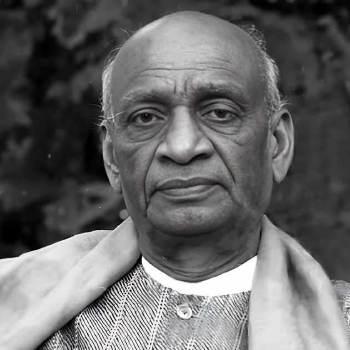
Sardar Patel Portrait

Patel’s leadership ensured India’s political integration and strengthened the foundations of the Republic.

Quick Summary

Born: 31 October 1875
Known As: The Iron Man of India
Role: India’s first Deputy Prime Minister & Home Minister
Key Contribution: Integration of 560+ princely states
Awards: Bharat Ratna (posthumous)

Early Life and Childhood

Sardar Vallabhbhai Patel was born on October 31, 1875, in a small town called Nadiad in the state of Gujarat. His family belonged to the Leva Patidar caste and was self-sufficient, owning land and working on it with great care. But despite having some land, the family was not very rich or highly educated like others. Patel was one of six children born to his parents, Jhaverbhai Patel and Ladba.

Growing up, Patel spent much of his childhood in the countryside, especially in the village of Karamsad, where he worked in the fields and helped his family. His early education was not in big schools but often in small village settings. To learn more, especially the English language which was important at that time, he moved to the nearby village of Petlad to study for his 4th and 5th standards.

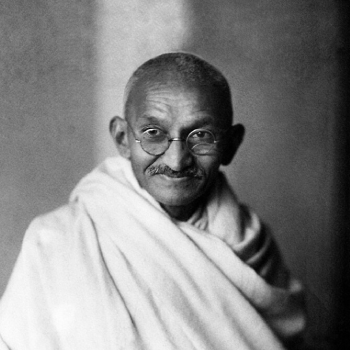
Though his family didn’t have a strong tradition of formal education, Patel worked hard and dreamed big. He later went on to study law and became a successful lawyer and barrister. His time as a law student opened his eyes to the problems faced by ordinary Indians under British rule. While initially doubtful about joining the freedom fight, Patel changed his mind after meeting Mahatma Gandhi. Gandhi’s powerful ideas about non-violence and fighting against British rule inspired Patel to join the struggle for India’s independence.

Journey in Pictures

Sardar Patel Portrait

1875–1890s

Early Life - Born on 31 October 1875 in Nadiad, Gujarat.

Sardar Patel with family

Early 1900s

Sardar Vallabhbhai Patel balanced family responsibilities with his legal career

Sardar Vallabhbhai Patel

1910s–1920s

Leader Emerges - After returning from England as a barrister.

Sardar Vallabhbhai Patel and mahatma gandhi

1920s–1930s

With Mahatma Gandhi - A close associate of Mahatma Gandhi

Sardar Vallabhbhai Patel in public meeting

1930s–1940s

Addressing Public Meetings - Known for his powerful oratory and decisive tone

Statue of unity

2018

Statue of Unity – World’s Tallest Statue - Unveiled in 2018 in Gujarat

Rising Through the Ranks: Career Journey

After finishing his law studies, Sardar Vallabhbhai Patel started his career as a lawyer. He set up his legal practice and became quite successful. He was known for solving cases with skill and fairness, which earned him respect in the courts. But even while practicing law, Patel could not ignore the growing call for India’s freedom.

In 1918, his life changed forever when Mahatma Gandhi trusted him to lead the Kheda Satyagraha, a movement where farmers protested against unfair taxes during a famine. Patel’s leadership here made him famous as a man who could stand up for the people. This earned him the title “Sardar,” meaning leader or chief. Over time, he led other important protests like the Bardoli Satyagraha in 1928, where he helped farmers win their rights.

His political career grew stronger as he joined the Indian National Congress and became a chief organizer in the freedom struggle. Patel was known for his practical approach and strong decision-making skills. When India finally became independent in 1947, Patel brought this same determination to his new role as the first Deputy Prime Minister and Home Minister of the country. These were very important jobs because he had to help build the government and keep the country united.

One of Patel’s biggest challenges was uniting over 560 princely states that were independent before British rule ended. Many of these states could have chosen to remain separate, which might have broken India into many smaller countries. But Patel used clever negotiations, firmness, and sometimes gentle persuasion to bring all these states into the Indian Union. Because of this great achievement, he earned the lifelong nickname “Iron Man of India.”

Building India: Major Achievements and Contributions

Sardar Vallabhbhai Patel’s contributions to India’s history are many, but a few stand out as truly remarkable.

First and foremost was his role in uniting the princely states after independence. Imagine a country with more than 560 small kingdoms, each with its own ruler and different interests. Patel’s job was to convince these rulers to join India so that the new country would be strong and not break apart. With wisdom and courage, Patel made sure all these states became part of India, a task many thought impossible. This helped avoid chaos and made India one of the largest democratic nations in the world.

Secondly, Patel’s leadership in the Kheda and Bardoli Satyagrahas showed his deep commitment to the people, especially farmers and villagers. These movements were not just about freedom from the British but also about justice and fairness for common people. In Bardoli, Patel’s work was so respected that people called him “Sardar,” recognizing him as a true leader.

Third, Patel’s vision extended beyond politics. He imagined enormous infrastructure projects like the Sardar Sarovar Dam on the Narmada River, which aimed to bring water and electricity to many parts of India. Though finished many years after his time, the dam still carries his name and his dream of progress.

Lastly, his dedication to law and order helped build a stable India. As the first Home Minister, Patel established strong police and administrative systems that protected the nation during its early fragile years. Today, the Sardar Vallabhbhai Patel National Police Academy stands as a symbol of his lasting impact on India’s security.

These achievements show us Patel’s qualities: hard work, practical thinking, and above all, love for the country and its people.

A Nation’s Pride: Awards and Recognition

Sardar Vallabhbhai Patel’s life and work were honored in many ways, both during his life and after his death. India’s highest civilian award, the Bharat Ratna, was given to him posthumously in 1991, recognizing his unmatched role in shaping independent India.

Many institutions carry his name, like the Sardar Vallabhbhai Patel University in Gujarat and the Sardar Vallabhbhai Patel Institute of Technology. These places keep his memory alive by educating new generations who learn about his work and leadership.

The most famous tribute to Patel is the Statue of Unity in Gujarat, which is the tallest statue in the world. This huge statue not only honors the Iron Man of India but also reminds people every day about his incredible contribution to India’s unity. In 2019, the Statue of Unity was named one of the “100 Greatest Places in the World” by Time magazine, showing how Patel’s legacy is respected worldwide.

Awards named after Patel, like the Sardar Patel National Unity Award, celebrate those who work for India’s unity and peace, continuing his spirit in today’s world.

Leading the Way: Recent Activities

Even near 75 years after his passing, Sardar Vallabhbhai Patel’s legacy is more alive than ever. The Government of India is celebrating his 150th birth anniversary from 2024 to 2026 with grand events across the country. On his birthday, October 31st, National Unity Day is observed with great pride, where people from every corner of India remember his message of peace and unity.

Leaders like the Prime Minister regularly pay respects at the Statue of Unity and speak about Patel’s vision for a strong, united India. Indian communities abroad also organize events to honor him, showing how his story crosses borders and inspires Indians everywhere.

Institutions named after Patel continue their work in education, law enforcement, agriculture, and technology. The growth of these centers is a living tribute to the values Patel stood for: knowledge, discipline, and growth for all Indians.

Vision for the Future: Philosophy and Legacy

Sardar Vallabhbhai Patel believed that India’s strength comes from its unity. He worked tirelessly not just to free India from British rule but also to make sure that after independence, India would remain a single, strong nation where people live peacefully.

His leadership style was practical and firm. He planned carefully, stayed calm in difficult times, and always put the nation’s interest first. Patel also believed in empowering people through law and order, respecting their rights, and encouraging women’s participation in society.

To the youth of India, Patel’s life teaches the importance of unity, hard work, and dedication to one’s duties. He showed that with determination and the spirit of teamwork, even the biggest challenges can be overcome.

His legacy remains a beacon of hope and strength for India, encouraging every citizen to contribute towards building a better and stronger nation.

Conclusion

Sardar Vallabhbhai Patel’s journey from a small village boy to the Iron Man of India is a tale full of courage, dedication, and unwavering love for the nation. He showed us that no matter where we come from, with hard work and a strong heart, we can achieve great things. His role in uniting India and building a strong government makes him a true India Ki Shaan— a pride of our country.

Today, as we see his towering statue and celebrate his memory, let us remember Patel’s message: Unity is strength. Let us all pledge to keep India united, strong, and prosperous, just as Sardar Vallabhbhai Patel dreamed. His life is a shining example, inspiring every Indian to work hard for the nation’s progress and harmony.

FAQ's

Due to his firmness, leadership, and role in unifying India.

Integration of princely states into the Indian Union.

Yes, he played a key role alongside Gandhi.

Bharat Ratna in 1991.

A 182-meter statue built in his honor, the tallest in the world.