1917
Champaran
One of Gandhi’s first major campaigns after returning to India.
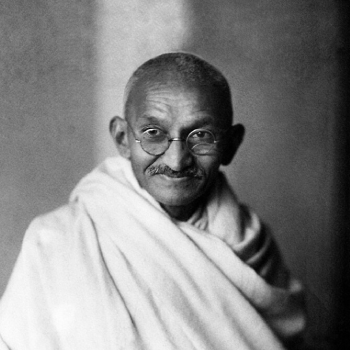
Nationalist leader whose politics of satyagraha, nonviolence and civil disobedience transformed India’s freedom movement and influenced protest movements around the world.
Mohandas Karamchand Gandhi was born in Porbandar in 1869, studied law in London and spent more than two decades in South Africa. There, experiences of racial discrimination and political organising shaped his early experiments with satyagraha.
Returning to India in 1915, Gandhi gradually became the central mass leader of the national movement. Campaigns in Champaran and Kheda were followed by Non-Cooperation, the Salt March, Civil Disobedience and Quit India.
Gandhi linked political independence with social reform, self-reliance, village life, religious coexistence and personal ethics. His methods became globally influential, even as historians continue to debate important aspects of his social and political thought.
Selected milestones that place the biography in its wider historical setting.
Mohandas Gandhi was born on 2 October 1869.
He began legal work and political organising against discriminatory laws.
Gandhi returned from South Africa and re-entered Indian public life.
Local campaigns helped establish his method of mass mobilisation.
Gandhi led a nationwide campaign of non-cooperation with colonial institutions.
The march to Dandi became one of the iconic acts of civil disobedience.
Congress demanded an end to British rule during wartime.
Gandhi was assassinated in New Delhi on 30 January 1948.
Gandhi’s political innovation was not simply the moral language of nonviolence. Satyagraha and civil disobedience gave ordinary people practical ways to participate in politics at enormous scale.
That combination of ethics, discipline and mass mobilisation made nonviolent resistance a central method of the Indian freedom struggle and later influenced movements far beyond India.
Satyagraha • Nonviolence • Mass MobilisationA concise selection rather than a complete historical record.
One of Gandhi’s first major campaigns after returning to India.
Expanded mass participation in nationalist politics.
Made the salt laws a powerful national symbol.
Connected local participation with a nationwide political strategy.
Called for British withdrawal during the Second World War.
Inspired later civil-rights and anti-colonial movements around the world.
Debates around Gandhi include his views on caste, race in his South African years, communal politics, economic modernity and political compromise.
A serious biography needs room for both the extraordinary reach of his movement and the areas where historians and activists continue to challenge his positions.
Gandhi became one of the most internationally recognised figures associated with India’s independence movement.
Satyagraha, civil disobedience and nonviolent mass action remain reference points in political movements and ethical debates worldwide.
Key facts on this page are supported by institutional, archival and reference sources.
Government-supported digital archive of Gandhi’s writings, documents and historical material.
View source →Biographical reference on Gandhi’s life and political career.
View source →Institution preserving documents, photographs and objects connected to Gandhi’s life.
View source →Quick answers about the life, movement and historical legacy.
He was born on 2 October 1869 in Porbandar, Gujarat.
Satyagraha was Gandhi’s method of nonviolent resistance based on truth, moral pressure and disciplined civil action.
The 1930 march to Dandi turned opposition to the British salt monopoly into a nationwide symbol of colonial injustice.
It was the 1942 Congress campaign demanding an end to British rule.
He was assassinated in New Delhi on 30 January 1948.
Help us improve the archive by suggesting reliable information or another Indian personality worth documenting.