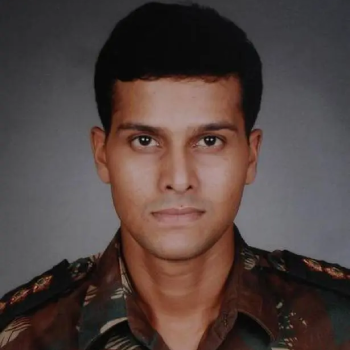
Major Sandeep’s courage during the 26/11 siege embodies the highest ideals of duty and sacrifice.
Quick Summary
Born: 15 March 1977
Role: NSG Commando, Indian Army Major
Known For: Heroic sacrifice in 26/11 Mumbai attacks
Honor: Ashoka Chakra (posthumous)
Early Life of a Future Hero
Born on March 15, 1977, Sandeep Unnikrishnan hailed from a Malayali Nair family rooted in Kozhikode but settled in Bangalore. His upbringing was steeped in a blend of cultural richness and disciplined values. His father worked at the Indian Space Research Organisation (ISRO), a prestigious and demanding career that brought a scientific temper and grounded outlook to their household. This environment fostered in young Sandeep a balance of intellectual curiosity and deep-rooted patriotism.
Sandeep’s schooling at The Frank Anthony Public School in Bangalore was marked by early indications of his desire to serve the nation. He was inspired by interactions with defense personnel who visited his school during events and celebrations, planting the first seeds of his dream to join the armed forces. Though a comfortable environment, his journey toward military service involved overcoming significant challenges. The transition to the National Defence Academy (NDA) introduced him to a world far removed from his familiar surroundings. Confronted with new cultures, languages, and strict regimens, he faced bullying, which tested his resolve. However, true to his nature, these hardships only strengthened his determination. He confronted adversity head-on, displaying resilience and a steadfast commitment to his purpose.
Journey in Pictures
1970s–1980s
Childhood Pic
1980s-1990s
School & NCC Training
2000-2004
Joining the Indian Army & Early Career
Mid-2000s
NSG Commando Training
2007-2008
Serving as NSG Officer
2009
Posthumous Honour: Ashoka Chakra
The Journey: A Life of Discipline and Courage
In 1995, Sandeep Unnikrishnan embarked on the rigorous path of the National Defence Academy. The NDA’s training is famously tough—physically grueling and emotionally demanding. It is designed not just to build soldiers but leaders who can inspire and endure. Sandeep’s time at NDA and later at the Indian Military Academy (IMA) was characterized by hard work, discipline, and a pursuit of excellence.
Commissioned into the Bihar Regiment in 1999, he soon faced the realities of warfare during Operation Vijay in Kargil. The harsh terrains and hostile conditions of Kargil demanded not only physical stamina but mental toughness and tactical acumen. These early battles were formative, molding him into a soldier respected by peers and commanders alike. His steady promotions to Captain in 2003 and then Major in 2005 reflected not just seniority but demonstrated merit and leadership.
Sandeep’s training milestones stand out as well. Twice topping the prestigious Ghatak course—a program that tests infantry commandos’ elite skills—he also trained at the High Altitude Warfare School. These rigorous courses prepared him for diverse environments, be it the icy heights of Siachen, the tricky terrains of Jammu & Kashmir, or the riot-prone zones in Gujarat. His postings across Rajasthan and Hyderabad further added to his broad experience. This varied exposure sharpened his tactical expertise and broadened his adaptability.
The pinnacle of his career was his selection into the National Security Guard (NSG), India’s elite counter-terrorism unit. His specialist training there polished his skills in hostage rescue, urban warfare, and rapid response. Throughout, Major Unnikrishnan displayed a ceaseless zeal for learning and improving, reflecting his personal creed of excellence and duty.
The Impact: Heroism During the 26/11 Mumbai Attacks
On November 26, 2008, when terrorists launched coordinated attacks across Mumbai, Major Sandeep Unnikrishnan’s moment of destiny arrived. Leading an NSG team, he was tasked with securing the Taj Mahal Palace Hotel, a key site where innocent hostages faced mortal danger. The operation, code-named Black Tornado, was one of the most complex and prolonged hostage-rescues ever undertaken in India.
Major Unnikrishnan’s team entered the hotel under fierce gunfire and chaos. Over 15 grueling hours, they moved floor to floor, clearing rooms and helping evacuate about 14 hostages to safety. His leadership shone brightest when he personally rescued two injured commandos stuck under heavy fire, risking life without hesitation. His calm command and strategic focus inspired his team as they fought relentlessly against heavily armed terrorists.
Each step was a battle against fear and uncertainty, yet Major Unnikrishnan moved with resolve. On November 28, after a fierce shootout, he was fatally wounded. His last words to his commanders—“Do not come up, I will handle them”—reflected his ultimate sacrifice. He chose to protect his team over his own safety, embodying true selflessness and leadership. Through his actions, he saved countless lives and became a beacon of courage against terror.
The Glory: Honours and Recognition
In recognition of his extraordinary valor and sacrifice, Major Sandeep Unnikrishnan was posthumously awarded the Ashoka Chakra on January 26, 2009, India’s highest peacetime gallantry award. The award citation spoke of his exemplary leadership, exceptional bravery under fire, and selfless service to the nation.
The Ashoka Chakra is a symbol not just of his heroic acts on 26/11 but of a life dedicated to the highest ideals of duty and patriotism. It places him among a revered group of soldiers who have shown supreme courage in protecting India’s sovereignty and citizenry during peace times, a tribute to his unparalleled fighting spirit.
The Present: Legacy and Remembrance
Major Sandeep Unnikrishnan’s legacy is very much alive today. The ongoing Major Sandeep Unnikrishnan Memorial Inter Forces Swimming & Diving Championship, held annually, honours his memory by promoting physical fitness and camaraderie among defense personnel.
On every 26/11 anniversary, candlelight marches and tributes are held across the nation, ensuring that his story remains etched in the public consciousness. The Major Sandeep Unnikrishnan Memorial Trust works tirelessly to keep his ideals alive and support families of martyrs. The recent popular movie, “Major,” further spreads awareness of his life and sacrifice, inspiring a new generation of Indians to aspire toward courage and service.
His family’s continued pursuit of justice stands as a reminder of the ongoing fight against terrorism and the importance of national vigilance.
The Legacy: A Life Philosophy of Duty and Courage
Major Unnikrishnan’s life and final moments teach us that true leadership demands placing the mission and safety of others above oneself. His words—“Do not come up, I will handle them”—have become emblematic of responsible leadership, courage, and sacrifice.
His core values—duty above self, courage in the face of danger, responsibility to comrades and country, and unity in action—are ideals that every Indian can aspire to. His story reminds young people that greatness is achieved not through comfort but through service and sacrifice. Protecting the nation’s unity and security is the highest form of patriotism.
Major Sandeep Unnikrishnan’s memory is a guiding light for India’s citizens. It urges each one of us to embrace courage, responsibility, and above all, love for our motherland. His legacy is not just of a soldier but of a true Indian hero whose life continues to inspire generations.
Conclusion
Major Sandeep Unnikrishnan’s journey from a disciplined schoolboy in Bangalore to a revered NSG commando is a story of unwavering patriotism and extraordinary bravery. His actions during the 26/11 Mumbai attacks showcased the finest qualities of leadership, valor, and sacrifice. Honoured with the Ashoka Chakra, his legacy continues to live through memorials, stories, and a nation’s gratitude. As India remembers him, his story serves as a timeless reminder that the greatest heroes are those who protect the nation with relentless courage and selfless love.
FAQ's
An NSG commando who led rescue operations in 26/11.
He saved multiple hostages before being martyred.
“Don’t come up, I will handle them!”
The Ashoka Chakra - India’s highest peacetime gallantry award.
In the Bihar Regiment of the Indian Army.