

Bhabha’s genius and leadership established India’s atomic research and shaped its scientific destiny.
Quick Summary
Born: 30 October 1909
Known As: Father of India’s Nuclear Programme
Profession: Nuclear Physicist
Institutions Built: TIFR, BARC
Legacy: Laid India’s scientific and atomic foundation
Early Life and Influences
Born on October 30, 1909, in Mumbai, Homi Bhabha was raised in a family that stood tall in the world of business and culture. His father, Jehangir Bhabha, was a well-known lawyer with progressive views. The Bhabha home was one where intellectual curiosity and cultural appreciation flourished side by side.
Among the earliest influences on young Homi was his aunt, Meherbai Tata, who nurtured his love for western classical music. It was in this fusion of art and science that Bhabha’s distinctive personality took shape. His early years saw remarkable precocity, from building Meccano models—a kind of mechanical toy inspiring his scientific curiosity—to diving into advanced scientific concepts like Einstein’s general relativity by the age of 15.
Bhabha’s artistic talent was evident too. He won an art society prize for a self-portrait during his school years, a reflection of his remarkable ability to blend meticulous observation with creative expression. This unique blend of arts and sciences laid the foundation for his holistic vision of what science should be—rooted in creativity and rigorous thought.
Journey in Pictures
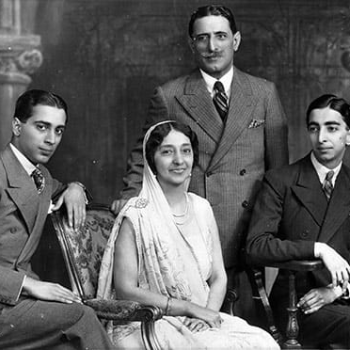
1910s–1920s
Early Life & Family
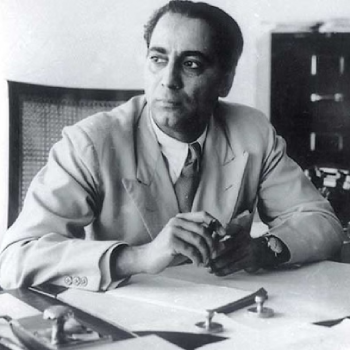
1930s
Begins Training at Gopichand Academy
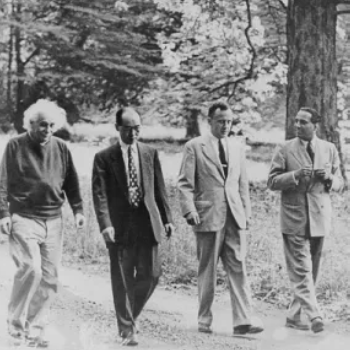
1940s
Collaboration with World Scientists
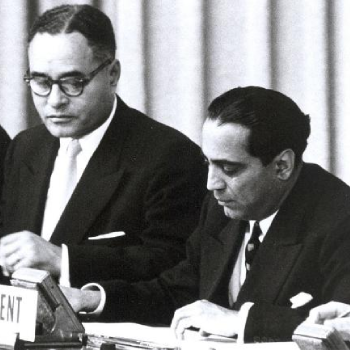
1950s
Architect of India’s Nuclear Vision
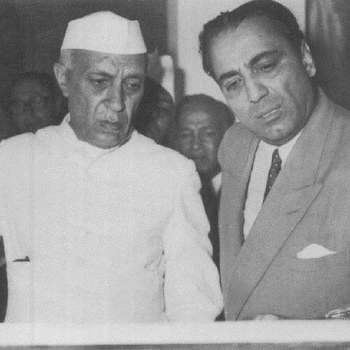
1950s–1960s
Nation Building With Leadership
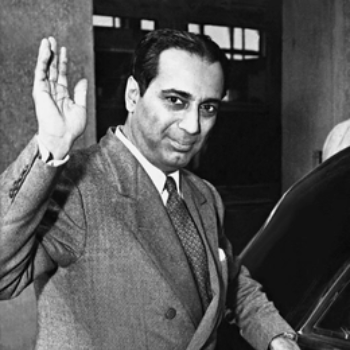
1960s
Final Years & Legacy
Academic Pursuits and Early Career
Homi Bhabha’s academic journey was marked by excellence and critical choices. After excelling in Senior Cambridge examinations, he enrolled at the prestigious Elphinstone College in Mumbai, where science began to take center stage in his life. A pivotal moment came from a lecture by Nobel laureate Arthur Compton, which awakened a deeper passion for physics.
Despite family plans steering him towards mechanical engineering and eventually taking a role in the Tata Steel dynasty, Homi was resolute. Upon his arrival at Cambridge University in England, he initially pursued mechanical engineering per his family’s wishes. But soon, faced with the compelling world of theoretical physics, he wrote to his father with clarity and courage, stating his firm decision to switch fields. In his words, “I know quite clearly what I want out of my life. Life and my emotions are the only things I am conscious of. I love the consciousness of life and I want as much of it as I can get.”
This emotional yet rational letter marked the turning point in Bhabha’s life and career. Immersed in the vibrant scientific environment of Cambridge, he worked closely with eminent physicists like Niels Bohr and Enrico Fermi. His research in cosmic rays and quantum theory earned international attention and laid the groundwork for his global reputation.
But the outbreak of World War II called Bhabha home. In 1939, with deep emotional and intellectual grit, he returned to India not merely as a scientist, but as a nation-builder. He shifted his focus from personal academic endeavors to serve the scientific needs of an emerging India.
Major Achievements and Nation Building
Homi Bhabha’s contributions to Indian science are monumental, shaped by his exceptional capacity to build institutions and inspire generations of scientists. His work is divided into three pivotal areas:
1. Founding the Tata Institute of Fundamental Research (TIFR) (1944-45)
In the challenging colonial context, where scientific research had limited support, Bhabha envisioned and founded the Tata Institute of Fundamental Research. His aim was clear—to create a world-class institution that nurtured scientific talent and fostered a culture of inquiry in India. Despite obstacles, TIFR became a beacon for researching nuclear physics and other fundamental sciences. It trained generations of scientists who would carry forward India’s scientific legacy.
2. Establishing the Atomic Energy Establishment, Trombay (1954), later BARC
Bhabha’s vision reached new heights with the creation of the Atomic Energy Establishment at Trombay, now known as the Bhabha Atomic Research Centre (BARC). This high-tech facility became the hub of India’s nuclear research and development. Under his leadership, Asia’s first research reactor, Apsara, was started. He laid out India’s unique three-stage nuclear program, leveraging the country’s abundant thorium reserves for a sustainable energy future. This blueprint was crucial for India’s long-term energy security and independence.
3. Leadership in Atomic Energy Commission and Department of Atomic Energy
As the first Chairman of the Indian Atomic Energy Commission and Secretary of the Department of Atomic Energy, Bhabha shaped the policies that guided Indian nuclear science for decades. His visionary leadership ensured that India’s nuclear program was built on strong scientific foundations, focused on peaceful applications and self-reliance. He also recognized the importance of space science, fostering early collaborations that tied atomic research to India’s ambitions in space exploration.
These achievements underscore Bhabha’s role not just as a scientist but as a farsighted leader who understood the interplay between science, technology, and national progress.
The Glory
The brilliance of Homi Bhabha’s scientific work was recognized both in India and internationally. His awards include:
- Adams Prize (1942): Awarded for his pioneering research on cosmic ray showers and electron scattering, this prestigious prize marked his entry into the elite global circle of physicists.
- Multiple Nobel Prize Nominations (1951, 1953-56): Although he never received the Nobel Prize, repeated nominations underscored the high regard in which the international scientific community held him.
- Padma Bhushan (1954): One of India’s highest civilian awards, it recognized his distinguished service and foundational contributions to Indian science.
- Fellowship of the Royal Society: This elite fellowship symbolized global scientific recognition of Bhabha’s exceptional work and leadership in physics.
These honors were more than personal achievements; they signified India’s emergence on the global scientific map through Bhabha’s relentless pursuit of excellence.
The Present - Bhabha’s Enduring Legacy in 2024-2025
Though Homi Bhabha passed away tragically in 1966, his legacy remains vibrant and alive. Institutions bearing his name continue to inspire:
- Dr. Homi Bhabha State University, Homi Bhabha National Institute, and Homi Bhabha Centre for Science Education are actively involved in research, education, and outreach. These centers host important academic events, including the 2024-25 Mathematical Olympiads, fostering young talent.
- The Dr. Homi Jahangir Bhabha Scholarship Scheme encourages postgraduate engineering students to pursue excellence, ensuring a future generation of skilled scientists and engineers.
- Recent biographies and academic reviews (2023-24) have rekindled public interest in Bhabha’s life and work, connecting the younger generation to his inspiring story.
- The Bhabha Atomic Research Centre continues cutting-edge research in nuclear science, upholding the high standards Bhabha set. Memorial events and lectures commemorate his contribution to India’s scientific advancement.
This ongoing activity ensures that Bhabha’s vision and values guide new frontiers of Indian science and technology.
The Legacy: Philosophy and Core Values
Homi Bhabha’s philosophy was rooted in deep conviction and practical vision. His core values included:
- Self-Reliance and Indigenous Innovation: Bhabha believed that India’s progress depended on mastering scientific knowledge and technology internally, rather than depending on external forces.
- Visionary Institution Building: He saw institutions as the backbone of sustained scientific growth, creating structures that fostered research and training.
- A Holistic Vision Combining Science and Arts: Crediting science and arts as “two sides of the same coin,” Bhabha championed a balanced growth of intellect and creativity.
- National Unity and Pride Through Science: Bhabha viewed collective scientific achievement as a source of national strength and pride, essential for India’s self-confidence on the world stage.
His profound words from the letter to his father resonate still: _“I know quite clearly what I want out of my life. Life and my emotions are the only things I am conscious of. I love the consciousness of life and I want as much of it as I can get.”_ This call to pursue true passion and contribute meaningfully to nation-building echoes as a guiding light for India’s youth today.
Conclusion
Homi Jehangir Bhabha’s life story is not just a biography of a great scientist; it is a testament to India’s journey toward scientific self-reliance and visionary progress. At a time when the world was grappling with war and scientific challenges, Bhabha chose to return to his homeland and build from scratch an Indian nuclear program capable of securing the nation’s future. His intellectual rigor, leadership, and unyielding resolve established the foundations of modern Indian science.
As India marches forward, the legacy of Homi Bhabha remains a beacon, inspiring generations to pursue knowledge, persevere through struggle, and contribute to the nation’s pride and progress through science and innovation. His life teaches us that true achievement is born from passion, perseverance, and a steadfast vision for the future.
FAQ's
He pioneered India’s nuclear energy and research programs.
TIFR (1945) and BARC (1954).
No - he was also a painter, administrator, and visionary.
In a plane crash (1966).
For laying the scientific and institutional foundations of atomic research.