

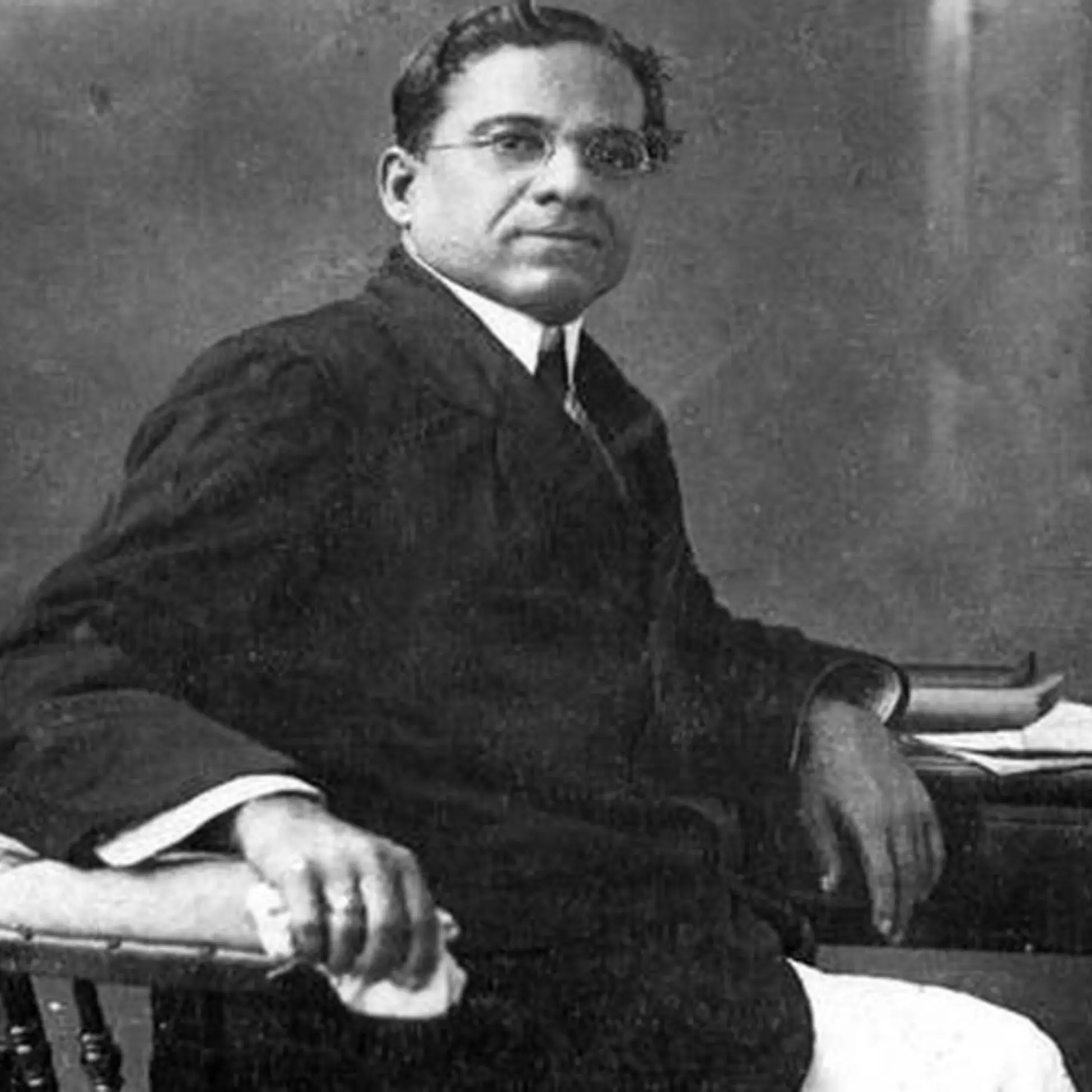
Dadasaheb Phalke introduced motion pictures to India, igniting the country’s cinematic journey.
Quick Summary
Full Name: Dhundiraj Govind Phalke
Born: 30th April 1870, Nashik, Maharashtra, India
Died: 16th February 1944, Nashik, India
Profession: Filmmaker, Producer, Screenwriter
Known As: “Father of Indian Cinema”
Career Span: 1913 – 1937
Key Contributions:
Directed India’s first full-length feature film, Raja Harishchandra (1913).
Laid the foundation of Indian cinema.
Pioneered filmmaking techniques in India.
Honored with the Dadasaheb Phalke Award instituted in his memory.
Quote:
“Cinema is a powerful medium to reach the soul of people.” — Dadasaheb Phalke
Early Life and Education
Dhundiraj Govind Phalke, popularly known as Dadasaheb Phalke, was born on 30 April 1870 in Trimbak, near Nashik, Maharashtra. Coming from a modest Maharashtrian family, Phalke grew up with a natural curiosity for art, culture, and technology. His father was a Sanskrit scholar and a professor, which meant young Phalke was surrounded by India’s rich mythological heritage from childhood.
Phalke showed a deep interest in drawing, painting, and photography at an early age. After completing his schooling, he joined the Sir J.J. School of Art in Bombay, where he studied sculpture, engineering, and photography. Later, he pursued specialized training in lithography, half-tone printing, and architecture — all of which would eventually influence his cinematic journey.
His multidisciplinary skills and artistic outlook shaped him into a visionary who would later combine art, storytelling, and technology to give birth to Indian cinema.
Inspiration to Enter Filmmaking
The turning point in Phalke’s life came in 1910 when he watched the silent film The Life of Christ. The movie left a deep impression on him. He wondered why India, with its vast mythology, stories, and cultural epics, could not produce films of its own.
He envisioned bringing Indian gods, epics, and tales alive on the screen — not just as entertainment but as a way to instill pride and preserve India’s cultural heritage. This idea sparked the beginning of his remarkable journey.
Determined to learn the craft of filmmaking, Phalke traveled to London in 1912, where he trained under Cecil Hepworth, one of the pioneers of British cinema. He learned the nuances of camera operation, film processing, and special effects, skills he would bring back to India to start his cinematic experiments.
The Making of Raja Harishchandra
In 1913, Dadasaheb Phalke created Raja Harishchandra, India’s first full-length feature film.
The making of the film was not easy:
- There were no professional actors available; men had to play female roles due to societal restrictions.
- Financial resources were scarce; Phalke sold his wife’s jewelry to fund the film.
- Equipment and film reels were imported at high costs.
- He had to personally train actors, handle the camera, manage lighting, and oversee editing.
Despite these challenges, the film premiered at Coronation Cinema in Mumbai on 3 May 1913, marking the birth of Indian cinema. The silent film, based on the mythological story of King Harishchandra, received tremendous appreciation from audiences.
Raja Harishchandra proved that films could become a powerful medium of storytelling in India, and Phalke earned the well-deserved title of “Father of Indian Cinema.”
Challenges in Early Indian Cinema
Phalke’s journey was filled with struggles:
- Societal resistance: Acting was not considered a respectable profession; many actors faced ridicule.
- Financial difficulties: Cinema was a new, untested industry with little investment.
- Technical limitations: Everything from film reels to cameras had to be imported.
- Conservative mindset: Many critics questioned why films should be made in India at all.
Yet, Phalke’s determination broke barriers and laid the foundation of a billion-dollar industry.
Later Works and Contribution
After the success of Raja Harishchandra, Phalke continued to make films inspired by Indian mythology, folklore, and epics. Some of his significant works include:
- Mohini Bhasmasur (1913) – the first Indian short film.
- Satyavan Savitri (1914) – a film based on the legendary tale of Savitri saving her husband’s life.
- Lanka Dahan (1917) – based on the Ramayana; immensely popular.
- Shri Krishna Janma (1918) – another mythological hit.
Phalke directed over 95 feature films and 26 short films in his career, pioneering the use of storytelling, special effects, and visual narratives in Indian cinema.
Recognition as Father of Indian Cinema
Phalke’s tireless efforts, creativity, and vision earned him the title of Father of Indian Cinema. His contribution was not merely in making films but in establishing cinema as an art form in India.
He demonstrated that films could be used not just for entertainment but for educating society, preserving culture, and inspiring patriotism.
Personal Life and Struggles
Behind the camera, Phalke’s life was filled with personal sacrifices. His wife, Saraswati Phalke, was his biggest supporter. She not only encouraged him but also actively assisted in his filmmaking journey, from managing costumes to supporting production.
Despite his contributions, Phalke faced financial difficulties in his later years. As commercial filmmakers began dominating the industry, Phalke struggled to keep up with the changing times and lost much of his recognition during his lifetime.
He passed away on 16 February 1944 in Nashik, leaving behind a monumental legacy.
Awards, Honors, and Dadasaheb Phalke Award
To honor his contribution, the Government of India instituted the Dadasaheb Phalke Award in 1969, the highest honor in Indian cinema. This prestigious award is presented annually to individuals who have made an outstanding contribution to Indian films.
Recipients include legendary actors, directors, and musicians such as Satyajit Ray, Lata Mangeshkar, Amitabh Bachchan, and Rajinikanth. The award ensures that Phalke’s name remains immortalized in the history of Indian cinema.
Legacy and Influence on Modern Cinema
Phalke’s vision continues to influence filmmakers even today. The Indian film industry, often called Bollywood, has grown into one of the largest in the world, producing over 2,000 films annually in multiple languages.
Modern filmmakers credit Phalke as the pioneer who proved that India could tell its stories on screen. His emphasis on mythological and cultural themes paved the way for India’s unique cinematic identity.
Remembering Dadasaheb Phalke Today
Today, Dadasaheb Phalke is remembered not just as a filmmaker but as a visionary, dreamer, and cultural reformer. His journey inspires entrepreneurs, artists, and creators to believe in their vision, no matter how impossible it may seem.
Film schools across India study his works as foundational texts. Statues, memorials, and film festivals have been dedicated in his honor. His birthplace and workstations are preserved as cultural landmarks.
Every time a new film lights up Indian cinema halls, it is a tribute to the man who dared to dream in 1913.
Conclusion
The biography of Dadasaheb Phalke is the story of one man’s relentless pursuit of a dream that gave birth to an entire industry. From creating India’s first feature film Raja Harishchandra to establishing cinema as a cultural movement, Phalke’s contributions remain unmatched.
Though he faced struggles and died in relative obscurity, his legacy shines brighter than ever. The Indian film industry, worth billions today, owes its roots to his vision. Through the Dadasaheb Phalke Award, his name continues to inspire generations of filmmakers.
Truly, Dhundiraj Govind Phalke will always be remembered as the Father of Indian Cinema — a pioneer whose passion gave India the magic of movies.
FAQ's
Because he made India’s first full-length film, Raja Harishchandra, in 1913.
India’s highest honor in cinema, named after him.