
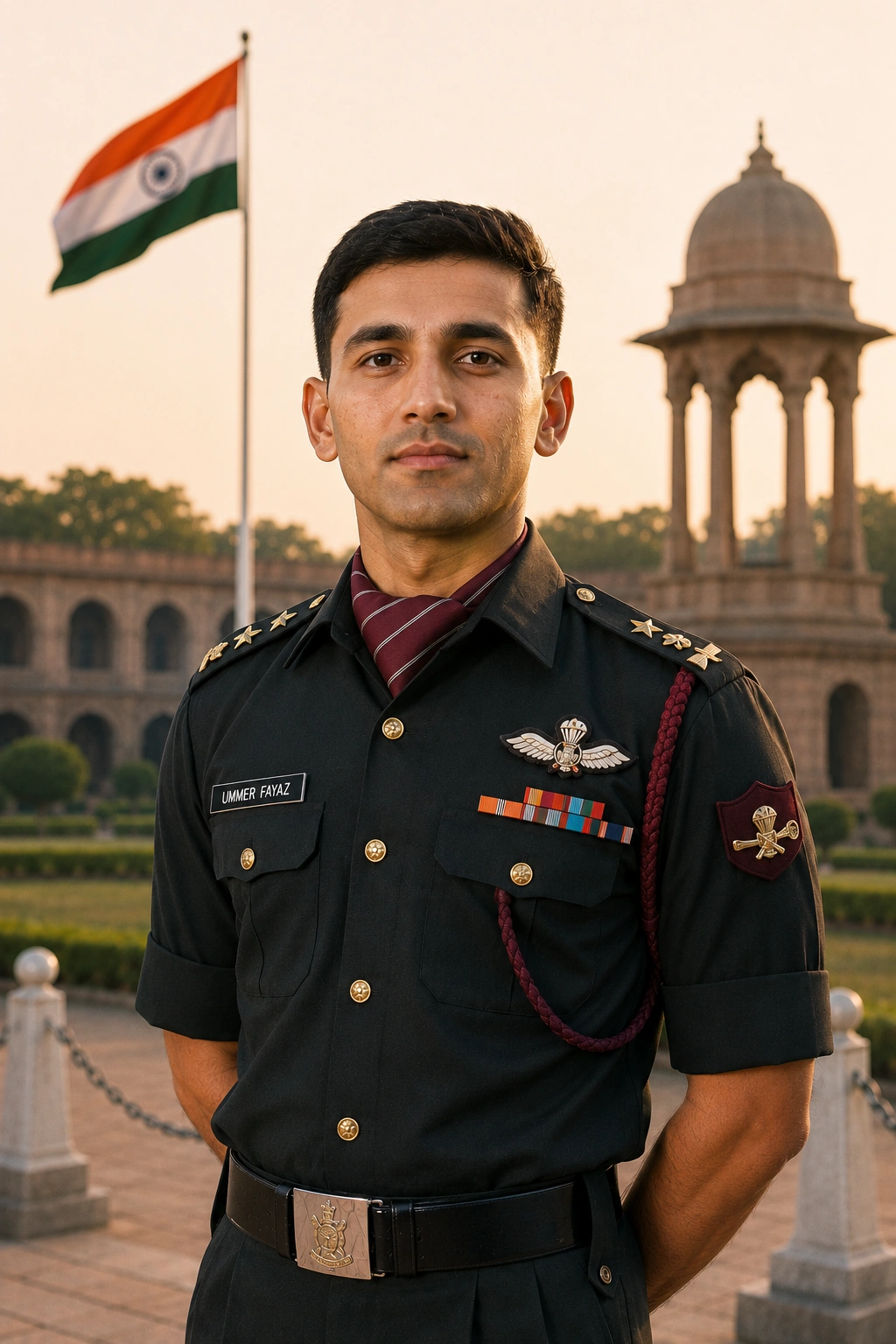
Lt. Ummer Fayaz Biography

In the heart of India, a hero emerged from the shadows of conflict, leaving behind a legacy of bravery and sacrifice that inspires millions. Lt. Ummer Fayaz’s life is a poignant reminder of the courage it takes to stand for one’s country, facing danger with unwavering resolve.

Introduction

Lt. Ummer Fayaz was an Indian Army officer known for his extraordinary bravery and dedication. He is remembered not just as a soldier but as a symbol of heroism and commitment to the nation. His life and untimely death resonated deeply with many, highlighting the sacrifices made by those who protect the country. Ummer Fayaz’s story is a testament to the spirit of the Indian Armed Forces and the valor of its young officers.

Quick Summary

  • Full Name: Lt. Ummer Fayaz
  • Born: 1993, Jammu and Kashmir, India
  • Profession: Indian Army Officer
  • Known As: A brave son of India
  • Career Span: 2016 – 2017
  • Key Contributions:
    • Served in the 2nd Battalion of the Jammu and Kashmir Light Infantry.
    • Participated in various operations aimed at maintaining peace and security in conflict areas.
    • Remembered for his valiant efforts in combat situations.
    • Embodied the spirit of sacrifice and duty towards the nation.
    • Inspired many young Indians to serve in the military.
  • Quote: “I am proud to serve my country.”

Early Life & Background

Ummer Fayaz was born in 1993 in a small town in Jammu and Kashmir. He grew up in a loving family that valued education and patriotism. His father worked as a government employee, and his mother was a homemaker, instilling strong moral values in their children. From an early age, Ummer was exposed to the beauty of his homeland and the challenges it faced due to conflict.

As a child, Ummer was known for his friendly nature and willingness to help others. He was curious and adventurous, often exploring the lush landscapes of Kashmir. His childhood was filled with stories of bravery and valor, which he heard from his elders, particularly those about the army and their role in protecting the nation.

Ummer attended a local school where he excelled in his studies. He was particularly drawn to history and physical education, often participating in sports and outdoor activities. His teachers noticed his leadership qualities early on, as he would often rally his classmates for various school activities. These traits became apparent during his teenage years, as he started to articulate his desire to serve in the military and follow in the footsteps of his heroes.

How It All Started

Ummer’s journey towards becoming an officer in the Indian Army began in high school when he decided to join the National Cadet Corps (NCC). This organization played a crucial role in shaping his character. Here, he learned about discipline, leadership, and the importance of teamwork. The rigorous training sessions were demanding, but Ummer embraced them wholeheartedly. It was during this time that he developed a passion for defense services.

His family and community strongly supported his aspirations. Ummer’s father took him to watch military parades and local Army events. He was inspired by the sight of soldiers in uniform, ready to protect their homeland. These experiences fueled his determination to join the Armed Forces. He often spoke to local army men, listening intently to their stories of valor, learning not just about their heroic deeds but also about the sacrifices they made for the country.

After completing his schooling, Ummer joined a college where he pursued a degree in arts. He continued his involvement with the NCC, where he received numerous accolades for his performance. His mentors in the NCC recognized his potential and encouraged him to apply for the Indian Military Academy (IMA). The journey to IMA was not smooth; Ummer faced many challenges, including rigorous entrance exams and selection processes. Nevertheless, he persevered, driven by his dream of serving the nation.

Upon being accepted into the IMA, Ummer underwent rigorous training, learning the skills necessary for a military career. The days were filled with physical training, tactical exercises, and academic studies. He formed strong bonds with fellow cadets, and together they faced the hardships of training, motivating one another to push through tough times. He was known for his supportive nature, often helping his peers with their challenges.

Despite the demanding schedule, Ummer remained focused and determined. He wanted to make his family and community proud. His dedication didn’t go unnoticed; he received several commendations for his performance during training. As he prepared for his final exams, Ummer felt a mix of excitement and anxiety about what lay ahead.

In 2016, he graduated and was commissioned into the Indian Army, joining the 2nd Battalion of the Jammu and Kashmir Light Infantry. This was a proud moment for him and his family, fulfilling his lifelong dream. However, the real test was yet to come. As he began his service, he faced the realities of conflict in Kashmir, where duty often meant putting one’s life on the line.

Ummer quickly earned a reputation for his leadership and bravery. His early days in the army were filled with challenges as he navigated the complexities of military operations in a sensitive region. He learned to rely on his training while also trusting his instincts, often finding himself in situations that tested not only his skills but also his resolve.

Ummer’s journey from a small town in Kashmir to becoming a soldier was marked by determination, support from loved ones, and an unwavering desire to serve his country. His story is an inspiring example of how dreams can be realized with hard work and dedication, a legacy that continues to inspire young Indians today.

Career Journey

Early Career

Lt. Ummer Fayaz began his military journey like many young men in India, filled with dreams and aspirations. Growing up in the enchanting valleys of Kashmir, he was surrounded by natural beauty but also by the harsh realities of conflict. His early life was punctuated by the tense atmosphere of his homeland, which instilled in him a desire to serve his country.

In 2010, he decided to join the Indian Army. After rigorous training at the Indian Military Academy in Dehradun, he was commissioned as a lieutenant in the 2nd Rajputana Rifles in December 2016. The rigorous training he underwent not only honed his physical abilities but also shaped his mental fortitude. His commitment and discipline were evident from the very beginning. He was not just another recruit; he was a soldier who had a clear sense of purpose and pride in his uniform.

Breakthrough Phase

Ummer’s breakthrough came quickly after his commissioning. As a young officer in a sensitive area like Jammu and Kashmir, he faced challenges that few soldiers encounter early in their careers. His first major operational deployment was during a time of heightened tensions in the region. Here, he had the opportunity to prove his mettle.

During a critical operation in 2017, Lt. Fayaz was part of an anti-terrorism mission. His unit was tasked with neutralizing a group of terrorists hiding in the dense forests of Shopian. The operation was fraught with danger, and the stakes were high. On the day of the operation, Lt. Fayaz displayed exceptional leadership, coordinating his team with precision under extreme pressure. They successfully neutralized the threat, which not only boosted the morale of his soldiers but also earned him commendations from his superiors. This operation marked him as a rising star within the army and showcased his potential as a leader.

Peak Career

As Lt. Fayaz continued to serve with distinction, his reputation as a courageous and skilled officer grew. In May 2017, he was involved in an intense encounter with terrorists in Pulwama. This mission was one of the most intense he had faced, and the atmosphere was electric with tension. The operation was crucial, as it aimed to dismantle a terrorist network that had been a significant threat to the local population.

On May 9, during a patrol, Lt. Fayaz and his team came under heavy fire. Despite the chaos, he maintained his composure, leading his men effectively and ensuring their safety while engaging the enemy. Tragically, this operation turned fatal. Lt. Ummer Fayaz was ambushed and lost his life in a display of unparalleled bravery. His last act was a testament to his dedication to his comrades and his country. The news of his sacrifice sent shockwaves throughout the nation, and he became a symbol of heroism and duty.

Later Career

Although Lt. Ummer Fayaz’s career was cut short, his legacy continued to inspire others in the armed forces. His actions were not just about military success; they represented the spirit of sacrifice that characterizes the Indian Army. The aftermath of his sacrifice saw a surge in recruitment and a renewed sense of pride among soldiers in the region. His story was shared in military circles and beyond, serving as a rallying point for young men and women considering a career in the forces.

His family, too, became a source of strength for the community. They carried forward his legacy, encouraging others to serve and protect their motherland, much like he did. The army honored his memory by posthumously awarding him the Shaurya Chakra, one of the highest peacetime military decorations in India, acknowledging his bravery and sacrifice.

Major Achievements

  • Commissioned into the Indian Army in December 2016.
  • Led a successful anti-terrorism operation in Shopian, Kashmir, in 2017.
  • Posthumously awarded the Shaurya Chakra for bravery and sacrifice.
  • Recognized for exceptional leadership under fire during critical operations.
  • Served as a symbol of courage and commitment within the Indian Armed Forces.

What Makes Them Special

Lt. Ummer Fayaz was not just a soldier; he was a leader with a unique set of traits that distinguished him from his peers. His ability to remain calm in the face of danger was remarkable. He had a strategic mind, capable of making quick decisions that saved lives. His dedication to his men was evident; he always put their safety above his own.

Moreover, he possessed an innate ability to inspire others. His actions motivated fellow soldiers, instilling in them a sense of duty and pride. Lt. Fayaz’s connection to his community also set him apart. He was not only focused on military operations but also understood the importance of winning hearts and minds in the regions affected by conflict.

Challenges & Struggles

Every successful career has its share of challenges, and Lt. Ummer Fayaz was no exception. Serving in a conflict zone like Kashmir meant constant pressure and the weight of expectations. His early days in the army were marked by the struggle to gain trust and respect from his superiors and peers. Many young officers face skepticism, but Ummer used this as motivation to prove himself.

Moreover, the psychological toll of combat was immense. The loss of comrades can be devastating for any soldier. Lt. Fayaz experienced the pain of losing friends in the line of duty, which tested his resolve. Yet, he used these experiences to fuel his determination to succeed and protect others.

His ultimate challenge came on that fateful day in May 2017, when he faced insurmountable odds during the encounter in Pulwama. Despite the grave danger, he fought bravely, showing that even in the face of death, his commitment to his country never wavered. His sacrifice serves as a powerful reminder of the struggles faced by those in the armed forces.

Legacy & Impact

Lt. Ummer Fayaz is remembered for his bravery and dedication to the Indian Army. He served in a challenging environment and displayed exceptional leadership during his tenure. His commitment to duty inspired many young soldiers in Jammu and Kashmir, motivating them to join the armed forces and serve their nation. Fayaz’s sacrifice became a symbol of courage, showing the world the spirit of the Indian soldier. His life and service are honored by his peers, family, and the local community, influencing future generations to prioritize duty and patriotism.

Personal Life

Lt. Ummer Fayaz was born and raised in Kashmir. He came from a close-knit family that valued education and service. Outside of his military life, he enjoyed spending time with friends and family. He was known for his warm personality and love for the beautiful landscapes of his homeland.

Interesting Facts

  • Lt. Ummer Fayaz joined the Indian Army motivated by the desire to protect his homeland.
  • He was commissioned into the 2nd Rajputana Rifles, a distinguished regiment of the Indian Army.
  • Fayaz was known for his strong connection with the local community in Kashmir.
  • His bravery was recognized by his superiors and fellow soldiers alike.
  • Lt. Ummer Fayaz was a role model for many aspiring soldiers in his region.
  • He loved outdoor activities, especially trekking in the mountains of Kashmir.

Frequently Asked Questions

Who is Lt. Ummer Fayaz?

Lt. Ummer Fayaz was an Indian Army officer known for his bravery and dedication in Jammu and Kashmir.

Why is Lt. Ummer Fayaz famous?

He is famous for his courageous service in the Indian Army and his ultimate sacrifice while protecting his homeland.

What are his achievements?

His achievements include exemplary leadership in operations and inspiring many young men to join the military.

What is his background?

He grew up in Kashmir, where he was deeply influenced by the local culture and the need for security in the region.

How did Lt. Ummer Fayaz impact others?

He inspired fellow soldiers and youth in Kashmir, encouraging them to serve the nation with pride.

Conclusion

Lt. Ummer Fayaz’s journey is a testament to the spirit of sacrifice and bravery inherent in the Indian Armed Forces. His life story, marked by dedication, service, and inspiration, continues to motivate many. Even after his untimely passing, his legacy lives on, reminding us all of the importance of courage and commitment to our nation. Lt. Ummer Fayaz will always be remembered as a true hero of India.
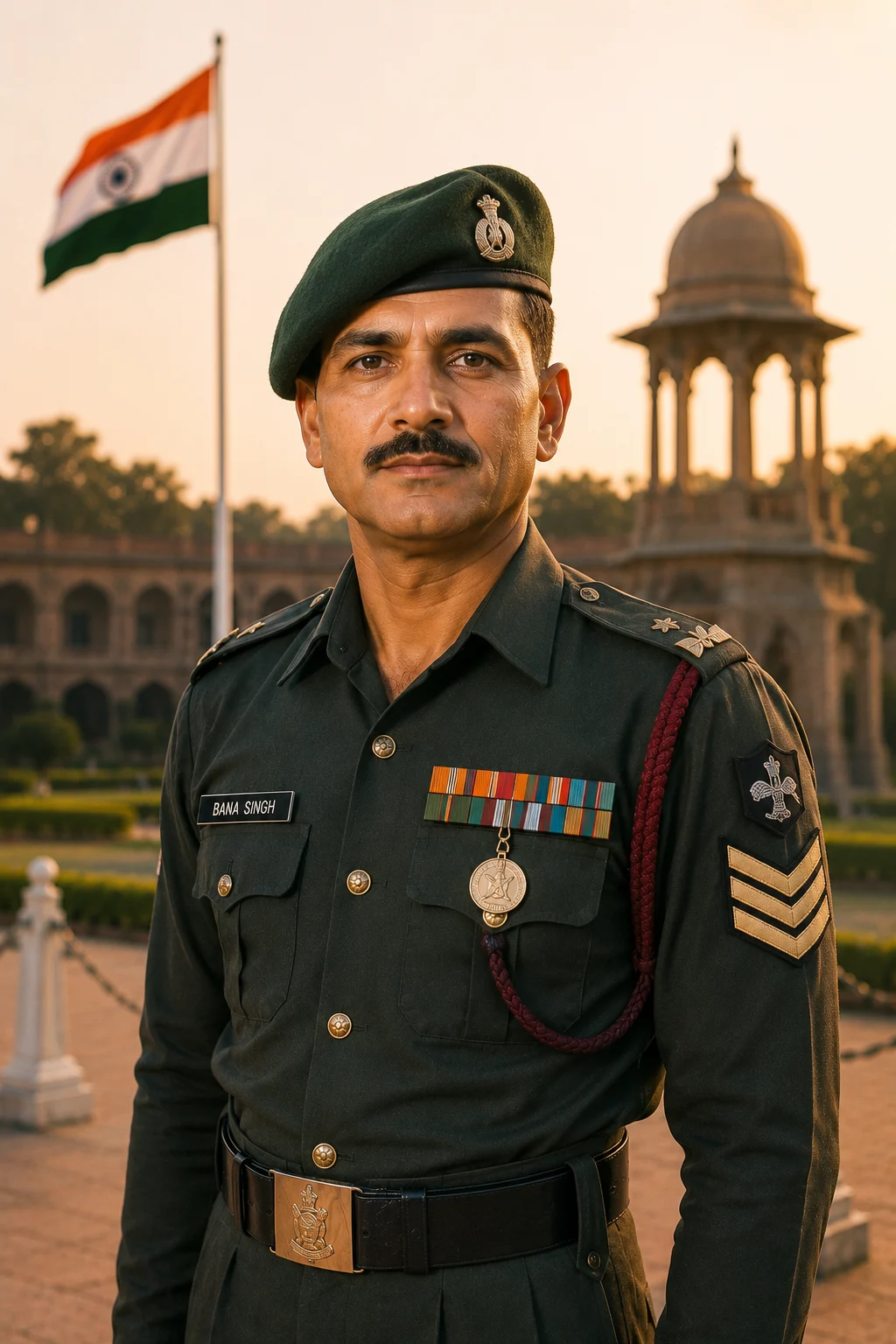
Naib Subedar Bana Singh Biography

In the heart of India’s defense history lies a name that resonates with courage and valor—Naib Subedar Bana Singh. His extraordinary bravery during the Siachen conflict has earned him a place among the nation’s greatest war heroes.

Introduction

Naib Subedar Bana Singh is an iconic figure in the Indian Armed Forces, known for his unparalleled bravery and commitment to duty. He is celebrated for his heroic actions in the Siachen Glacier, where he played a crucial role in reclaiming a strategic position from enemy forces. His legacy inspires countless individuals and stands as a testament to the courage of the Indian soldier.

Quick Summary

  • Full Name: Naib Subedar Bana Singh
  • Born: 6 January 1949, in Jammu and Kashmir, India
  • Profession: Indian Army Soldier
  • Known As: War Hero of the Siachen Conflict
  • Career Span: 1965 – Present
  • Key Contributions:
    • Led a daring operation in the Siachen Glacier in 1987.
    • Reclaimed a crucial post at an altitude of 21,000 feet.
    • Awarded the Param Vir Chakra, India’s highest military honor.
    • Symbol of bravery and resilience for the Indian Army.
    • Served as an inspiration through his speeches and community work.
  • Quote: “It is our duty to protect our homeland and the people of India.”

Early Life & Background

Naib Subedar Bana Singh was born in a small village in Jammu and Kashmir. Growing up in a modest family, he was raised with strong values of bravery and duty. His father, a soldier himself, instilled a sense of pride and responsibility in him from a young age. Bana was a bright child, known for his curiosity and adventurous spirit. He often explored the hills around his village, developing a love for nature and an understanding of the land.

His childhood was filled with stories of valor and sacrifice, often narrated by his father and local elders. These tales inspired him deeply. During his school days, he was actively involved in sports and physical activities, showcasing his determination and team spirit. Bana’s early education was in local schools, where he was not only an above-average student but also a natural leader among his peers. His interest in joining the army began to grow during these formative years, influenced by the tales of soldiers who fought for their country.

How It All Started

Bana Singh’s journey to becoming a hero began when he decided to join the Indian Army at a young age. Inspired by the stories of his father and the sacrifices of soldiers, he felt a calling to serve his nation. After completing his education, he enlisted in the Indian Army, eager to make a difference. His initial training was rigorous, pushing him to his physical and mental limits. He faced many challenges, from tough physical drills to learning the intricacies of military tactics.

During his early years in the army, Bana quickly earned a reputation for his dedication and skill. His trainers recognized his potential and encouraged him to excel further. He underwent various training programs, including mountain warfare, where he learned to navigate the treacherous terrains of the Himalayas. It was during these training sessions that he developed the resilience and courage that would later define his legacy.

Bana faced several early challenges, including grueling exercises that tested his endurance. Many of his peers dropped out, but Bana remained focused, driven by his dream of serving at the front lines. He often recalled the tough training sessions, where he would be up at dawn, practicing in harsh conditions, learning to survive and thrive in adverse weather. His perseverance caught the attention of his commanders, who began to mentor him closely.

In the late 1980s, a significant turning point occurred when India faced increasing tensions in the Siachen region. Bana’s battalion was ordered to participate in operations aimed at securing strategic points in this cold and harsh environment. The challenges were immense—soldiers had to endure extreme weather conditions, high altitudes, and constant threats from the enemy. Bana was ready. He understood the risks involved and was determined to prove himself.

When the operation began, Bana Singh and his battalion were tasked with reclaiming a vital post at an altitude of 21,000 feet. The journey was treacherous, with thin air and freezing temperatures. Many soldiers faced exhaustion, but Bana’s leadership shone through. He encouraged his fellow soldiers, showing them the path forward despite their fears. It was during this operation that his bravery truly emerged—facing enemy fire, he led the charge to take back the post, earning him the Param Vir Chakra for his unmatched courage.

Throughout this mission, Bana demonstrated extraordinary courage and tactical brilliance. His actions not only secured a key position but also inspired his comrades to push through their limits. The entire nation watched in awe as reports of his heroics spread, marking the beginning of his legacy as one of India’s greatest war heroes. His story is not just about valor; it is about the spirit of sacrifice and the unwavering commitment to duty that defines every soldier.

Career Journey

Early Career

Naib Subedar Bana Singh began his journey in the Indian Army when he joined the 8th Jammu and Kashmir Light Infantry in 1976. His early days in the army were marked by rigorous training and a strong desire to serve his country. Bana Singh quickly adapted to the disciplined life of a soldier, excelling in physical fitness and combat training. His dedication did not go unnoticed, and he swiftly gained respect among his peers and superiors. The values of bravery, honor, and commitment to duty were instilled in him from the very beginning.

During these formative years, Bana Singh was involved in various military exercises, where he honed his skills as a soldier. His first major posting was in the northern regions of India, where he faced challenging terrain and weather conditions. This experience prepared him for the harsh realities of combat, teaching him the importance of teamwork and resilience. It was a crucial time for him, as he learned not just to survive but to thrive under pressure, setting the stage for his later achievements in the army.

Breakthrough Phase

As tensions heightened in the Kashmir region in the 1980s, Bana Singh’s skills and determination began to shine. The Siachen Glacier, a strategically significant area, became a focal point of conflict. In 1987, Bana Singh was part of an operation to capture the important position known as ‘Bana Top’, named in his honor after the successful mission. His unit was tasked with reclaiming this high-altitude area from enemy forces entrenched there.

In May 1987, during Operation Rajiv, Bana Singh and his team faced insurmountable odds. They had to ascend a treacherous 21,000 feet in extreme weather conditions. The mission was fraught with danger as they encountered heavy fire from enemy positions. Despite the odds, Bana Singh displayed remarkable courage. He led his men with unwavering resolve, encouraging them to push forward. The team’s determination culminated in a fierce battle that lasted for several days.

Bana Singh’s most pivotal moment came during this operation when he climbed a steep cliff under enemy fire to plant the Indian flag on top of the strategic location. This act not only marked a significant victory for the Indian Army but also showcased his exceptional leadership and bravery. His actions during this operation earned him the admiration of his fellow soldiers and the recognition of military officials. The successful capture of Bana Top became a turning point in his career, marking him as a prominent soldier in the Indian Army.

Peak Career

With his reputation solidified after the successful operation in Siachen, Naib Subedar Bana Singh reached the peak of his career. In 1988, he was awarded the Param Vir Chakra, India’s highest military honor, for his bravery during the Operation Rajiv. This prestigious award was a testament to his courage, leadership, and commitment to duty and honor. Bana Singh’s recognition brought forth immense pride not just to his regiment but also to the entire nation.

Following this honor, Bana Singh devoted himself to mentoring younger soldiers. He understood that leadership was not just about rank but also about inspiring and guiding others. His experiences in Siachen and his exemplary conduct made him a role model for many. He participated in various training programs, teaching soldiers about survival tactics and combat readiness in challenging environments.

Throughout the 1990s, he continued to serve in various capacities, participating in numerous operations across different regions of India, including counter-insurgency operations in Kashmir. His tactical acumen and ability to handle high-pressure situations earned him respect among senior commanders. He played a crucial role in training and preparing troops, ensuring that they were ready for any situations they might face.

Later Career

As Bana Singh progressed through the ranks, he assumed leadership roles that further solidified his impact on the Indian Army. He became a Naib Subedar, a non-commissioned officer, and continued to serve with dedication. In this phase of his career, he focused on enhancing the operational effectiveness of his unit. His experiences in Siachen equipped him with unique insights into mountainous warfare, and he shared these insights with his fellow soldiers.

Bana Singh retired from active service after a distinguished career, leaving behind a legacy of valor and integrity. Even after retiring, he remained connected to the armed forces, participating in veteran activities and sharing his experiences with the younger generation. He became an ambassador of bravery, advocating for the rights of soldiers and their families. His story has inspired countless individuals, reinforcing the values of courage and selflessness in service to the nation.

Today, Naib Subedar Bana Singh is not only remembered for his heroic actions but also for his role in shaping the future of the Indian Army through mentorship and training. His career journey is a testament to what it means to serve with honor, and his legacy continues to inspire new generations of soldiers.

Major Achievements

  • Awarded the Param Vir Chakra in 1988 for exceptional bravery in Operation Rajiv.
  • Successfully led a crucial operation to capture Bana Top in the Siachen Glacier.
  • Recognized for exemplary leadership and mentoring of junior soldiers in the Indian Army.
  • Participated in various counter-insurgency operations in Kashmir, enhancing the operational effectiveness of his unit.
  • Influenced military training programs focusing on high-altitude warfare and survival tactics.

What Makes Them Special

Naib Subedar Bana Singh is special for many reasons. His extraordinary courage in face of danger stands out. He demonstrated a remarkable ability to lead from the front, showing his soldiers how to overcome fear and adversity. Bana Singh was not only physically strong but also mentally resilient. He possessed the ability to remain calm under pressure, a crucial trait for any military leader.

His strategic thinking during operations allowed him to devise effective plans even in the most challenging circumstances. Bana Singh’s dedication to his men was evident; he always prioritized their safety and well-being. His leadership style was inclusive, as he encouraged his team to voice their opinions and contribute to the mission’s success. This approach fostered trust and camaraderie among his soldiers.

Challenges & Struggles

Throughout his career, Naib Subedar Bana Singh faced numerous challenges. The most prominent was the extreme weather conditions and the physical toll of high-altitude warfare during the Siachen conflict. The harsh, icy environment tested the limits of every soldier. Despite the difficult conditions, he remained focused on the mission, demonstrating resilience and determination.

Additionally, there were times of self-doubt and pressure, particularly during crucial operations where the stakes were high. Thousands of lives depended on the decisions made in such moments. However, Bana Singh learned to channel these pressures into motivation, pushing himself and his team to excel. His ability to face these struggles head-on transformed him into a symbol of hope and inspiration for his fellow soldiers.

Even after retirement, he encountered the challenge of adjusting to civilian life. Transitioning from a soldier’s life to that of a civilian can be tough, but Bana Singh embraced this phase with the same vigor. He engaged with veteran communities, advocating for the welfare of retired soldiers and their families. His journey through struggles and triumphs continues to resonate, motivating many to strive for excellence in their own lives.

Legacy & Impact

Naib Subedar Bana Singh is remembered as a symbol of courage and dedication in the Indian Army. His heroic actions during the Siachen conflict not only earned him the prestigious Ashoka Chakra but also inspired countless soldiers and citizens across India. His bravery set a high standard for military service and is a source of motivation for future generations. Bana Singh’s legacy continues to influence military training and strategy, especially in challenging terrains, as he demonstrated the importance of resilience, teamwork, and unwavering commitment to duty.

Personal Life

Bana Singh was born in a small village in Jammu and Kashmir. He is a family man, married with children. Outside of his military career, he enjoys spending time with his family and often shares stories of his experiences in the army. He remains deeply connected to his roots and the community he hails from.

Interesting Facts

  • Bana Singh was awarded the Ashoka Chakra in 1987 for his bravery in combat.
  • His battalion, the 8th Jammu and Kashmir Light Infantry, is known for its exceptional performances in various conflicts.
  • Bana Singh played a pivotal role in the Siachen conflict, one of the toughest battles fought at extreme altitudes.
  • He is often referred to as a hero among his peers and in the Indian Army.
  • After retiring, he has been involved in various initiatives to support soldiers and their families.
  • Bana Singh is not just a military figure but a respected community leader in his native region.
  • His life story is frequently shared in motivational talks and military training programs.

Frequently Asked Questions

Who is Naib Subedar Bana Singh?

Naib Subedar Bana Singh is a decorated Indian Army soldier known for his bravery during the Siachen conflict.

Why is Naib Subedar Bana Singh famous?

He is famous for receiving the Ashoka Chakra, India’s highest peacetime military award, for his extraordinary courage.

What are their achievements?

His most notable achievement is leading a successful operation in Siachen, showcasing exceptional bravery and leadership.

What is their background?

Bana Singh hails from Jammu and Kashmir and joined the Indian Army in 1976, where he quickly made a name for himself.

What influence did he have on future generations?

His legacy inspires soldiers to uphold the values of honor and duty, impacting military training and ethos.

What does he do after retirement?

Post-retirement, he engages in community service and supports initiatives for soldiers and their families.

Is there a memorial or tribute to him?

Yes, his contributions are honored in various military functions and commemorations related to the Siachen conflict.

Conclusion

Naib Subedar Bana Singh’s journey is a remarkable tale of bravery, commitment, and service to the nation. His contributions to the Indian Army, particularly during the Siachen conflict, remain etched in the annals of history. His legacy not only inspires his fellow soldiers but also resonates with citizens across India. As a symbol of resilience and courage, Bana Singh’s life story encourages us all to stand firm in our duties and strive for excellence in every endeavor.

Squadron Leader Rakesh Sharma Biography

With courage and determination, Squadron Leader Rakesh Sharma soared through the skies, becoming a symbol of heroism and patriotism for India. His journey into space not only marked a monumental achievement for the nation but also inspired countless hearts to dream big.

Introduction

Squadron Leader Rakesh Sharma is an iconic figure in Indian history, celebrated for his remarkable journey as the first Indian citizen to travel in space. He is a former pilot of the Indian Air Force and a national hero, known for his extraordinary contributions to India’s space exploration efforts. His mission aboard the Soviet spacecraft Soyuz T-11 in 1984 not only showcased India’s capabilities in aerospace but also ignited a sense of pride among Indians. Rakesh Sharma’s legacy continues to inspire future generations to pursue their dreams, no matter how distant they may seem.

Quick Summary

  • Full Name: Rakesh Sharma
  • Born: January 13, 1949, in Patiala, Punjab, India
  • Profession: Pilot, Squadron Leader, Astronaut
  • Known As: First Indian to travel in space
  • Career Span: 1970 – Present
  • Key Contributions:
    • First Indian citizen to go into space
    • Completed a mission aboard Soyuz T-11
    • Contributed to India’s growing presence in space exploration
    • Inspired generations with his bravery and achievements
    • Served in the Indian Air Force with distinction
    • Participated in various missions that enhanced Indian defense
  • “Saare Jahan Se Achha” resonates as a reminder of his love for his country.

Early Life & Background

Rakesh Sharma was born into a middle-class family in Patiala, Punjab. His father, an officer in the Indian Army, played a significant role in shaping his values of discipline and duty. Growing up in an environment that valued service to the nation, Rakesh was deeply influenced by his father’s dedication. He was a curious child with a passion for adventure, often spending hours gazing at the skies, dreaming of becoming a pilot one day.

As a child, Rakesh excelled in his studies, showing a keen interest in science and technology. He attended St. George’s Grammar School, where his teachers recognized his potential. The school encouraged students to pursue their interests, and Rakesh found himself drawn to aviation. During his early years, he built model airplanes, spending weekends at local airshows, which further ignited his fascination with flying.

His family instilled in him a sense of responsibility and patriotism. Rakesh’s mother, a homemaker, supported his dreams, nurturing his ambitions with love and encouragement. The blend of his father’s discipline and his mother’s support laid a solid foundation for his future endeavors. These early experiences molded Rakesh into a determined individual, ready to take on life’s challenges.

How It All Started

Rakesh Sharma’s journey toward becoming a pilot began when he joined the National Defence Academy (NDA) in Khadakwasla, Pune, after completing his schooling. This was a pivotal moment for him, as it marked the beginning of his formal training in the Indian Air Force (IAF). The rigorous training at NDA was both physically and mentally demanding, but Rakesh faced every challenge with unwavering determination. He learned to fly various aircraft and honed his skills under the watchful eyes of experienced instructors.

As he progressed, Rakesh developed a deep passion for flying. He often recalled the day he first flew solo, feeling an indescribable thrill as he soared through the skies. His dreams of becoming a skilled pilot were not just aspirations; they were becoming his reality. Rakesh graduated from the NDA and was commissioned as a pilot in the IAF in 1970, where he quickly made a name for himself as a talented fighter pilot.

His early career was filled with challenges. Rakesh had to prove himself in every mission, often facing difficult situations that tested his skills and resolve. His dedication paid off when he became a part of the IAF’s fighter squadron, flying missions that showcased his bravery and expertise. Rakesh was not only focused on individual achievements; he always sought to uplift those around him, mentoring younger pilots and sharing his knowledge.

In the late 1970s, Rakesh’s life took an unexpected turn when the Indian government announced a space program in collaboration with the Soviet Union. The idea of sending an Indian to space fascinated Rakesh, and he knew he had to be a part of it. He began preparing himself for the selection process, which involved rigorous physical and mental training. This was no small feat, as only a few pilots would be chosen for such a prestigious mission.

Encouraged by his colleagues and mentors, Rakesh pushed beyond his limits. He underwent intense training that included survival exercises, technical training, and simulations of life in space. The process was grueling, but Rakesh never wavered. His passion for flying and serving his country fueled his perseverance. After months of preparation, he was finally selected as one of the candidates for the Indo-Soviet space mission.

The moment he received the news about being chosen for the space flight was surreal. Rakesh felt a mixture of excitement and nervousness. He was about to embark on a journey that would not only change his life but also make history for India. He trained extensively alongside his fellow astronauts, learning everything he needed to know about the spacecraft and the mission. Their camaraderie grew, and they became a close-knit team, ready to take on the unknown together.

With each passing day, the mission drew closer. Rakesh faced numerous challenges, from the intense training regimens to the mental pressure of being a representative for his country. Despite the obstacles, he remained focused and determined. His family, friends, and mentors provided unwavering support, encouraging him to stay the course. Finally, the day arrived when Rakesh Sharma would step into the history books, ready to make India proud as he flew into space.

Career Journey

Early Career

Rakesh Sharma’s journey began when he joined the Indian Air Force (IAF) as a pilot in 1970. Inspired by the thrill of flying, he quickly established himself as a talented aviator. His initial training took place at the Air Force Academy in Hyderabad, where he honed his skills on various aircraft. After completing his training, he was assigned to fly the MiG-21, a fighter aircraft notorious for its speed and agility.

During this period, Sharma flew numerous missions, demonstrating remarkable aptitude in aerial combat and flight operations. His dedication and skill caught the attention of his superiors, and he was soon deployed in various capacities across the country. By the late 1970s, he had amassed significant flying hours, which laid a solid foundation for his future endeavors.

Breakthrough Phase

In the early 1980s, Rakesh Sharma’s career took a significant turn when he was selected for a special training program with the Soviet space program. This opportunity came at a time when India was keen on expanding its presence in space exploration. Sharma’s selection was not just based on his flying skills but also on his ability to endure physical and psychological challenges. He underwent rigorous training in Russia, learning about the spacecraft, weightlessness, and various scientific experiments he would conduct in space.

The breakthrough moment arrived on April 2, 1984, when Sharma, aboard the Soyuz T-11 spacecraft, launched into space along with two Soviet cosmonauts. The mission was historic, as it marked the first time an Indian citizen traveled beyond the Earth’s atmosphere. As the rocket lifted off from the Baikonur Cosmodrome in Kazakhstan, Sharma felt a mix of excitement and responsibility. He knew he was representing not just himself, but an entire nation.

During his time in space, Sharma conducted scientific experiments and engaged in a live telephonic interaction with then Prime Minister Indira Gandhi. When asked how India looked from space, Sharma famously replied, “Saare Jahan Se Achha” (better than the entire world). This statement resonated with millions back home and symbolized the pride of India. His mission lasted 7 days, during which he orbited the Earth 140 times, gathering valuable data for future scientific endeavors.

Peak Career

After returning to Earth, Rakesh Sharma became a national hero. The success of the Soyuz T-11 mission propelled him into the limelight. He was awarded the Ashoka Chakra, India’s highest peacetime military decoration, for his remarkable achievement. Sharma’s return was celebrated with grand ceremonies, and he became a role model for aspiring astronauts and young pilots across the nation.

In the years that followed, Sharma continued to serve in the Indian Air Force, taking on leadership roles. He was involved in training new pilots, sharing his experiences and insights from his time in space. His contributions went beyond flying; he was instrumental in promoting the importance of aerospace education in India. During this peak phase, he also represented India in various international forums, advocating for further advancements in space technology.

In 1985, he became a part of the Indian Space Research Organisation (ISRO) advisory panel, contributing his insights into future missions. Sharma’s experience and knowledge were invaluable as India began to plan more ambitious space projects.

Later Career

As the years passed, Rakesh Sharma’s focus shifted towards leadership and mentorship. He retired from the Indian Air Force in 1984 with the rank of Squadron Leader. However, he remained actively involved in aerospace and aviation sectors. Sharma pursued various roles in the private sector, working with organizations that aligned with his passion for aviation and space technology.

In the late 1990s, Sharma’s career took a new direction when he became involved in the corporate world. His leadership qualities were recognized as he took on executive roles in several companies, helping to foster innovation and development in technology. Despite stepping away from active flying, Sharma continued to inspire the next generation through public speaking and educational initiatives.

In recent years, Rakesh Sharma has been invited to participate in debates and discussions on space exploration and national security. His insights and experiences have made him a respected figure in both military and civilian circles. Even as he transitioned from a pilot to a corporate leader, his legacy as India’s first man in space has remained intact, inspiring many to pursue their dreams beyond the stars.

Major Achievements

  • Pioneered space exploration for India as the first Indian citizen to travel in space aboard Soyuz T-11.
  • Awarded the Ashoka Chakra, India’s highest peacetime military decoration, for his contributions.
  • Served as a member of the Indian Space Research Organisation’s advisory panel post-retirement.
  • Played a critical role in promoting aerospace education in India.
  • Recognized internationally for his unique achievements in space and aviation.

What Makes Them Special

Rakesh Sharma stands out for his remarkable skills as a pilot and astronaut. His flying style was characterized by precision and calmness, even in high-pressure situations. His ability to remain composed in the face of adversity makes him a natural leader. Sharma’s dedication to his work and his country is evident in every aspect of his career.

His personality traits, such as humility and approachability, make him relatable to many. Despite his fame, he remains grounded, often attributing his success to the teamwork and support he received throughout his career. Sharma’s leadership qualities shone through in his roles as a mentor and trainer, where he inspired young pilots to aspire to great heights.

Challenges & Struggles

Rakesh Sharma’s career was not without its challenges. The rigorous training for his space mission was physically and mentally demanding. There were moments of self-doubt during the intense preparation, but he persevered, demonstrating resilience and determination. Additionally, transitioning from an active pilot to a corporate leader involved adapting to new environments and challenges, which required significant adjustment and learning.

Post-retirement, Sharma faced the challenge of finding his place in a rapidly changing technological landscape. Despite setbacks, he embraced new opportunities in aerospace and technology, continuously learning and evolving. His ability to overcome obstacles and adapt to new situations has been a key part of his inspiring journey.

Legacy & Impact

Squadron Leader Rakesh Sharma is remembered as a national hero in India. He is celebrated for his role as the first Indian to travel to space, which he accomplished aboard the Soyuz T-11 in 1984. His journey into space not only showcased India’s capabilities in space exploration but also inspired countless young Indians to pursue careers in science and technology.

Rakesh Sharma’s achievements have also left a lasting impact on the Indian Air Force. His dedication and courage encourage future generations of pilots and space enthusiasts to reach for the stars. Schools and institutions honor his legacy, and his story is often shared in educational programs to motivate youth. Sharma’s influence extends beyond the military, inspiring scientists, engineers, and dreamers across the country.

Personal Life

Rakesh Sharma was born on January 13, 1949, in Patiala, Punjab. He is married to Madhu Sharma, and together they have a son and a daughter. Sharma has always maintained a low profile regarding his personal life, focusing instead on his career and contributions to India. He enjoys sharing his experiences and often participates in events to inspire young minds.

Interesting Facts

  • Rakesh Sharma was a pilot in the Indian Air Force for over 10 years before his space mission.
  • He conducted scientific experiments during his eight days in space.
  • Sharma received the Ashoka Chakra, India’s highest peacetime military decoration.
  • He spent time training in Russia for the space mission, enhancing his skills as an astronaut.
  • His famous quote during a call with Prime Minister Indira Gandhi was, “Saare Jahan Se Achha,” expressing pride in his country.
  • Sharma’s space journey heightened India’s interest in developing its own space program.
  • He has become a motivational speaker, sharing his extraordinary experiences with students and aspiring pilots.

Frequently Asked Questions

Who is Rakesh Sharma?

Rakesh Sharma is a former Indian Air Force pilot and the first Indian to travel to space.

Why is Rakesh Sharma famous?

He is famous for his space mission aboard the Soyuz T-11 in 1984, showcasing India’s potential in space exploration.

What are his achievements?

Sharma’s notable achievements include becoming an astronaut, receiving the Ashoka Chakra, and conducting scientific research in space.

What is his background?

Rakesh Sharma began his career as a pilot in the Indian Air Force and was selected for a space program due to his exceptional skills.

What inspired him to join the Air Force?

His love for flying and adventure inspired him to join the Indian Air Force as a pilot.

Has he spoken about his experiences in space?

Yes, he frequently shares his experiences and lessons learned during his time in space, inspiring others.

Conclusion

Squadron Leader Rakesh Sharma’s life journey is a testament to dedication, courage, and the pursuit of excellence. From his early days as a pilot to becoming an astronaut, he has left an indelible mark on India’s history. His achievements not only elevate the spirit of the nation but also serve as an inspiration for future generations. Through his story, millions are encouraged to dream big, explore new frontiers, and contribute to the progress of humanity.

Captain Manoj Kumar Pandey Biography

In the heat of battle, one soldier stood tall, displaying unmatched courage and determination. Captain Manoj Kumar Pandey’s legacy inspires countless hearts, reminding us of the price of freedom and the spirit of sacrifice.

Introduction

Captain Manoj Kumar Pandey was a brave officer of the Indian Army, known for his extraordinary valor during the Kargil War in 1999. He played a pivotal role in various operations that showcased his leadership and bravery, ultimately sacrificing his life for the nation. His legacy continues to inspire generations, symbolizing the true essence of patriotism and heroism.

Quick Summary

  • Full Name: Captain Manoj Kumar Pandey
  • Born: June 25, 1975, in Sitapur, Uttar Pradesh, India
  • Profession: Indian Army Officer
  • Known As: A symbol of courage and sacrifice
  • Career Span: 1997 – 1999
  • Key Contributions:
    • Led a successful operation to capture the Tololing Hill during the Kargil War.
    • Displayed exceptional leadership in the face of adversity.
    • Received the Param Vir Chakra, India’s highest military honor, posthumously.
    • Inspiration for future generations of soldiers.
    • Embodied the spirit of sacrifice in defense of the nation.
  • Quote: “The nation is supreme; we, the soldiers, fight for our country.”

Early Life & Background

Captain Manoj Kumar Pandey was born into a loving family in Sitapur, Uttar Pradesh. His father, a military officer, instilled a sense of discipline and duty in him from a young age. Manoj grew up in an environment that valued hard work and service to the nation. His mother was a supportive figure, encouraging him to pursue his dreams. Their love and guidance shaped him into a determined and ambitious young boy.

From a young age, Manoj was known for his adventurous spirit. He loved playing sports and was always eager to take on new challenges. Whether it was climbing trees or participating in school competitions, he showed an early interest in physical activities. His childhood was filled with friends, laughter, and a strong desire to excel.

Manoj attended a local school where he excelled in academics and sports alike. His teachers often noted his leadership qualities as he led his classmates in various activities. It was during these formative years that he developed a keen interest in the armed forces. The stories of bravery and sacrifice shared by his father influenced his dreams of becoming a soldier, igniting a passion that would shape his future.

How It All Started

Manoj’s journey towards the military began during his teenage years. Inspired by tales of valor from his father and the likes of celebrated military heroes, he knew he wanted to serve his country. After completing his schooling, he decided to pursue a career in the Indian Army. He enrolled in the National Defence Academy, where he undertook rigorous training that tested his physical and mental limits.

At the NDA, Manoj faced a new level of challenges. The training was intense, and the competition was fierce. Yet, he thrived under pressure. Manoj devoted countless hours to practicing his skills, whether it was in combat drills or physical fitness. He remained focused, often rising early in the morning to fit in extra training sessions. His dedication did not go unnoticed, as he quickly gained the respect of his peers and instructors.

His determination paid off when he was commissioned as a lieutenant in the Indian Army. He joined the 1st Battalion, the Kumaon Regiment, where he continued to hone his skills. However, the journey was not without its struggles. Manoj faced moments of self-doubt and tough days when he questioned his abilities. But the thought of serving his country kept him going. His passion for the military grew stronger as he learned more about the responsibilities of a soldier.

One significant influence during this phase of his life was his instructor, who recognized Manoj’s potential and often guided him through challenging training exercises. This mentor became a steady source of support, pushing him to strive for excellence in all that he did. Under this mentorship, Manoj learned essential leadership qualities and the importance of teamwork. These lessons would later become crucial during his service in the Kargil War.

The Kargil War began in 1999, and Manoj found himself facing the most significant challenge of his life. He was deployed to the treacherous terrain of Kargil, where he would lead his troops in daring operations against enemy positions. The conditions were harsh, with steep mountains and unpredictable weather. Manoj’s early training and experiences prepared him for this moment, as he used his knowledge and skills to devise strategies for his battalion.

In one of the most notable operations, he led his men in an assault to capture Tololing Hill. The mission was fraught with danger, but Manoj’s courage shone through. He fought fiercely, demonstrating exceptional bravery even in the face of adversity. The challenges were immense, but his resolve inspired his fellow soldiers to push forward. Despite the obstacles, he remained steadfast, earning recognition for his leadership.

The turning point came when Manoj was wounded during one of the operations. Even then, he refused to be evacuated, insisting on leading his troops until the objective was achieved. This selfless act of bravery ultimately cost him his life, but it solidified his legacy as a true hero. Captain Manoj Kumar Pandey became a symbol of courage, reminding us all of the sacrifices made by those in uniform.

Career Journey

Early Career

Captain Manoj Kumar Pandey’s journey in the Indian Army began when he joined the National Defence Academy (NDA) in 1992. His dedication and discipline stood out during his training, and he quickly became known for his leadership skills. After completing his education at NDA, he was commissioned into the 1st Battalion, the Garhwal Rifles, on December 13, 1997. This battalion, known for its rich history and valor, laid the foundation for Manoj’s military career.

In the early days of his service, Captain Pandey underwent rigorous training and participated in various exercises designed to prepare soldiers for combat situations. His training included mountain warfare, which would later be crucial during the Kargil War. His instructors noted his physical fitness and mental resilience, qualities that would define his character as a soldier.

Breakthrough Phase

The breakthrough moment in Captain Pandey’s career came as tensions escalated between India and Pakistan, leading up to the Kargil War in 1999. The conflict erupted when Pakistani forces infiltrated strategic positions on the Indian side of the Line of Control (LoC) in the Kargil district of Jammu and Kashmir. Captain Pandey was soon deployed in this challenging environment, where the harsh weather and difficult terrain posed significant obstacles.

During the early operations, he quickly earned a reputation as a leader who would never compromise on his mission. His leadership and tactical planning came to the forefront during the operation to capture Point 4875, a crucial position held by enemy forces. His unit faced tough resistance, but Captain Pandey’s relentless spirit inspired his men to press on despite the challenges they faced.

Peak Career

The peak of Captain Manoj Kumar Pandey’s career unfolded amidst fierce fighting during the Kargil War. On July 2, 1999, he led an assault on the enemy position at Point 4875. The situation was dire; enemy fire was intense, and morale among his troops began to wane. However, Captain Pandey’s indefatigable spirit shone through. He urged his men to press forward, leading by example as he charged toward the enemy bunker.

As he neared the enemy, he faced heavy gunfire. With each step, he displayed extraordinary bravery. He was determined to reach the enemy stronghold, not just for victory but to ensure the safety of his fellow soldiers. In a moment of tremendous courage, he climbed on top of the enemy bunker and engaged in close-quarter combat, ultimately eliminating several enemy soldiers. His actions inspired his troops, who rallied behind him and successfully captured the position.

This decisive victory at Point 4875 was a turning point in the Kargil War, but it came at a great cost. Captain Pandey was gravely wounded during the assault, yet he continued to direct his soldiers even in his last moments, embodying the spirit of sacrifice. On July 3, 1999, he succumbed to his injuries, leaving behind a legacy of valor and heroism that would forever resonate in the annals of Indian military history.

Later Career

Though his life was tragically cut short, Captain Manoj Kumar Pandey’s influence extended far beyond the battlefield. Posthumously, he was awarded the Param Vir Chakra (PVC), India’s highest wartime military honor, for his gallantry during the Kargil War. His brave leadership became a beacon of inspiration for future generations of soldiers. Many in the Indian Armed Forces cite Captain Pandey as a role model, someone who epitomized courage, leadership, and patriotism.

The impact of his sacrifice is felt not just within the ranks of the military but also across civilian society, where he is remembered as a national hero. His story continues to be shared in military academies and educational institutions, instilling the values of bravery and commitment in young minds. Schools, roads, and institutions have been named after him, ensuring that his legacy lives on and inspires future generations to serve their country with honor.

Major Achievements

  • Awarded the Param Vir Chakra posthumously for extraordinary bravery during the Kargil War.
  • Led the successful assault on Point 4875, a significant victory in the Kargil conflict.
  • Remembered as a symbol of courage and sacrifice in the Indian Armed Forces.
  • His life and legacy are taught in military academies and schools across India.
  • Several memorials, roads, and institutions named in his honor, celebrating his contributions.

What Makes Them Special

Captain Manoj Kumar Pandey’s special qualities stem from his unmatched bravery and leadership. His skills as a tactician were evident during critical operations, where he displayed alacrity in making swift decisions under pressure. He inspired his troops not through mere orders but by leading them into battle, showing them the way forward.

His personality traits included resilience, fearlessness, and an unwavering commitment to his men. Captain Pandey had a unique ability to maintain morale even in the direst of circumstances. He believed in the strength of his unit and always worked towards building camaraderie among his soldiers, understanding that unity was key to overcoming challenges in combat.

Challenges & Struggles

Throughout his career, Captain Pandey faced many challenges. The Kargil War was one of the toughest conflicts in Indian military history, filled with unpredictable elements and high stakes. Each mission carried the weight of responsibility, where failure meant losing lives. The harsh terrain of Kargil, combined with extreme weather conditions, tested the limits of every soldier’s endurance.

Despite the external pressures, Captain Pandey remained focused and determined. His ability to navigate challenges was evident when leading his troops through difficult missions. The loss of friends and comrades in battle weighed heavily on him, yet he channeled this grief into motivation, pushing himself and his unit to perform even better in subsequent operations. His story is one not just of bravery in battle, but also of resilience in the face of adversity, making his sacrifice all the more poignant.

Legacy & Impact

Captain Manoj Kumar Pandey is remembered as a true hero in India. His bravery during the Kargil War inspired many, especially young soldiers. He played a key role in reclaiming Indian territory and displayed unmatched courage that earned him the Param Vir Chakra, India’s highest military honor.

Captain Pandey’s actions have a lasting impact on the Indian Army. He is a symbol of valor and sacrifice. His story encourages future generations to serve their country with pride. Many young recruits look up to him as a role model, embodying the spirit of dedication and determination.

Moreover, schools and organizations honor his memory, ensuring that his legacy lives on. His courage continues to motivate not only soldiers but also civilians, reminding everyone of the importance of patriotism and resilience.

Personal Life

Captain Manoj Kumar Pandey was born in a close-knit family in Rudraprayag, Uttarakhand. He had a passion for adventure and sports from a young age. He was also known for his loving nature and commitment to family. Sadly, he lost his life in the Kargil conflict, leaving a legacy that his family cherishes to this day.

Interesting Facts

  • Captain Pandey was a bright student and excelled in sports during school.
  • He was known for his leadership skills even during his training at the NDA.
  • His battalion, the Garhwal Rifles, has a rich history of valor and has produced many war heroes.
  • He was posthumously awarded the Param Vir Chakra for his bravery.
  • The movie ‘LOC Kargil’ features his life and contributions during the Kargil War.
  • He is commemorated with various memorials and institutions named after him.

Frequently Asked Questions

Who is Captain Manoj Kumar Pandey?

Captain Manoj Kumar Pandey was an Indian Army officer known for his extraordinary bravery during the Kargil War.

Why is Captain Manoj Kumar Pandey famous?

He is famous for his heroic actions in the Kargil War, where he displayed exceptional courage and leadership.

What are his achievements?

He was awarded the Param Vir Chakra for his valor and is remembered for his significant role in reclaiming Indian territory.

What is his background?

Captain Pandey was born in Rudraprayag, Uttarakhand, and joined the Indian Army after completing training at the National Defence Academy.

How did he die?

He sacrificed his life during a fierce battle in the Kargil War while leading his troops to reclaim strategic positions.

What impact did he have on the Indian Army?

His bravery and dedication serve as an inspiration for future generations of soldiers, promoting values of courage and patriotism.

Conclusion

Captain Manoj Kumar Pandey’s life is a testament to courage and sacrifice. His journey from a dedicated soldier to a national hero inspires many. Through his bravery in the Kargil War, he carved his name in history. His legacy not only honors his life but also motivates future generations to serve their country with pride. Captain Pandey serves as a reminder that true heroism lies in selflessness and commitment to the nation.

Field Marshal Sam Manekshaw Biography

In a land where bravery and sacrifice often intertwine, Field Marshal Sam Manekshaw stands as a beacon of courage. His leadership not only shaped the Indian Army but also inspired a generation to believe in the power of resilience and determination.

Introduction

Field Marshal Sam Manekshaw was one of India’s most revered military leaders. Known for his strategic brilliance and charismatic personality, he played a crucial role in shaping modern India’s military history. His contributions during the 1971 Indo-Pakistani War are particularly celebrated, marking a significant milestone in India’s fight for independence and sovereignty. Manekshaw’s legacy goes beyond just military achievements; he is remembered as a leader who valued the lives of his soldiers and believed in the principles of honor and integrity.

Quick Summary

  • Full Name: Sam Hormusji Framji Jamshedji Manekshaw
  • Born: April 3, 1914, in Amritsar, Punjab, India
  • Profession: Indian Army Officer
  • Known As: ‘Sam Bahadur’
  • Career Span: 1934 – 1973
  • Key Contributions:
    • Leadership in the 1971 Indo-Pakistani War, leading to the creation of Bangladesh.
    • First Indian Army Chief to be promoted to the rank of Field Marshal.
    • Instrumental in modernizing the Indian Army.
    • Influential figure in military strategy and operations.
    • Strong advocate for soldiers’ welfare.
    • Played a key role during the Sino-Indian War in 1962.
    • Promoted a strong sense of camaraderie and spirit within the forces.
  • Quote: “It is the soldier, not the reporter, who has given us the freedom of the press.”

Early Life & Background

Sam Manekshaw was born into a Parsi family in Amritsar, Punjab. His father, Hormusji Manekshaw, was a keen supporter of education, which greatly influenced Sam’s upbringing. Growing up in a well-educated household, Sam was nurtured in an environment that valued knowledge and integrity. His mother, a homemaker, instilled in him the importance of compassion and understanding for others.

As a child, Sam was known for his lively and adventurous spirit. He was often found exploring the lush fields and streets of Amritsar, displaying a sense of curiosity and fearlessness. This adventurous nature would later translate into his military career. He attended St. George’s Grammar School and later moved to the prestigious Sherwood College in Nainital. It was during these formative years that he began to show signs of leadership, often organizing sports events and engaging in debates.

Sam’s early education was marked by a strong interest in history and military tactics. He was particularly inspired by stories of great warriors and leaders from Indian history, which ignited a spark in him to pursue a career in the armed forces. The values of bravery and honor he learned in his youth would later define his approach to leadership in the army.

How It All Started

The journey of Sam Manekshaw into the military began when he decided to join the Indian Military Academy (IMA) in Dehradun. This decision was influenced by his early fascination with the army and the desire to serve his country. Sam faced numerous challenges during his time at the academy, including rigorous training and demanding physical exercises. However, he embraced these challenges with determination, often pushing himself to his limits.

His leadership qualities became evident at IMA, where he quickly gained respect from both peers and instructors. He was not just a brilliant student but also someone who inspired others with his confidence and strategic thinking. After completing his training, he commissioned into the British Indian Army in 1934, a pivotal moment that marked the start of his military career.

During World War II, Sam served in various capacities, which exposed him to the realities of warfare. He was part of the British forces in Burma, where he faced the harsh conditions of battle. It was here that he learned the importance of quick decision-making and adaptability in the face of adversity. These experiences shaped him into a resilient leader, and he often recalled these lessons in later operations.

His early career was not without struggles. Manekshaw faced discrimination and challenges within the ranks due to his Parsi background and the political climate of the time. However, he did not let these obstacles deter him. Instead, he used them as motivation to prove his capability and dedication to the army. His persistence paid off when he received recognition for his leadership during the war, which laid the groundwork for his future promotions.

As he advanced in his career, Sam was fortunate to have mentors who recognized his potential. These leaders guided him through various military operations, allowing him to learn and grow. Their support was invaluable and helped him navigate the complexities of military hierarchy and strategy.

Sam Manekshaw’s big break came during the Indo-Pakistani War of 1971. His strategic planning and bold leadership played a crucial role in the Indian victory, ultimately leading to the birth of Bangladesh. This moment not only cemented his status as a national hero but also highlighted his ability to unite and motivate his troops under pressure.

Reflecting on his journey, Manekshaw often emphasized the importance of learning from experiences and never backing down from challenges. His story is one of resilience, courage, and an unwavering commitment to his country. This remarkable path laid the foundation for his eventual recognition as one of India’s greatest military leaders, forever etching his name in the annals of history.

Career Journey

Early Career

Field Marshal Sam Manekshaw began his military career in 1934 when he joined the British Indian Army as a Second Lieutenant. This was a time when India was under British rule, and the military served as a reflection of the country’s complex political landscape. Manekshaw trained at the prestigious Royal Military Academy Sandhurst in the UK, where he developed a strong foundation in military strategy and leadership. His early experiences were marked by the Second World War, where he served in the 4th Battalion of the 12th Frontier Force Regiment. By 1944, during World War II, Manekshaw was involved in fierce battles in the Burma campaign against the Japanese forces.

In 1945, he was promoted to the rank of Major and played a pivotal role in the operations against the Japanese in Burma. His early days in the army were filled with challenges, as he learned the art of warfare and the importance of leadership in high-pressure situations. The lessons learned during these formative years shaped his future as a military strategist. Despite the chaos of war, Manekshaw distinguished himself, earning a reputation for his calm demeanor and tactical acumen.

Breakthrough Phase

After India gained independence in 1947, Manekshaw continued to rise through the ranks of the Indian Army. He was appointed as the Chief of Staff of the Eastern Command in 1962, a significant position that came during a turbulent period for India. The Sino-Indian War had just taken place, and Manekshaw faced the immediate challenge of reorganizing the army to adapt to new threats. His ability to analyze the situation and implement necessary changes marked the beginning of his journey toward becoming a key military leader in India.

In 1965, during the Indo-Pakistani War, Manekshaw’s strategic thinking came to the forefront. As the General Officer Commanding of the Western Command, he played a crucial role in planning operations. The war was intense, and the Indian Army faced many challenges. Manekshaw’s calm and decisive leadership during this period was instrumental in bringing about a successful outcome for India. His ability to unite the forces and execute effective strategies in the field earned him accolades and respect from his peers and the government.

Peak Career

The year 1971 marked the peak of Manekshaw’s military career. The Indo-Pakistani War of 1971 was not just a military conflict; it was a battle for liberation for the people of East Pakistan, who were fighting for their rights. As the Chief of Army Staff, Manekshaw was at the helm of operations during one of the most significant military campaigns in Indian history. His meticulous planning and foresight were evident in the way he assessed the situation. He recognized the need for a swift and decisive action to support the Mukti Bahini, the Bangladeshi freedom fighters.

On December 3, 1971, Pakistan launched an aerial attack on India, which led to India formally entering the war. Manekshaw’s decisive response was immediate. He launched Operation Citadel, a strategic plan that involved a multi-pronged offensive into East Pakistan. The campaign was characterized by rapid troop movements and well-coordinated attacks that caught the Pakistani forces off guard. Within just 13 days, Indian forces achieved a remarkable victory, leading to the creation of Bangladesh. This war not only showcased Manekshaw’s military prowess but also solidified his position as a national hero. His famous quote, “The operation has been a success,” after the victory became a symbol of pride for the nation.

Later Career

After the triumph of 1971, Manekshaw was promoted to the rank of Field Marshal in 1973, one of the highest honors in the Indian military. His leadership style evolved to focus on mentoring young officers and instilling a sense of duty and honor in the ranks. He served as a key advisor to the Indian government on various defense matters, ensuring that the lessons learned from the war were not forgotten. However, his later career was not without challenges. The political landscape was shifting, and Manekshaw often found himself at odds with political leaders over military issues.

His retirement in 1973 marked the end of an illustrious military career, but he continued to be involved in discussions regarding national defense and military strategy. Even after retirement, Manekshaw’s legacy lived on as he inspired generations of military leaders. His life became a testament to the values of courage, leadership, and commitment, lasting long after he hung up his uniform.

Major Achievements

  • Promoted to Field Marshal in 1973, one of the highest ranks in the Indian Army.
  • Successfully led Indian forces in the Indo-Pakistani War of 1971, resulting in the liberation of Bangladesh.
  • Played a key role in the Indo-Pakistani War of 1965, demonstrating strategic leadership.
  • Participated in the Second World War, gaining valuable combat experience.
  • Recognized for his exceptional leadership and tactical skills throughout his military career.
  • Received numerous awards, including the Padma Vibhushan and the Param Vishisht Seva Medal.

What Makes Them Special

Field Marshal Sam Manekshaw was not just a brilliant strategist; he was also a charismatic leader who inspired those around him. His ability to communicate effectively with his troops created a sense of unity and purpose. He believed in leading from the front and often visited the frontline to boost morale. His keen analytical mind allowed him to assess situations quickly and make crucial decisions under pressure.

Manekshaw had a unique style of leadership that combined decisiveness with empathy. He understood the human aspect of warfare, taking care of his soldiers and valuing their lives. His famous wit and humor endeared him to his troops and helped lighten the burdens of war. Manekshaw’s personality traits of resilience, courage, and strategic brilliance set him apart as a military leader. His legacy continues to inspire not only military personnel but also civilians across India.

Challenges & Struggles

Throughout his career, Manekshaw faced numerous challenges and criticisms. His role in the 1962 Sino-Indian War was scrutinized, and he faced challenges in restructuring the army post-war. Many doubted the military’s preparedness at the time, but he took these criticisms in stride. He learned from the mistakes made during the war and used them to strengthen the army’s capabilities for future conflicts.

During the 1971 conflict, Manekshaw faced immense pressure from political leaders who were eager for immediate results. However, he remained steadfast in his strategy, refusing to rush into combat without proper planning. His ability to balance military strategy with political pressures is a testament to his leadership. Even in retirement, he remained vocal about the need for strong military policies, occasionally facing resistance for his straightforward opinions. Manekshaw’s resilience in overcoming challenges shaped not only his career but also the future of the Indian military.

Legacy & Impact

Field Marshal Sam Manekshaw is remembered as one of India’s greatest military leaders. His strategic prowess during the Indo-Pakistani War of 1971 not only led to a decisive victory but also played a crucial role in the creation of Bangladesh. Manekshaw’s leadership and vision transformed the Indian Army into a formidable force, setting new standards for military operations. His ability to inspire troops and maintain morale under pressure has influenced generations of military professionals. Manekshaw’s legacy continues to shape military strategies and leadership styles in India and beyond, inspiring leaders like General Bipin Rawat and many defense personnel.

Personal Life

Sam Manekshaw was born into a Parsi family in Amritsar, India. He married Sila Manekshaw, who was a constant source of support throughout his career. They had a close-knit family and shared a love for nature and literature. Beyond the military, Manekshaw enjoyed storytelling and was known for his wit and charm.

Interesting Facts

  • Manekshaw was affectionately known as ‘Sam Bahadur’ which means ‘Brave Sam’ in Hindi.
  • He was a keen horse rider and enjoyed outdoor activities throughout his life.
  • Field Marshal Manekshaw was diagnosed with tuberculosis during his early military career but overcame it to rise through the ranks.
  • He was the first Indian Army officer to be promoted to the rank of Field Marshal.
  • Manekshaw’s famous saying, “If you can’t take a joke, you can’t take command,” reflects his humorous approach to leadership.
  • He played a crucial role in the Kargil War strategy discussions, even after his retirement.
  • Manekshaw has been featured in various books and documentaries celebrating his military contributions and life.

Frequently Asked Questions

Who is Field Marshal Sam Manekshaw?

Field Marshal Sam Manekshaw was a distinguished Indian Army officer and a key figure in India’s military history.

Why is Field Marshal Sam Manekshaw famous?

He is famous for his leadership during the Indo-Pakistani War of 1971, which led to the formation of Bangladesh.

What are his achievements?

His achievements include transforming the Indian Army and winning the 1971 war with strategic brilliance.

What is his background?

Manekshaw began his career in the British Indian Army and rose through the ranks due to his exceptional skills and courage.

How did he influence future generations?

His leadership style and strategic insights have influenced many military leaders in India and around the world.

What was his role in World War II?

During World War II, he served in the Burma Campaign and earned recognition for his bravery and tactical skills.

When did Field Marshal Manekshaw pass away?

He passed away on June 27, 2008, but his legacy continues to inspire.

Conclusion

Field Marshal Sam Manekshaw’s life story is one of resilience, bravery, and remarkable leadership. His contributions to the Indian Army and the nation during a crucial period in history are unparalleled. Through his strategic genius and unwavering commitment, he has left an indelible mark on India’s defense forces. His legacy serves as an inspiration to current and future military leaders, reminding them of the importance of courage, integrity, and the ability to unite people in pursuit of a common goal.

Major Somnath Sharma Biography

In a land where courage meets sacrifice, Major Somnath Sharma stands tall as a beacon of bravery, whose legacy continues to inspire countless souls in India. His heroism during the battle of Jammu and Kashmir is a story etched in the annals of history.

Introduction

Major Somnath Sharma was a distinguished officer of the Indian Army, renowned for his valor and sacrifice during the Indo-Pakistani War of 1947. He is celebrated as one of India’s greatest war heroes, whose unwavering commitment to duty and supreme courage on the battlefield made him a symbol of patriotism. His legacy is not only remembered in military circles but also deeply embedded in the hearts of ordinary Indians who cherish the spirit of sacrifice and bravery.

Quick Summary

  • Full Name: Major Somnath Sharma
  • Born: January 31, 1923, in Dhamtari, Chhattisgarh, India
  • Profession: Indian Army Officer
  • Known As: War Hero
  • Career Span: 1942 – 1947
  • Key Contributions:
    • Bravery in the Battle of Badgam
    • First recipient of the Ashoka Chakra, India’s highest peacetime military decoration
    • Led his troops with exceptional leadership under fire
    • Participated in the Indo-Pakistani War of 1947
    • Inspired a generation of soldiers with his commitment to duty
    • Remembered as a symbol of sacrifice and valor
  • Quote: “The nation is greater than the individual.”

Early Life & Background

Major Somnath Sharma was born into a family with a rich military tradition. His father, a prominent army officer, instilled the values of discipline and courage in young Somnath from an early age. Growing up in Dhamtari, he was surrounded by stories of bravery and valor, which ignited a passion for serving his country. Somnath was an adventurous and spirited child, often found playing outdoors and exploring nature.

His early education took place in various schools, where he was known for his keen intelligence and leadership qualities. He showed great interest in sports, often participating in various competitions that nurtured his competitive spirit. It was during these formative years that he first discovered his desire to join the army, inspired by his father’s tales of bravery and honor.

As a teenager, he moved to Delhi for his higher education, where he attended St. Stephen’s College. Here, he continued to excel academically while also engaging in various extracurricular activities that honed his leadership skills. His experiences during this time solidified his resolve to serve in the Indian Army, where he could truly make a difference.

How It All Started

Somnath Sharma’s journey towards becoming a war hero began when he joined the Indian Military Academy (IMA) in Dehradun. It was a significant moment for him, as he was stepping into an environment filled with ambition, discipline, and camaraderie. At the IMA, he was surrounded by like-minded individuals who shared his dream of serving the nation. The rigorous training instilled a sense of resilience and determination in him.

During his time at the academy, Somnath was deeply inspired by the stories of past heroes, especially those who fought for India’s independence. This fueled his desire to be among those who would protect the nation. He embraced the arduous training, understanding that every challenge was a step towards fulfilling his dream. He often recalled the words of his instructors, emphasizing the importance of honor and sacrifice in the military profession.

After successfully completing his training, Somnath was commissioned as a Second Lieutenant in the 4th Battalion of the Kumaon Regiment in 1942. His early days in the army were filled with excitement as he was eager to prove himself. He participated in various exercises and drills, where he demonstrated exceptional skills as a leader. His commitment to his duties soon earned him respect among his peers and superiors.

However, his path was not without challenges. Being a young officer in a newly independent country, he faced difficulties related to resources and training. There were moments of doubt, especially during the initial confrontations with hostility from neighboring regions. Yet, Somnath remained steadfast, often recalling the teachings of his father and the sacrifice of those who came before him.

The turning point in his career came during the Indo-Pakistani War of 1947. As tensions escalated in Jammu and Kashmir, Somnath was deployed to the region. This was a defining moment that would test his mettle. He led his men into the battle of Badgam with unwavering resolve. Even in the face of overwhelming odds, he inspired those around him by exemplifying courage and strategic acumen.

During a fierce encounter, his battalion faced severe enemy fire. Despite being heavily outnumbered, Somnath refused to retreat. He motivated his troops by standing at the forefront, demonstrating determination and bravery. It was this moment that showcased his leadership, as he rallied his men and led them to hold their position against all odds. His actions during this battle not only earned him the admiration of his fellow soldiers but also marked his name in history as a true hero.

Somnath Sharma’s bravery did not go unnoticed. He was posthumously awarded the Ashoka Chakra for his outstanding courage, making him the first recipient of this prestigious honor. His legacy lives on, inspiring future generations to serve their country with honor and integrity.

Career Journey

Early Career

Major Somnath Sharma’s military journey began when he joined the Indian Army in 1942. He was commissioned into the 4 Kumaon Regiment, a unit with a proud history of valor and bravery. During his early days, Sharma trained rigorously, learning the fundamentals of infantry warfare. He quickly developed a reputation for his leadership skills and tactical acumen, which set the stage for his future endeavors. His early assignments took him to various military posts, allowing him to gain valuable experience in challenging terrains and operations.

One notable incident during this phase occurred in 1944, when Major Sharma participated in operations against the Japanese forces in the jungles of Eastern India. These experiences not only honed his skills but also instilled in him a sense of commitment and duty towards his country. The difficult conditions he faced during these operations laid the foundation for the bravery he would later display in the battle of Jammu and Kashmir.

Breakthrough Phase

The real turning point in Major Somnath Sharma’s career came in October 1947 when the Indo-Pakistani War broke out. As tensions escalated in the Jammu and Kashmir region, Major Sharma and his unit were deployed to the frontline. The situation was dire, with the Pakistani forces making significant advances into the region. Sharma’s unit was tasked with defending the strategic position at Srinagar, particularly the airfield that was crucial for air support and supply routes.

Major Sharma’s leadership was put to the test when his battalion was ordered to repel the advancing enemy. On November 3, 1947, during a fierce attack near Badgam, Major Sharma displayed extraordinary courage. Despite being outnumbered, he led his soldiers into battle, showcasing tactical brilliance and fearlessness. He was actively involved in repelling multiple assaults, inspiring his men to stand firm against the enemy. His ability to maintain composure under fire and form effective counter-strategies turned the tide for his battalion, marking a critical moment in the conflict.

Peak Career

Major Somnath Sharma’s peak came during the battle of Badgam on November 3, where he and his men faced overwhelming odds. With the enemy launching a major offensive, the situation quickly became precarious. Despite heavy artillery fire and casualties among his men, Sharma refused to retreat. He communicated effectively with his troops, organizing them to hold their positions and counterattack when necessary.

In an act of remarkable bravery, Major Sharma moved from one sector to another, encouraging his soldiers and providing tactical advice. His charisma and resolve instilled a sense of purpose among the troops. Unfortunately, as the battle raged on, he suffered grievous injuries. Sharma continued to fight valiantly, leading from the front until he fell to enemy fire. His last moments were spent ensuring that his men were rallying and that they understood the significance of holding their ground.

The battle of Badgam was not only a testament to Major Sharma’s military prowess but also a defining moment in Indian military history. His actions that day led to a significant delay in the enemy’s advance, ultimately saving Srinagar from capture. For his extraordinary bravery, he was posthumously awarded the Param Vir Chakra, India’s highest military honor. His legacy became a source of inspiration for generations of soldiers in the Indian Army.

Later Career

Although Major Somnath Sharma did not have a chance to continue his military career posthumously, his impact can be felt in the Indian Army to this day. His exemplary leadership and selfless sacrifice have been commemorated, and he is often cited as an ideal soldier and leader. In the years following his death, numerous memorials and institutions have been named in his honor, ensuring that his legacy is preserved.

Every year, the Indian Army remembers Major Sharma and his contributions during the Indo-Pakistani War of 1947. His story is taught in military academies, emphasizing the values of courage, commitment, and sacrifice. Furthermore, his gallant actions have inspired countless young officers to embody the same spirit of bravery and dedication in their service to the nation.

Major Achievements

  • Posthumously awarded the Param Vir Chakra, India’s highest military honor, for exceptional bravery during the Indo-Pakistani War of 1947.
  • Notable for his leadership during the Battle of Badgam, where he played a crucial role in defending against the Pakistani forces.
  • Remembered as a pioneer of modern Indian military strategy due to his tactical insights during combat.
  • His legacy continues to inspire generations of soldiers within the Indian Armed Forces.
  • Several memorials and institutions have been established in his name, such as the Somnath Sharma Memorial in Delhi.

What Makes Them Special

Major Somnath Sharma is special not just for his bravery but also for his strategic thinking and leadership skills. He possessed an innate ability to inspire his men, fostering camaraderie and morale even in the direst of situations. His calm demeanor under pressure was a testament to his strong character and resolve. Sharma’s tactical approach to warfare emphasized adaptability and quick decision-making, which proved crucial during intense confrontations.

Moreover, his willingness to lead from the front, putting himself in harm’s way to protect his soldiers, embodies the highest ideals of military leadership. His dedication to duty and his unwavering commitment to his country make him an enduring symbol of heroism and patriotism in India.

Challenges & Struggles

Like many great leaders, Major Somnath Sharma faced significant challenges throughout his military career. The most pressing struggles arose during the chaotic early days of the Indo-Pakistani War, where the Indian forces were not fully prepared for the scale of conflict. The pressure to defend the newly formed nation was immense, with the stakes higher than ever.

Despite these challenges, Sharma remained resolute. He was faced with the loss of fellow soldiers and the constant threat of enemy advances. These trials honed his character and molded him into the leader he became. His ability to overcome adversity, even when the odds were stacked against him, is a testament to his strength and determination.

Though he did not survive to see the result of his sacrifices, Major Somnath Sharma’s legacy continues to resonate within the fabric of Indian military history, inspiring future generations to uphold the values for which he stood.

Legacy & Impact

Major Somnath Sharma is remembered as a symbol of courage and sacrifice in India. His bravery during the Indo-Pakistani War of 1947, especially in the battle of Jammu and Kashmir, inspired countless soldiers and future leaders. He played a significant role in defending India’s territory, which helped shape the nation’s military strategies. Major Sharma’s leadership and dedication continue to motivate young officers in the Indian Army. His legacy lives on through various memorials and honors dedicated to his memory, ensuring that future generations recognize his contributions.

Personal Life

Major Somnath Sharma was born into a military family, which influenced his early life choices. He married in 1946 and had a daughter. His love for the army was evident, and he often spent time with his family sharing stories of his experiences. Sharma was known for his disciplined lifestyle and deep commitment to his duties.

Interesting Facts

  • Major Somnath Sharma was posthumously awarded the Param Vir Chakra, India’s highest military honor.
  • He was a part of the famed 4 Kumaon Regiment, celebrated for its valor.
  • Sharma was known for his exceptional leadership even at a young age.
  • He played a key role in several crucial operations during the 1947 war.
  • The Indian Army celebrates his bravery every year on Brigade Day.
  • His family has continued to uphold his legacy, with many relatives serving in the armed forces.
  • Major Sharma’s dedication to duty has made him an example for many in military training programs.

Frequently Asked Questions

Who is Major Somnath Sharma?

Major Somnath Sharma was an Indian Army officer known for his bravery during the Indo-Pakistani War of 1947.

Why is Major Somnath Sharma famous?

He is famous for his outstanding leadership and sacrifice during the battle of Jammu and Kashmir, where he lost his life while defending his country.

What are his achievements?

Major Sharma was posthumously awarded the Param Vir Chakra for his valor and exceptional leadership in combat.

What is his background?

He came from a military family and joined the Indian Army in 1942, eventually serving in the 4 Kumaon Regiment.

How did he influence future generations?

His courage and dedication serve as an inspiration for young officers and soldiers in the Indian Armed Forces.

What memorials honor his legacy?

Numerous memorials and honors, including streets and institutions, are named after him to commemorate his contributions.

Conclusion

Major Somnath Sharma’s life story is one of valor and dedication to his country. From his early career in the Indian Army to his heroic actions during the Indo-Pakistani War, his journey reflects the spirit of sacrifice. He remains a beacon of courage, inspiring future generations in the Indian Armed Forces. His legacy continues to thrive, reminding all of us of the importance of bravery and commitment to one’s nation.

Wing Commander Abhinandan Varthaman Biography

In the face of danger, when the world watched with bated breath, one man emerged as a symbol of courage and determination. Wing Commander Abhinandan Varthaman’s legacy is etched in the hearts of many, representing the true spirit of bravery in the Indian Air Force.

Introduction

Wing Commander Abhinandan Varthaman is a decorated officer of the Indian Air Force, renowned for his valiant role during the 2019 India-Pakistan standoff. His fearless conduct and unwavering spirit during challenging circumstances have made him a national hero. Abhinandan is celebrated not just for his military prowess, but for his ability to inspire hope and resilience in the face of adversity.

Quick Summary

  • Full Name: Abhinandan Varthaman
  • Born: 1983, Chennai, India
  • Profession: Wing Commander, Indian Air Force
  • Known As: National Hero
  • Career Span: Active since 2004
  • Key Contributions:
    • Played a key role in the 2019 Balakot airstrike.
    • Engaged in aerial combat during a dogfight with Pakistani jets.
    • Involved in intelligence operations to secure national borders.
    • Served as a mentor to young pilots in the Indian Air Force.
    • Received the Vir Chakra for exceptional bravery.
    • Symbolized the spirit of resilience during his capture and return.
  • Quote: “I am proud to be an Indian.” – Abhinandan Varthaman

Early Life & Background

Abhinandan Varthaman was born in 1983 in Chennai, India, to a family with a strong military background. His father, an Air Marshal, and his mother, a teacher, instilled in him the values of discipline, courage, and commitment from a young age. Growing up in a family that valued service to the nation, Abhinandan was surrounded by stories of bravery and sacrifice, which greatly influenced his aspirations.

As a child, Abhinandan was curious and adventurous. He often spent time outdoors, dreaming of flying high in the sky. His family played a crucial role in nurturing his interests; weekends were often spent visiting air shows and military exhibitions, where he would gaze in awe at the fighter jets. He attended St. Patrick’s School in Chennai, where he excelled academically while also participating in various sports, showcasing his competitive spirit.

During his school years, Abhinandan demonstrated early signs of leadership and determination. He was actively involved in the school’s air force cadet program, which deepened his fascination with aviation and the defense forces. His teachers often noted his exceptional ability to motivate his peers, hinting at his future role as a guiding figure in the Indian Air Force.

How It All Started

Abhinandan’s journey into the Indian Air Force began when he decided to pursue a career that would allow him to serve his country. Inspired by his father’s legacy and the stories of valor he grew up hearing, he enrolled in the National Defence Academy (NDA). The rigorous training at NDA was both challenging and transformative. Abhinandan faced intense physical and mental tests, pushing himself to his limits while forming lifelong friendships with fellow cadets who shared his passion for flying and serving the nation.

His interest in becoming a pilot was solidified during his time at the NDA, where he excelled in various training exercises. He showed remarkable skill during flight simulations and quickly became known for his strategic thinking and quick decision-making. After successfully completing his training, he was commissioned as a Flying Officer in 2004, taking his first steps into the skies as a proud member of the Indian Air Force.

Abhinandan was assigned to the MiG-21 squadron, where he faced numerous challenges. The MiG-21 was an older model with a rich history, and flying it required immense skill and precision. Throughout his early career, Abhinandan dedicated countless hours to perfecting his flying techniques, often practicing night flights to enhance his skills further. He sought guidance from senior pilots, absorbing their experiences and learning from their stories of both triumph and failure.

The journey was not without its difficulties. Abhinandan faced several setbacks, including challenging training missions and technical issues during flights. However, these experiences only fueled his determination to succeed. He learned the importance of teamwork and camaraderie, drawing strength from the bonds he formed with his fellow pilots. His ability to handle pressure during difficult missions earned him respect among his peers and superiors alike.

Recognition came when he played a crucial role during various missions, showcasing his exceptional skills and bravery. His most notable moment came during the 2019 India-Pakistan conflict, where he engaged in a dogfight that would define his legacy. Abhinandan’s courage in the face of adversity, particularly during his capture and subsequent release, captured the nation’s heart. His story became a symbol of patriotism, resilience, and the unbreakable spirit of the Indian Air Force.

Career Journey

Early Career

Wing Commander Abhinandan Varthaman began his journey in the Indian Air Force (IAF) when he was commissioned as a pilot on 19th December 2004. After finishing his training, he joined the prestigious No. 26 Squadron, known as the “Tigers.” This squadron, equipped with the MiG-21 aircraft, was renowned for its skilled pilots and operational excellence. In the initial years, Abhinandan honed his flying skills through rigorous training, mastering the complexities of aerial combat and navigation.

During this early phase, he participated in various exercises that tested his skills and prepared him for future challenges. One notable moment was during the exercise ‘Live Wire’ in 2005, where he flew multiple sorties, showcasing his agility and control in the MiG-21. His dedication and performance caught the attention of senior officers, planting the seeds for a promising future.

Breakthrough Phase

Abhinandan’s breakthrough came during his tenure with No. 51 Squadron, which operated the upgraded MiG-21 Bison. The squadron played a key role during the 2019 India-Pakistan tensions. In early 2019, tensions escalated between the two countries after a terrorist attack in Pulwama, India. As the situation worsened, the IAF was put on high alert, and Abhinandan was called upon to contribute to various missions.

On 27th February 2019, during a critical aerial skirmish, Abhinandan was part of a mission to intercept enemy aircraft. This mission turned into a defining moment in his career. Flying his MiG-21 Bison, he engaged with Pakistani F-16s. In a fierce dogfight, Abhinandan showcased his exceptional flying skills and strategic thinking. He managed to shoot down one F-16, marking a significant achievement for the IAF during this tense encounter. However, amidst the engagement, Abhinandan’s aircraft was hit, leading to his ejection and capture on the other side of the Line of Control.

Peak Career

The world held its breath as news of Abhinandan’s capture spread. His calm demeanor, even in captivity, made him a hero in the eyes of the nation. During his captivity, he was treated with dignity by his captors, and his character shone through. He reportedly maintained his composure and even managed to communicate his identity to the Pakistani authorities, showcasing his training and resilience.

After two days of intense diplomatic pressure, Abhinandan was released on 1st March 2019. His return was celebrated across India, with joyous scenes and patriotic fervor. Abhinandan’s bravery and professionalism under pressure turned him into a national icon, representing not just military might but the spirit of India itself. His famous line, “I am Abhinandan,” became a rallying cry for many, symbolizing bravery and pride.

Following his return, Abhinandan was awarded the Vir Chakra, India’s third-highest wartime military decoration, for his exceptional courage. This period marked the peak of his career, where he was not only recognized for his flying skills but also for his ability to inspire millions. His story became a part of India’s modern military history, and he was invited to speak at various events, sharing his experiences and insights with young aspirants.

Later Career

After the events of 2019, Wing Commander Abhinandan continued to serve in the Indian Air Force, taking on various leadership roles. He was assigned to vital positions where he could share his experience and knowledge with younger pilots. His transition from a frontline pilot to a leadership role showcased his versatility and commitment to the IAF.

In addition to operational duties, Abhinandan took part in several initiatives aimed at boosting morale among troops and enhancing the capabilities of the IAF. He actively engaged in community outreach programs, emphasizing the importance of mental resilience and teamwork. His leadership style, marked by humility and approachability, made him a respected figure among his peers and subordinates.

Today, as a Wing Commander, Abhinandan Varthaman continues to embody the values of courage, dedication, and excellence that the Indian Air Force stands for. His journey from a young pilot to a national hero illustrates the spirit of sacrifice and the pursuit of excellence in service to the nation.

Major Achievements

  • Awarded the Vir Chakra for exceptional bravery during aerial combat on 27th February 2019.
  • Successfully shot down a Pakistani F-16 aircraft during the 2019 India-Pakistan aerial engagement.
  • Participated in multiple military exercises, enhancing the operational readiness of the IAF.
  • Served in high-pressure missions that demonstrated his tactical acumen and leadership abilities.
  • Recognized as a symbol of courage and resilience, inspiring many within and outside the armed forces.

What Makes Them Special

Wing Commander Abhinandan Varthaman is special due to his unique blend of skills, character, and leadership qualities. As a pilot, he possesses exceptional flying skills and tactical knowledge, allowing him to navigate complex aerial situations with precision. His calm demeanor under pressure, especially during the 2019 conflict, highlights his mental toughness.

Abhinandan’s communication skills stand out as well. He effectively conveys his thoughts, whether in high-stakes situations or while inspiring the next generation of pilots. His ability to connect with people and foster team spirit creates a positive atmosphere in the units he leads.

Moreover, his humility is a significant aspect of his personality. Despite being a national hero, he often credits his training and team for his successes. This attitude not only endears him to his colleagues but also sets a benchmark for future leaders in the Indian Air Force.

Challenges & Struggles

Like any military officer, Abhinandan faced his share of challenges throughout his career. The most significant was undoubtedly the aerial engagement on 27th February 2019. The pressure of flying in a high-stakes environment, knowing the potential risks involved, was immense. After his aircraft was shot down, he found himself in enemy territory, facing uncertainty about his fate. The emotional and psychological stress of captivity could have overwhelmed many, but Abhinandan displayed remarkable resilience and composure.

His return to India was not just a physical journey, but also an emotional one. He had to cope with the sudden fame and the expectations that came with it. However, he navigated these challenges with grace, using his experiences to motivate others and emphasize the importance of serving the country with pride.

Through his journey, Abhinandan has shown that challenges can be overcome with courage, intelligence, and a strong spirit. His ability to turn struggles into learning experiences has only strengthened his resolve to serve the nation and inspire future generations of Indian Air Force pilots.

Legacy & Impact

Wing Commander Abhinandan Varthaman is remembered as a symbol of bravery and resilience in the Indian Air Force. His actions during the 2019 India-Pakistan conflict brought him national and international acclaim. By successfully ejecting from his aircraft and displaying courage in captivity, he became a hero for many. His story inspires future generations of pilots and soldiers, highlighting the importance of duty and patriotism.

Abhinandan’s legacy extends beyond his individual bravery; he represents the dedication of the Indian armed forces. His experience has motivated many young individuals to pursue careers in defense, fostering a spirit of nationalism and pride in service. His actions also strengthened public support for the military, reminding citizens of the sacrifices made by soldiers.

Personal Life

Wing Commander Abhinandan Varthaman is a family man. He is married to a supportive wife, who has played a crucial role in his life and career. Together, they have children. Outside of his military duties, he enjoys flying and is passionate about aviation. He also values time with his family and friends, often sharing simple moments that ground him amid his responsibilities.

Interesting Facts

  • Abhinandan is known for his trademark mustache, becoming a recognizable figure in India.
  • He was awarded the Vir Chakra, one of India’s highest wartime honors, for his bravery in combat.
  • His capture and subsequent return were marked by widespread media coverage and public interest.
  • Abhinandan’s personal journey has been shared in various documentaries and news segments.
  • He has become a role model for many young aspiring pilots in India.
  • His calm demeanor during adversity has been praised by military experts and the public alike.
  • Abhinandan is actively involved in promoting the importance of aviation and defense careers among youth.

Frequently Asked Questions

Who is Wing Commander Abhinandan Varthaman?

Wing Commander Abhinandan Varthaman is an Indian Air Force pilot known for his bravery during the 2019 India-Pakistan conflict.

Why is Wing Commander Abhinandan Varthaman famous?

He became famous for his courageous actions during aerial combat and for being captured and later released by Pakistan.

What are his achievements?

Abhinandan was awarded the Vir Chakra for his valor and played a significant role in enhancing India’s defense reputation.

What is his background?

Abhinandan joined the Indian Air Force in 2004 and has served in various capacities, showcasing exceptional flying skills and leadership.

What impact did he have on the Indian Air Force?

His actions inspired many young people to join the armed forces and underscored the importance of service and sacrifice.

Conclusion

Wing Commander Abhinandan Varthaman’s life story is one of courage, dedication, and resilience. His journey from a young pilot to a national hero reflects his commitment to his country and the values of the Indian Air Force. Through his actions, he has set an example for future generations, proving that true bravery lies in serving others and standing firm in the face of adversity. As India moves forward, Abhinandan’s legacy will continue to inspire many to take pride in their service and contribute to the nation’s security.

Lt. Col. Arun Khetarpal Biography

In the heat of battle, where courage meets sacrifice, Lt. Col. Arun Khetarpal emerged as a symbol of bravery. His relentless spirit and inspirational leadership continue to resonate in the hearts of many, making him a true hero of the Indian defense forces.

Introduction

Lt. Col. Arun Khetarpal was an Indian Army officer known for his exemplary courage during the Indo-Pakistani War of 1971. He played a crucial role in the Battle of Basantar, where he displayed unmatched bravery, ultimately sacrificing his life for the nation. His actions not only earned him the Param Vir Chakra, India’s highest military honor, but also secured his legacy as one of India’s greatest war heroes.

Quick Summary

  • Full Name: Lt. Col. Arun Khetarpal
  • Born: March 14, 1950, in Pune, India
  • Profession: Indian Army Officer
  • Known As: A hero of the Indo-Pakistani War of 1971
  • Career Span: 1971 (his service was cut short due to his sacrifice)
  • Key Contributions:
    • Fought bravely in the Battle of Basantar
    • Displayed exceptional leadership qualities
    • Implemented strategic maneuvers against enemy forces
    • Motivated his troops with unwavering spirit
    • Posthumously awarded the Param Vir Chakra
    • Inspires future generations with his heroic story
    • Led his squadron during critical combat operations
  • Quote: “The man who fights for his country is the greatest hero.” (attributed to various sources)

Early Life & Background

Arun Khetarpal was born into a family that valued discipline and patriotism. His father, a soldier, instilled in him a strong sense of duty and honor from a young age. Growing up in Pune, Arun was surrounded by stories of bravery and sacrifice, which deeply influenced his character. He was known for his adventurous spirit and a strong sense of justice, often standing up for his friends in school.

During his early years, Arun attended various schools where he excelled in academics and sports. His love for adventure and challenges became evident as he participated in various extracurricular activities, especially in athletics and scouting. These experiences built his leadership skills and shaped his personality to be resilient and courageous. His family background provided him with a nurturing environment that emphasized the importance of serving one’s country.

As a child, Arun was inspired by his father’s tales of valor in the army. These stories sparked a fire within him to pursue a career in the military. After completing school, Arun chose to join the National Defence Academy, where he further honed his skills and nurtured his passion for serving the nation. His early life was marked by an unwavering commitment to excellence, setting the stage for a remarkable military career.

How It All Started

Arun Khetarpal’s journey to becoming a soldier began with a simple yet profound dream of serving his nation. As a teenager, he often fantasized about being a hero, inspired by the soldiers he saw in uniforms during parades. His desire to join the army grew stronger when he learned about the sacrifices made by men in uniform, especially from his father’s narratives. Arun decided to take his first step toward this dream by joining the National Defence Academy (NDA) after completing his schooling.

At the NDA, Arun faced rigorous training that tested both his physical and mental capabilities. He learned the importance of teamwork, strategy, and perseverance. He often recalled the grueling hours spent in training exercises, where he bonded with fellow cadets who shared his aspirations. These friendships became a cornerstone of his support system, pushing him to strive for excellence. Arun’s determination saw him excel in various military drills, displaying a natural aptitude for leadership.

His instructors quickly recognized his potential and encouraged him to take up challenging roles. This encouragement fueled his ambition, and he dedicated himself to mastering the skills required for a career in the army. Arun participated in various competitions, showcasing his tactical skills and earning accolades for his performance. However, it wasn’t always smooth sailing. He faced challenges in mastering certain military operations, which initially discouraged him. But instead of giving up, he sought guidance from his mentors, who provided valuable insights and motivated him to overcome his weaknesses.

After completing his training at the NDA, Arun was commissioned into the Indian Army as a lieutenant. His journey from a young boy with dreams of serving his country to a soldier ready to protect it was marked by discipline, hard work, and an unwavering spirit. In the days leading up to the Indo-Pakistani War of 1971, Arun was deployed to the frontline, where his training and experiences would soon be put to the ultimate test.

As the war broke out, Arun found himself in the Battle of Basantar, a critical confrontation that would define his legacy. Leading his troops with courage, he faced overwhelming odds. His strategic acumen during intense combat situations earned him the respect of his peers and highlighted his capability as a leader. It was during this fierce battle that Arun would make the ultimate sacrifice, showcasing remarkable bravery that would echo through history.

In the heat of battle, when many would falter, Arun Khetarpal stood firm. His story is a poignant reminder of the sacrifice and valor that defines true heroism, inspiring generations to come. From his early days as a dreamer in Pune to his last heroic stand, Arun’s journey is a testament to dedication, courage, and a profound love for his country.

Career Journey

Early Career

Lt. Col. Arun Khetarpal began his career in the Indian Army with a deep sense of duty and a passion for serving his nation. He was commissioned into the 2nd Lancers, a cavalry regiment, in 1969 after completing his training at the Indian Military Academy. His early days in the army were marked by rigorous training and learning the intricacies of armored warfare. Khetarpal quickly gained the respect of his peers and seniors through his dedication and keen intellect. He was determined to hone his skills, preparing himself for the challenges that lay ahead in combat.

His first assignment took him to the deserts of Rajasthan, where he faced the harsh conditions while training in tank operations. This experience not only built his physical resilience but also instilled in him a tactical acumen that would later define his legendary status. He participated in various exercises and drills, learning the importance of teamwork and strategy. Khetarpal’s passion for his craft was evident as he dove into every opportunity to learn about the mechanics of warfare, artillery, and the art of leading men into battle.

Breakthrough Phase

As the Indo-Pakistani War of 1971 approached, Khetarpal’s training and leadership skills began to shine. He was deployed to the eastern front, an area rife with conflict, where tensions escalated rapidly. Here, he served as a tank commander in the 2nd Lancers during the crucial Battle of Basantar. This battle, fought in the Punjab region, would become a defining moment in his military career.

The night of December 4, 1971, marked the beginning of the intense combat. Khetarpal, showing remarkable bravery, led his troop through treacherous terrain against the heavily fortified enemy positions. His effective communication and tactical decisions were instrumental as they faced the Pakistani armored brigade. The fierce fighting tested the limits of his leadership and determination. Khetarpal consistently urged his men to remain steadfast, reminding them of their duty to protect their homeland.

On December 16, 1971, while his troop was engaged in fierce combat, Khetarpal’s tank was hit. Instead of retreating, he assessed the situation and decided to charge forward. His courageous actions inspired his men, rallying them to push back against overwhelming odds. It was during this fierce battle that he exhibited unparalleled heroism, taking out enemy tanks and advancing even when faced with dire circumstances. His unwavering spirit and tactical brilliance during this critical phase laid the groundwork for his ascent to legendary status within the Indian Armed Forces.

Peak Career

Khetarpal’s most significant moment came on December 16, 1971, during an encounter in the Battle of Basantar. In a fierce clash against Pakistani forces, Khetarpal and his troop found themselves under heavy artillery fire. Determined to protect his men, Khetarpal drove his tank forward, targeting enemy positions. Despite being outnumbered, his leadership and tactical decisions pushed his unit to engage fiercely. In one notable instance, he took down multiple enemy tanks, proving his mettle as a skilled and brave commander.

However, the battle took a tragic turn when Khetarpal’s tank was hit. Instead of abandoning the vehicle, he chose to fight until the end. He was severely wounded but continued to command his men, demonstrating extraordinary resolve. It was his final act of bravery that cemented his legacy. He was posthumously awarded the Param Vir Chakra for his exceptional valor, becoming one of the youngest recipients of India’s highest military honor. His bravery and sacrifice were celebrated across the nation, and his story became a source of inspiration for many.

Later Career

Although Lt. Col. Arun Khetarpal’s life was tragically cut short, his legacy continued to inspire the future generations of the Indian Army. He was remembered not only for his gallantry but also for his leadership qualities that defined his brief but impactful military career. The values he stood for—honor, courage, and sacrifice—served as guiding principles for many young officers who followed in his footsteps.

In the years following the war, his stories were shared in military academies and veteran gatherings, serving as a lesson in bravery for aspiring soldiers. Educational institutions have also honored Khetarpal by dedicating awards and scholarships in his name, ensuring his legacy lives on. His family continued his legacy, celebrating his memory through various initiatives aimed at inspiring youth to serve their country.

Major Achievements

  • Awarded the Param Vir Chakra for extraordinary bravery during the Indo-Pakistani War of 1971.
  • Led his troop with distinction in the Battle of Basantar.
  • Recognized as one of the youngest recipients of India’s highest military honor.
  • Left a legacy that continues to inspire young officers in the Indian Armed Forces.
  • His actions during the war are taught in military academies across India.

What Makes Them Special

Lt. Col. Arun Khetarpal stood out due to his unique combination of tactical brilliance and unwavering courage. His leadership style was characterized by empathy and motivation; he knew how to inspire his men even in the direst situations. Khetarpal was not just a commander; he was a soldier who led from the front, sharing the risks with his troops. His ability to remain calm under pressure and make quick decisions in high-stress scenarios was exceptional.

His genuine concern for the welfare of his soldiers made him a beloved figure. He understood the importance of teamwork, often emphasizing the collective effort over individual achievements. Khetarpal’s personality was marked by a strong sense of duty, determination, and a commitment to excellence, qualities that resonate deeply within the Indian defense community even today.

Challenges & Struggles

While Arun Khetarpal’s military career was marked with outstanding achievements, it was not without challenges. The nature of warfare is unpredictable and often brutal. The psychological toll of combat can weigh heavily on soldiers, and Khetarpal was no exception. He faced immense pressure, not only to lead effectively but also to ensure the safety and success of his men in life-threatening situations. The constant threat of loss and the stakes of battle added to the challenges he encountered.

Moreover, the Indo-Pakistani War of 1971 was a turning point not just in Khetarpal’s life but for the entire nation. The intensity of the situation demanded that he rise above fear and embrace his role as a leader. However, he faced moments of doubt and uncertainty, especially when the lives of his comrades were at stake. His ability to overcome these struggles and emerge as a figure of inspiration is what truly sets him apart as a war hero.

Legacy & Impact

Lt. Col. Arun Khetarpal is remembered as a true hero of the Indian Army. His bravery and leadership during the Indo-Pakistani War of 1971 have left a lasting impact on the Indian military. Khetarpal’s actions during the Battle of Basantar, where he displayed extraordinary courage, inspired countless soldiers who followed in his footsteps. His commitment to duty and sacrifice is a beacon for future generations, emphasizing the values of honor, bravery, and selflessness.

His legacy is celebrated not only in the military circles but also among the civilian population, as he is viewed as a symbol of patriotism. Schools and institutions honor his memory, ensuring that his story continues to motivate young Indians to serve their nation with pride.

Personal Life

Lt. Col. Arun Khetarpal was born into a family with a rich military background. He was married and had a deep bond with his family. Outside of his military career, he enjoyed reading and had a passion for learning. His dedication to his family and country reflected in all aspects of his life.

Interesting Facts

  • Lt. Col. Khetarpal was awarded the Maha Vir Chakra, India’s second-highest military honor.
  • He was known for his tactical brilliance in armored warfare.
  • His last battle ended on December 16, 1971, just a day before his 22nd birthday.
  • Khetarpal is remembered not just for his heroics but for his leadership skills.
  • His life and sacrifice are taught in military academies across India.
  • The Indian Army commemorates his legacy through various events and ceremonies.
  • He is often referred to as one of the youngest officers to receive high military honors in India.

Frequently Asked Questions

Who is Lt. Col. Arun Khetarpal?

Lt. Col. Arun Khetarpal was a distinguished officer in the Indian Army known for his bravery during the 1971 Indo-Pakistani War.

Why is Lt. Col. Arun Khetarpal famous?

He is famous for his heroic actions in battle, particularly at the Battle of Basantar, where he displayed exceptional courage.

What are his achievements?

His notable achievements include being awarded the Maha Vir Chakra for his gallantry and leadership in combat.

What is his background?

Khetarpal came from a military family and was commissioned into the Indian Army in 1969 after training at the Indian Military Academy.

What was his impact on future generations?

His legacy inspires future generations of soldiers to embrace values of courage, honor, and service to the nation.

Where can we learn more about him?

Information about Lt. Col. Arun Khetarpal can be found in military history books, documentaries, and various Indian Army commemorative events.

Conclusion

Lt. Col. Arun Khetarpal’s life story is one of bravery, sacrifice, and dedication to the nation. His courageous actions during the 1971 War have secured his place in Indian history as a revered war hero. Through his legacy, he continues to inspire countless individuals to serve with honor and commitment. As we remember his achievements, let us also strive to embody the spirit of courage that he exemplified throughout his life.

Major Mohit Sharma Biography

Major Mohit Sharma is remembered for his bravery and sacrifice, a true hero whose legacy inspires countless Indians. His journey in the Indian Armed Forces is marked by extraordinary valor and unwavering dedication.

Introduction

Major Mohit Sharma was an Indian Army officer known for his courageous actions during the Kargil War in 1999. He is celebrated not just for his military skills but for his ultimate sacrifice for the nation. Mohit became a symbol of bravery and commitment, inspiring many young Indians to serve their country with honor.

Quick Summary

  • Full Name: Major Mohit Sharma
  • Born: Not publicly documented
  • Profession: Indian Army Officer
  • Known As: War Hero
  • Career Span: Not publicly documented
  • Key Contributions:
    • Played a crucial role in the Kargil War
    • Led troops in high-altitude warfare
    • Demonstrated exemplary leadership under fire
    • Posthumously awarded the Maha Vir Chakra
    • Inspiration for countless youth to join the armed forces
  • Quote: “Bravery is not the absence of fear, but the triumph over it.”

Early Life & Background

Major Mohit Sharma was born into a family that valued discipline and service. Growing up in a small town, he was surrounded by stories of valor and patriotism. His father, a retired army officer, played a significant role in shaping Mohit’s character. The values of duty and sacrifice were instilled in him from a young age.

As a child, Mohit was adventurous and curious. He loved playing outdoors, often engaging in games that required teamwork and strategy. His childhood friends often looked up to him as a natural leader. Mohit was not just good at sports; he was also academically inclined, excelling in his studies. This balance of physical and mental prowess set the foundation for his future in the army.

In school, he was an active participant in various activities, from sports to cultural events. He attended a local school where his teachers recognized his potential early on. They encouraged him to pursue leadership roles, and he often emerged as a captain in various school competitions. This early recognition of his capabilities pushed him to aim higher, fostering a desire to serve his country.

How It All Started

Mohit’s passion for the military began at a young age. Inspired by tales of bravery from his father and other family members who served in the armed forces, he dreamt of wearing the olive green uniform. His family’s background fostered a sense of duty and responsibility in him. From an early age, he began to look up to heroes like Captain Vikram Batra, whose bravery during the Kargil War ignited a flame within Mohit.

As Mohit entered his teenage years, he decided to take concrete steps towards his dream. He enrolled in the National Cadet Corps (NCC), where he learned basic military skills and discipline. The training was rigorous; it involved physical exercises, leadership training, and learning about the armed forces. Mohit embraced these challenges, often going above and beyond to prove himself. His instructors noted his exceptional ability to inspire his peers, making him a natural choice for various leadership roles within the NCC.

Despite his growing interest in the army, Mohit faced challenges along the way. The competitive nature of the NCC meant that not every cadet could excel, and he often had to push through demanding physical training sessions. There were times when he struggled to keep up with his peers, but each setback only fueled his determination to improve. His resilience and commitment set him apart from others, earning him respect among his fellow cadets.

After completing his education, Mohit successfully cleared the entrance examination for the Indian Military Academy (IMA). The months spent at the IMA were transformative; he was now surrounded by like-minded individuals who shared his passion for serving the nation. The training was intense and demanding, but Mohit thrived in this environment, ready to face whatever challenges came his way.

During his time at IMA, he learned not only tactical skills but also the importance of camaraderie and teamwork. Many of his friends from IMA would later become his brothers-in-arms. They all shared a common goal: to serve their country with honor and bravery. These friendships provided him with a strong support system, and together they trained tirelessly, preparing for the challenges they would face in the real world.

Mohit’s first significant recognition came during a training exercise where he displayed exceptional leadership qualities. He led his team through a challenging obstacle course, demonstrating courage and determination. This incident caught the attention of his superiors, who recognized his potential to become a leader in the Indian Army.

After months of rigorous training, Major Mohit Sharma was commissioned into the Indian Army. He was filled with pride as he donned his uniform for the first time, ready to serve his nation. His journey had just begun, but the path ahead was fraught with challenges and responsibilities that he was eager to face. The lessons he learned during his early life and military training prepared him for the ultimate test in the Kargil War, where he would showcase the true essence of bravery and sacrifice.

Career Journey

Early Career

Major Mohit Sharma began his journey in the Indian Army with dreams of serving his nation. He joined the National Defence Academy (NDA), where he honed his skills and developed a strong sense of discipline, leadership, and camaraderie. His time at the NDA prepared him for the rigors of military life and instilled in him the values essential for a soldier. After successfully completing his training, he was commissioned into the 2 Rajputana Rifles, a regiment known for its rich history and spirit of valor. This marked the start of a promising career.

Mohit’s early assignments involved various operational roles, where he gained critical experience in handling diverse situations. He participated in numerous exercises that tested his tactical skills and readiness. His commitment and prowess stood out, gradually earning him respect among his peers and superiors. While he faced the typical challenges of a young officer, his determination and hard work set him apart from others, laying a solid foundation for his future exploits.

Breakthrough Phase

Major Mohit Sharma’s breakthrough came with the onset of the Kargil War in 1999. As tensions escalated between India and Pakistan, he found himself at the forefront of one of the most significant military operations in India’s history. The war was characterized by difficult terrain, challenging weather conditions, and fierce fighting. Mohit was stationed in the Ladakh region, where he was tasked with leading his troops to reclaim strategically important heights occupied by enemy forces.

During his first major operation, Mohit showed exceptional leadership and bravery. He led his men under extreme pressure, showcasing tactical ingenuity that proved vital in several encounters. One of the notable engagements took place at a location called Point 5140. Despite the overwhelming odds, Mohit spearheaded an assault that involved scaling steep cliffs while under fire. His outstanding command kept morale high among his soldiers, who were inspired by his relentless spirit.

This phase also involved a significant turning point for Mohit. During one of the battles, he was injured but chose to continue leading his troops instead of retreating for medical attention. His unwavering commitment not only led to the successful capture of critical positions but also solidified his reputation as a true military leader. The bravery he displayed during this period was a defining moment in his career and earned him the admiration of his colleagues and the nation.

Peak Career

As the Kargil War progressed, Major Mohit Sharma’s actions became increasingly heroic. He was involved in several key operations that contributed to the overall success of Indian forces. His strategic planning and execution during these operations showcased his growth from a young officer to a capable leader. Mohit led from the front, demonstrating courage that inspired his men to face the enemy with determination.

One of the most crucial moments in Mohit’s career was the operation to capture Point 4860, another critical location held by enemy forces. The operation was marked by intense and fierce fighting, with casualties on both sides. Mohit and his unit faced logistical challenges, including limited ammunition and harsh weather conditions. However, his ability to adapt and motivate his troops was instrumental in the success of the mission. His unit managed to capture the point at a great cost, and this victory played a crucial role in turning the tide of the war.

On July 2, 1999, during an operation to dislodge enemy positions, Mohit was gravely injured. Despite his injuries, he continued to lead his men. He was aware of the risks but believed in the mission and the need to protect his country. Tragically, Major Mohit Sharma made the ultimate sacrifice that day while trying to rescue an injured soldier. His bravery and commitment to his duty resonated deeply across India, and he became a symbol of heroism and sacrifice.

Later Career

Though Major Mohit Sharma’s life was cut short during the Kargil War, his legacy continues to inspire many in the armed forces and beyond. His actions were not just a testament to his skills as a soldier but also reflected his deep love for his country. He was posthumously awarded the Mahavir Chakra, India’s second-highest military award, for his exceptional bravery. This honor recognized not only his sacrifices during the Kargil War but also the relentless spirit he embodied throughout his service.

Following his heroic actions, many initiatives and tributes were established in his name. The Indian Army and various organizations created scholarships and programs to inspire youth to join the armed forces, emphasizing Mohit’s dedication to duty. His story is taught in military academies as an example of exceptional leadership, courage, and sacrifice, ensuring future generations learn from his life and legacy. Major Mohit Sharma’s impact continues to resonate, reminding us of the sacrifices made by soldiers for the freedom and security of the nation.

Major Achievements

  • Awarded the Mahavir Chakra posthumously for exceptional bravery during the Kargil War.
  • Recognized as a war hero and a symbol of courage and dedication in the Indian Armed Forces.
  • Instrumental in major operations during the Kargil War, including the successful capture of critical positions.
  • Honored by various military and civilian organizations, leading to initiatives promoting youth involvement in the armed forces.

What Makes Them Special

Major Mohit Sharma was known for his exceptional leadership qualities. He possessed the ability to unite his troops under extreme pressure, instilling in them the courage to face daunting challenges. His tactical skills were evident during critical operations where he demonstrated quick thinking and adaptability. Mohit’s commitment to his men and his country set him apart; he often prioritized the safety of his soldiers over his own. His unwavering spirit and valor continue to inspire young soldiers and civilians alike, making him a cherished figure in Indian history.

Challenges & Struggles

Like many soldiers, Major Mohit faced numerous challenges during his career. The pressure of leading his men in high-stakes situations was immense. He often dealt with the physical and emotional toll of combat, including witnessing injuries and losses among his fellow soldiers. Despite these struggles, Mohit remained steadfast in his commitment. His resilience in the face of adversity and his ability to motivate his troops were crucial in overcoming setbacks. He transformed challenges into lessons for himself and his men, reinforcing the belief that courage and dedication could triumph over any obstacle.

Legacy & Impact

Major Mohit Sharma is remembered as a true hero of the Kargil War. His bravery and tactical skills during the conflict not only contributed to India’s victory but also inspired countless young soldiers. He displayed exceptional leadership, which motivated his regiment and future generations of the Indian Army. Major Sharma became a symbol of courage and dedication, encouraging others to serve the nation with honor. His commitment to duty and the sacrifices he made set a benchmark for all those who follow in his footsteps.

Personal Life

Outside his military career, Major Mohit Sharma valued his family life. He was known to be a loving husband and a dedicated father. His interests included outdoor activities and reading, which reflected his adventurous spirit. Major Sharma balanced his time between family and service, showcasing the importance of both in his life.

Interesting Facts

  • Major Mohit Sharma was a passionate advocate for the welfare of soldiers and their families.
  • He participated in several military exercises before the Kargil War that prepared him well for combat.
  • His regiment, the 2 Rajputana Rifles, is known for its rich history and valor in various conflicts.
  • Major Sharma was posthumously awarded the Mahavir Chakra, India’s second-highest military honor.
  • He is remembered not just for his bravery but also for his kindness towards fellow soldiers.
  • His story is often shared in military academies to inspire future officers.
  • Major Sharma’s life is a testament to the spirit of sacrifice and duty in the Indian Armed Forces.

Frequently Asked Questions

Who is Major Mohit Sharma?

Major Mohit Sharma was a valiant officer in the Indian Army known for his heroic actions during the Kargil War.

Why is Major Mohit Sharma famous?

He is famous for his bravery and leadership during the Kargil War, where he played a significant role in India’s military success.

What are his achievements?

Major Sharma received the Mahavir Chakra for his valor and was recognized for his contributions to the Indian Army.

What is his background?

He joined the National Defence Academy and served in the 2 Rajputana Rifles, gaining recognition for his skills and dedication.

What influence did he have on future generations?

Major Sharma’s legacy continues to inspire young soldiers to exhibit courage, commitment, and love for their country.

Conclusion

Major Mohit Sharma’s journey from a young officer to a decorated war hero is a powerful narrative of dedication and bravery. His contributions during the Kargil War solidified his status as a national hero. Major Sharma’s life story serves as an inspiration, reminding us of the sacrifices made by those who serve in the armed forces. His legacy will continue to inspire future generations to uphold the values of honor, courage, and commitment to the nation.

Captain Vikram Batra Biography

In the heart of Kargil, a soldier’s bravery turned the tide of battle, etching his name in the annals of Indian history. Captain Vikram Batra’s unwavering courage and dedication made him a symbol of hope and sacrifice.

Introduction

Captain Vikram Batra was an Indian Army officer who gained fame during the Kargil War in 1999. He is remembered for his heroic actions and ultimate sacrifice while fighting against enemy forces in the treacherous terrains of the Himalayas. His valor and commitment to duty captivated the nation and inspired countless young people to serve their country.

Quick Summary

  • Full Name: Vikram Batra
  • Born: September 9, 1974, in Palampur, Himachal Pradesh, India
  • Profession: Indian Army Officer
  • Known As: “Shershaah” (Lion of the Valley)
  • Career Span: 1996 – 1999
  • Key Contributions:
    • Led troops in critical battles during the Kargil War.
    • Captured Point 4875, a significant strategic location.
    • Famous for the phrase “Yeh Dil Maange More!”
    • Awarded the Param Vir Chakra posthumously for his bravery.
    • Served as a role model for aspiring soldiers and youth.
    • Embodied the spirit of sacrifice and patriotism.
    • His life story inspired a biographical film, “Shershaah.”
  • Quote: “Either I will come back after hoisting the Tricolor, or I will come back wrapped in it.”

Early Life & Background

Vikram Batra was born into a loving family in Palampur, Himachal Pradesh. His father, a school principal, and his mother, a teacher, nurtured a strong educational environment at home. Growing up in the picturesque hills, Vikram was surrounded by nature, which influenced his adventurous spirit. He was the eldest of three siblings, and from a young age, he displayed a sense of leadership and responsibility.

In school, Vikram was not just academically inclined but also actively participated in sports. His penchant for adventure shone through in his love for hiking and outdoor activities. Friends and family often described him as courageous, always ready to take on challenges. The values of discipline and commitment instilled by his parents played a crucial role in shaping his character.

Vikram attended St. Francis School in Palampur and later moved to D.A.V. College in Chandigarh for higher studies. His college life was filled with youthful exuberance and a growing interest in military service. It was during this time that he began to dream of wearing the uniform of an Indian Army officer, inspired by stories of bravery from soldiers and the sacrifices they made for the nation.

How It All Started

The journey of Vikram Batra towards becoming a soldier began in his college years. While pursuing his studies, he participated in various extracurricular activities that focused on leadership and teamwork. He was inspired by the stories of valor shared by his father, who often recounted tales of Indian soldiers and their heroism during conflicts. This upbringing instilled in him a deep respect and admiration for the armed forces.

Vikram’s first significant step towards his dream happened when he decided to join the National Cadet Corps (NCC) during his college days. The NCC provided him with a platform to train in military drills and discipline. He excelled in this training, earning accolades for his dedication and performance. His commitment caught the attention of his instructors, who recognized his potential and encouraged him to pursue a career in the Indian Army.

After completing his graduation, Vikram Batra took the entrance exam for the Indian Military Academy (IMA) in Dehradun. It was a rigorous selection process that tested his physical and mental endurance. Vikram faced numerous challenges, but his determination never wavered. He trained day and night, running long distances and practicing drills, all while balancing his academic responsibilities.

Upon joining the IMA, Vikram quickly adapted to the disciplined lifestyle of a cadet. He formed strong friendships with fellow cadets and learned essential skills like navigation, weapon handling, and leadership. However, the journey was not without struggles. There were times when training was grueling, and doubts crept in, but Vikram kept pushing forward, remembering his dream of serving the nation.

His dedication paid off when he graduated from the IMA as a commissioned officer in the Indian Army in 1996. He was assigned to the 13th Battalion of the Jammu and Kashmir Rifles, where he began his official military career. His early days in the regiment were filled with learning and adapting to the realities of army life. He respected his seniors and sought guidance from experienced officers, who became mentors to him.

Vikram’s first major recognition came during his initial postings in the Valley, where he led his troops with courage and conviction. He faced numerous challenges, including harsh weather conditions and difficult terrain. Yet, he remained focused on his duties. His leadership and tactical skills were put to the test, and he emerged as a promising officer, earning the respect of his peers and superiors.

As the Kargil War approached in 1999, Vikram Batra’s training and experiences set the stage for his most significant challenge yet. The call to arms transformed his resolve into action, and he was ready to face whatever lay ahead. The spirit of bravery he had nurtured since childhood would soon be put to the ultimate test on the challenging hills of Kargil.

Career Journey

Early Career

Captain Vikram Batra’s journey in the Indian Army began when he joined the National Defence Academy (NDA) in Khadakwasla, Pune, in 1993. He was determined from an early age to serve his country, and the NDA provided him with the necessary foundation. After three years of rigorous training, he was commissioned into the Indian Army’s 13th Battalion of the Jammu and Kashmir Rifles in December 1997 as a lieutenant. This battalion had a storied history, known for its bravery in various conflicts, and it became the ideal place for Batra to start his career. His initial training involved learning the art of war in diverse terrains, which would prove invaluable in the challenging environment of Kargil later on.

Breakthrough Phase

In 1998, shortly after his commissioning, Lieutenant Vikram Batra was deployed in the Indian-held Kargil region. This deployment would change the trajectory of his life. The Kargil War broke out in May 1999, marking a critical moment for Batra and his battalion. As a young officer, he quickly distinguished himself during operations in the high-altitude region fraught with challenges. In one significant encounter during Operation Vijay, Batra led a team to capture the strategic Point 5140, a peak that was vital for the success of the Indian Army’s operations. This operation showcased his leadership abilities and tactical awareness.

His breakthrough came on July 7, 1999, during the assault on Point 4875. The situation was tense as Indian troops faced heavy fire from enemy positions. Batra’s actions were pivotal. He displayed exceptional bravery by charging up the hill, engaging the enemy directly, and encouraging his men to follow. His famous quote, “Yeh Dil Maange More!” (This heart wants more!) became a rallying cry for his troops and a reflection of his indomitable spirit. His unit successfully captured the point, which was a turning point in the Kargil War. It established him as a national hero and a role model for aspiring soldiers.

Peak Career

Captain Batra’s peak career moment came during the final phases of the Kargil conflict in July 1999. As the war intensified, he participated in the capture of more strategic posts, including the crucial Point 4875 and Point 5140. The battles were fierce, with the Indian Army facing entrenched enemy positions that were well-fortified. Batra’s leadership and strategic foresight in these operations were instrumental in gaining the upper hand. In one notable incident, he led a daring assault on enemy bunkers at Point 4875, where he was initially injured but refused to withdraw from the battlefield. Instead, he pressed on, displaying remarkable resilience and fortitude.

On July 7, during the assault on Point 4875, he was engaged in a fierce firefight with the enemy. Despite being shot in the back, he continued to lead his men, ensuring that the objective was fulfilled. Tragically, it was during this operation that he was fatally wounded. His last words, “I will either come back after raising the Indian flag or I will come back in a box,” encapsulated his commitment to his country. His sacrifice not only motivated his unit but also resonated deeply throughout India, inspiring countless citizens to honor his legacy.

Later Career

Although Captain Vikram Batra’s life was tragically cut short, his legacy lived on through his exemplary service. In recognition of his bravery, he was posthumously awarded the Param Vir Chakra, India’s highest military honor, which is reserved for acts of exceptional courage in the presence of the enemy. His family received the award from the then Prime Minister, Atal Bihari Vajpayee, who called Batra a “national hero” and a symbol of India’s resilience. The impact of his actions during the Kargil War is still talked about in military circles, and his story continues to inspire new generations of soldiers.

Batra’s leadership style was characterized by his ability to connect with his troops. He was known for his approachable nature and the respect he earned from his men. He focused on building a strong sense of camaraderie, which was crucial in the trials of war. His dedication to duty, tactical expertise, and unwavering spirit made him a beacon of hope during one of India’s most trying times.

Major Achievements

  • Posthumously awarded the Param Vir Chakra for bravery during the Kargil War.
  • Led the successful capture of critical heights like Point 5140 and Point 4875.
  • Known for his inspirational quotes, “Yeh Dil Maange More!” and “I will either come back after raising the Indian flag or I will come back in a box.”
  • Recognized as a national hero and an embodiment of courage by the Indian armed forces and government.
  • His story continues to be taught in military academies across India as a lesson in leadership and sacrifice.

What Makes Them Special

Captain Vikram Batra is remembered not just for his bravery but also for his exceptional leadership qualities. His ability to inspire his men during the most challenging times set him apart. Batra possessed a unique blend of tactical intelligence and charisma. He was not just a commander but a friend to his soldiers, often sharing their fears and hopes.

His strategic thinking was evident during the Kargil War, where he devised plans that maximized the strengths of his team while exploiting the weaknesses of the enemy. His courageous demeanor in the face of danger encouraged his fellow soldiers to give their best. Batra was also known for his infectious enthusiasm, which motivated his team to push past their limits. He believed in leading from the front, often putting himself in harm’s way to ensure the safety and success of his men. His legacy is a testament to the values of honor, duty, and sacrifice.

Challenges & Struggles

Though Captain Vikram Batra is celebrated for his heroic actions, his journey was not without challenges. Like many soldiers, he faced the inherent dangers of combat, and the pressure of leadership weighed heavily on him. The training was rigorous, and the emotional toll of leaving family and home was significant. Batra also had to deal with the fear of failure in his early career, as the expectations for a young officer in a high-stakes environment like Kargil were immense.

Despite these struggles, he rose to the occasion, illustrating remarkable resilience. His determination and ability to forge ahead in difficult circumstances were crucial in building his character as a soldier. Batra’s story encapsulates the essence of overcoming challenges with courage and a steadfast commitment to duty. His sacrifices resonate with the Indian public, reminding everyone that the path to greatness often comes with trials and tribulations.

Legacy & Impact

Captain Vikram Batra is remembered as a true hero of India. His bravery during the Kargil War in 1999 has inspired countless individuals. Batra’s courage and leadership played a crucial role in the success of Operation Vijay, which reclaimed strategic heights for India. He is a symbol of sacrifice and patriotism, inspiring future generations to serve their country with honor.

His impact extends beyond the battlefield. Batra’s story has encouraged many young people to join the armed forces, promoting a spirit of service and sacrifice. He has been honored in various forms, including memorials and books, ensuring that his legacy continues to inspire.

Personal Life

Captain Vikram Batra was born in a close-knit family. He had a twin brother, Vishal Batra, who shares many fond memories of their childhood. Vikram was engaged to a fellow NDA cadet, but their wedding was postponed due to the war. Outside of his military life, he enjoyed reading and playing sports, especially cricket.

Interesting Facts

  • Captain Batra was fondly called ‘Shershaah’ by his comrades, meaning ‘Lion King.’
  • He was awarded the Param Vir Chakra, India’s highest military honor, posthumously for his bravery.
  • His last words during a battle were, ‘Dil mange more’ (My heart desires more), reflecting his fearless spirit.
  • Batra’s story has inspired the Bollywood movie ‘Shershaah,’ showcasing his life and sacrifices.
  • He was known for his sense of humor, often lightening the mood among his team during tough times.
  • Vikram Batra was an avid outdoor enthusiast, enjoying activities like trekking and mountaineering.
  • He was passionate about serving not just in the military but in community service initiatives as well.

Frequently Asked Questions

Who is Captain Vikram Batra?

Captain Vikram Batra was an Indian Army officer celebrated for his heroism during the Kargil War in 1999.

Why is Captain Vikram Batra famous?

He is famous for his courageous actions in reclaiming territory during the Kargil War, earning him the Param Vir Chakra.

What are Captain Vikram Batra’s achievements?

Batra’s key achievements include leading successful operations in Kargil and being posthumously awarded the Param Vir Chakra.

What is Captain Vikram Batra’s background?

Batra was born in Palampur, Himachal Pradesh, and attended the National Defence Academy before joining the Indian Army.

When did Captain Vikram Batra serve in the Kargil War?

He served in the Kargil War from May to July 1999, showing remarkable bravery throughout the conflict.

How did Captain Vikram Batra die?

Captain Batra was killed in action on July 7, 1999, while leading his men in a crucial operation.

What has been the impact of Captain Vikram Batra’s life?

His life and heroism have inspired many, encouraging young Indians to join the military and uphold the spirit of service.

Conclusion

Captain Vikram Batra’s life story is one of courage, sacrifice, and unwavering commitment to his country. From his early days in the National Defence Academy to his heroic actions in the Kargil War, he remains a source of inspiration for many. His legacy continues to resonate, reminding us of the values of bravery and patriotism. Captain Batra’s achievements in the face of adversity serve as a beacon of hope for future generations, urging them to pursue their dreams while honoring the spirit of service.