
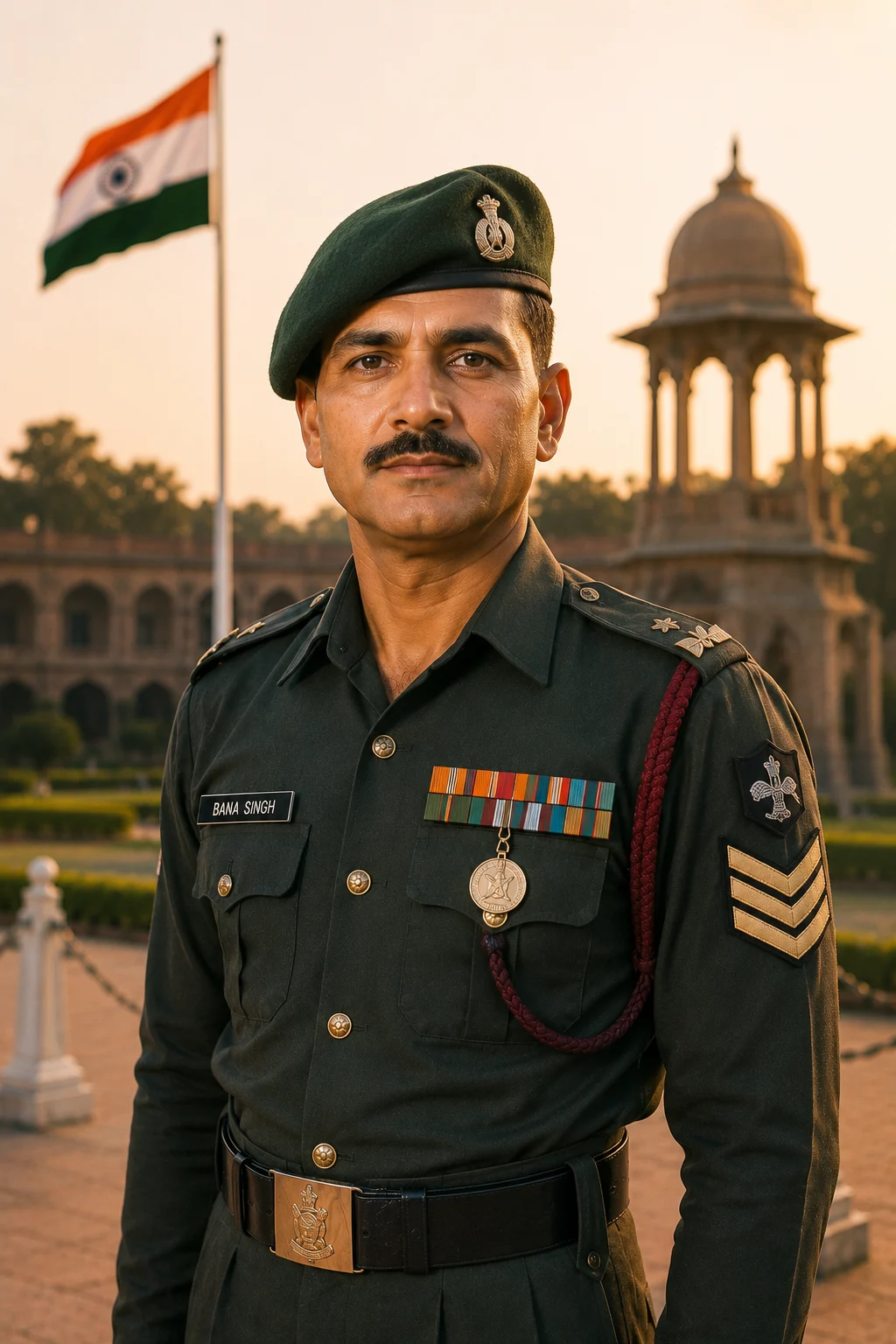
In the heart of India’s defense history lies a name that resonates with courage and valor—Naib Subedar Bana Singh. His extraordinary bravery during the Siachen conflict has earned him a place among the nation’s greatest war heroes.
Introduction
Naib Subedar Bana Singh is an iconic figure in the Indian Armed Forces, known for his unparalleled bravery and commitment to duty. He is celebrated for his heroic actions in the Siachen Glacier, where he played a crucial role in reclaiming a strategic position from enemy forces. His legacy inspires countless individuals and stands as a testament to the courage of the Indian soldier.
Quick Summary
- Full Name: Naib Subedar Bana Singh
- Born: 6 January 1949, in Jammu and Kashmir, India
- Profession: Indian Army Soldier
- Known As: War Hero of the Siachen Conflict
- Career Span: 1965 – Present
- Key Contributions:
- Led a daring operation in the Siachen Glacier in 1987.
- Reclaimed a crucial post at an altitude of 21,000 feet.
- Awarded the Param Vir Chakra, India’s highest military honor.
- Symbol of bravery and resilience for the Indian Army.
- Served as an inspiration through his speeches and community work.
- Quote: “It is our duty to protect our homeland and the people of India.”
Early Life & Background
Naib Subedar Bana Singh was born in a small village in Jammu and Kashmir. Growing up in a modest family, he was raised with strong values of bravery and duty. His father, a soldier himself, instilled a sense of pride and responsibility in him from a young age. Bana was a bright child, known for his curiosity and adventurous spirit. He often explored the hills around his village, developing a love for nature and an understanding of the land.
His childhood was filled with stories of valor and sacrifice, often narrated by his father and local elders. These tales inspired him deeply. During his school days, he was actively involved in sports and physical activities, showcasing his determination and team spirit. Bana’s early education was in local schools, where he was not only an above-average student but also a natural leader among his peers. His interest in joining the army began to grow during these formative years, influenced by the tales of soldiers who fought for their country.
How It All Started
Bana Singh’s journey to becoming a hero began when he decided to join the Indian Army at a young age. Inspired by the stories of his father and the sacrifices of soldiers, he felt a calling to serve his nation. After completing his education, he enlisted in the Indian Army, eager to make a difference. His initial training was rigorous, pushing him to his physical and mental limits. He faced many challenges, from tough physical drills to learning the intricacies of military tactics.
During his early years in the army, Bana quickly earned a reputation for his dedication and skill. His trainers recognized his potential and encouraged him to excel further. He underwent various training programs, including mountain warfare, where he learned to navigate the treacherous terrains of the Himalayas. It was during these training sessions that he developed the resilience and courage that would later define his legacy.
Bana faced several early challenges, including grueling exercises that tested his endurance. Many of his peers dropped out, but Bana remained focused, driven by his dream of serving at the front lines. He often recalled the tough training sessions, where he would be up at dawn, practicing in harsh conditions, learning to survive and thrive in adverse weather. His perseverance caught the attention of his commanders, who began to mentor him closely.
In the late 1980s, a significant turning point occurred when India faced increasing tensions in the Siachen region. Bana’s battalion was ordered to participate in operations aimed at securing strategic points in this cold and harsh environment. The challenges were immense—soldiers had to endure extreme weather conditions, high altitudes, and constant threats from the enemy. Bana was ready. He understood the risks involved and was determined to prove himself.
When the operation began, Bana Singh and his battalion were tasked with reclaiming a vital post at an altitude of 21,000 feet. The journey was treacherous, with thin air and freezing temperatures. Many soldiers faced exhaustion, but Bana’s leadership shone through. He encouraged his fellow soldiers, showing them the path forward despite their fears. It was during this operation that his bravery truly emerged—facing enemy fire, he led the charge to take back the post, earning him the Param Vir Chakra for his unmatched courage.
Throughout this mission, Bana demonstrated extraordinary courage and tactical brilliance. His actions not only secured a key position but also inspired his comrades to push through their limits. The entire nation watched in awe as reports of his heroics spread, marking the beginning of his legacy as one of India’s greatest war heroes. His story is not just about valor; it is about the spirit of sacrifice and the unwavering commitment to duty that defines every soldier.
Career Journey
Early Career
Naib Subedar Bana Singh began his journey in the Indian Army when he joined the 8th Jammu and Kashmir Light Infantry in 1976. His early days in the army were marked by rigorous training and a strong desire to serve his country. Bana Singh quickly adapted to the disciplined life of a soldier, excelling in physical fitness and combat training. His dedication did not go unnoticed, and he swiftly gained respect among his peers and superiors. The values of bravery, honor, and commitment to duty were instilled in him from the very beginning.
During these formative years, Bana Singh was involved in various military exercises, where he honed his skills as a soldier. His first major posting was in the northern regions of India, where he faced challenging terrain and weather conditions. This experience prepared him for the harsh realities of combat, teaching him the importance of teamwork and resilience. It was a crucial time for him, as he learned not just to survive but to thrive under pressure, setting the stage for his later achievements in the army.
Breakthrough Phase
As tensions heightened in the Kashmir region in the 1980s, Bana Singh’s skills and determination began to shine. The Siachen Glacier, a strategically significant area, became a focal point of conflict. In 1987, Bana Singh was part of an operation to capture the important position known as ‘Bana Top’, named in his honor after the successful mission. His unit was tasked with reclaiming this high-altitude area from enemy forces entrenched there.
In May 1987, during Operation Rajiv, Bana Singh and his team faced insurmountable odds. They had to ascend a treacherous 21,000 feet in extreme weather conditions. The mission was fraught with danger as they encountered heavy fire from enemy positions. Despite the odds, Bana Singh displayed remarkable courage. He led his men with unwavering resolve, encouraging them to push forward. The team’s determination culminated in a fierce battle that lasted for several days.
Bana Singh’s most pivotal moment came during this operation when he climbed a steep cliff under enemy fire to plant the Indian flag on top of the strategic location. This act not only marked a significant victory for the Indian Army but also showcased his exceptional leadership and bravery. His actions during this operation earned him the admiration of his fellow soldiers and the recognition of military officials. The successful capture of Bana Top became a turning point in his career, marking him as a prominent soldier in the Indian Army.
Peak Career
With his reputation solidified after the successful operation in Siachen, Naib Subedar Bana Singh reached the peak of his career. In 1988, he was awarded the Param Vir Chakra, India’s highest military honor, for his bravery during the Operation Rajiv. This prestigious award was a testament to his courage, leadership, and commitment to duty and honor. Bana Singh’s recognition brought forth immense pride not just to his regiment but also to the entire nation.
Following this honor, Bana Singh devoted himself to mentoring younger soldiers. He understood that leadership was not just about rank but also about inspiring and guiding others. His experiences in Siachen and his exemplary conduct made him a role model for many. He participated in various training programs, teaching soldiers about survival tactics and combat readiness in challenging environments.
Throughout the 1990s, he continued to serve in various capacities, participating in numerous operations across different regions of India, including counter-insurgency operations in Kashmir. His tactical acumen and ability to handle high-pressure situations earned him respect among senior commanders. He played a crucial role in training and preparing troops, ensuring that they were ready for any situations they might face.
Later Career
As Bana Singh progressed through the ranks, he assumed leadership roles that further solidified his impact on the Indian Army. He became a Naib Subedar, a non-commissioned officer, and continued to serve with dedication. In this phase of his career, he focused on enhancing the operational effectiveness of his unit. His experiences in Siachen equipped him with unique insights into mountainous warfare, and he shared these insights with his fellow soldiers.
Bana Singh retired from active service after a distinguished career, leaving behind a legacy of valor and integrity. Even after retiring, he remained connected to the armed forces, participating in veteran activities and sharing his experiences with the younger generation. He became an ambassador of bravery, advocating for the rights of soldiers and their families. His story has inspired countless individuals, reinforcing the values of courage and selflessness in service to the nation.
Today, Naib Subedar Bana Singh is not only remembered for his heroic actions but also for his role in shaping the future of the Indian Army through mentorship and training. His career journey is a testament to what it means to serve with honor, and his legacy continues to inspire new generations of soldiers.
Major Achievements
- Awarded the Param Vir Chakra in 1988 for exceptional bravery in Operation Rajiv.
- Successfully led a crucial operation to capture Bana Top in the Siachen Glacier.
- Recognized for exemplary leadership and mentoring of junior soldiers in the Indian Army.
- Participated in various counter-insurgency operations in Kashmir, enhancing the operational effectiveness of his unit.
- Influenced military training programs focusing on high-altitude warfare and survival tactics.
What Makes Them Special
Naib Subedar Bana Singh is special for many reasons. His extraordinary courage in face of danger stands out. He demonstrated a remarkable ability to lead from the front, showing his soldiers how to overcome fear and adversity. Bana Singh was not only physically strong but also mentally resilient. He possessed the ability to remain calm under pressure, a crucial trait for any military leader.
His strategic thinking during operations allowed him to devise effective plans even in the most challenging circumstances. Bana Singh’s dedication to his men was evident; he always prioritized their safety and well-being. His leadership style was inclusive, as he encouraged his team to voice their opinions and contribute to the mission’s success. This approach fostered trust and camaraderie among his soldiers.
Challenges & Struggles
Throughout his career, Naib Subedar Bana Singh faced numerous challenges. The most prominent was the extreme weather conditions and the physical toll of high-altitude warfare during the Siachen conflict. The harsh, icy environment tested the limits of every soldier. Despite the difficult conditions, he remained focused on the mission, demonstrating resilience and determination.
Additionally, there were times of self-doubt and pressure, particularly during crucial operations where the stakes were high. Thousands of lives depended on the decisions made in such moments. However, Bana Singh learned to channel these pressures into motivation, pushing himself and his team to excel. His ability to face these struggles head-on transformed him into a symbol of hope and inspiration for his fellow soldiers.
Even after retirement, he encountered the challenge of adjusting to civilian life. Transitioning from a soldier’s life to that of a civilian can be tough, but Bana Singh embraced this phase with the same vigor. He engaged with veteran communities, advocating for the welfare of retired soldiers and their families. His journey through struggles and triumphs continues to resonate, motivating many to strive for excellence in their own lives.
Legacy & Impact
Naib Subedar Bana Singh is remembered as a symbol of courage and dedication in the Indian Army. His heroic actions during the Siachen conflict not only earned him the prestigious Ashoka Chakra but also inspired countless soldiers and citizens across India. His bravery set a high standard for military service and is a source of motivation for future generations. Bana Singh’s legacy continues to influence military training and strategy, especially in challenging terrains, as he demonstrated the importance of resilience, teamwork, and unwavering commitment to duty.
Personal Life
Bana Singh was born in a small village in Jammu and Kashmir. He is a family man, married with children. Outside of his military career, he enjoys spending time with his family and often shares stories of his experiences in the army. He remains deeply connected to his roots and the community he hails from.
Interesting Facts
- Bana Singh was awarded the Ashoka Chakra in 1987 for his bravery in combat.
- His battalion, the 8th Jammu and Kashmir Light Infantry, is known for its exceptional performances in various conflicts.
- Bana Singh played a pivotal role in the Siachen conflict, one of the toughest battles fought at extreme altitudes.
- He is often referred to as a hero among his peers and in the Indian Army.
- After retiring, he has been involved in various initiatives to support soldiers and their families.
- Bana Singh is not just a military figure but a respected community leader in his native region.
- His life story is frequently shared in motivational talks and military training programs.
Frequently Asked Questions
Who is Naib Subedar Bana Singh?
Naib Subedar Bana Singh is a decorated Indian Army soldier known for his bravery during the Siachen conflict.
Why is Naib Subedar Bana Singh famous?
He is famous for receiving the Ashoka Chakra, India’s highest peacetime military award, for his extraordinary courage.
What are their achievements?
His most notable achievement is leading a successful operation in Siachen, showcasing exceptional bravery and leadership.
What is their background?
Bana Singh hails from Jammu and Kashmir and joined the Indian Army in 1976, where he quickly made a name for himself.
What influence did he have on future generations?
His legacy inspires soldiers to uphold the values of honor and duty, impacting military training and ethos.
What does he do after retirement?
Post-retirement, he engages in community service and supports initiatives for soldiers and their families.
Is there a memorial or tribute to him?
Yes, his contributions are honored in various military functions and commemorations related to the Siachen conflict.
Conclusion
Naib Subedar Bana Singh’s journey is a remarkable tale of bravery, commitment, and service to the nation. His contributions to the Indian Army, particularly during the Siachen conflict, remain etched in the annals of history. His legacy not only inspires his fellow soldiers but also resonates with citizens across India. As a symbol of resilience and courage, Bana Singh’s life story encourages us all to stand firm in our duties and strive for excellence in every endeavor.