

Bhagat Singh’s courage, intellect, and sacrifice made him a symbol of India’s youthful revolution.
Quick Summary
Born: 28 September 1907
Known As: Shaheed Bhagat Singh
Role: Revolutionary Freedom Fighter
Major Acts: Lahore Conspiracy Case, Assembly Bombing (1929)
Martyrdom: Executed at age 23 (1931)
Early Life and Childhood
Bhagat Singh was born in 1907 in the quiet village of Banga, in Punjab. His family carried the proud legacy of fighting against British rule. Stories of heroes and martyrs filled his childhood, planting seeds of patriotism in his young heart. The turning point came in 1919 when he was only 12 years old: the tragic Jallianwala Bagh massacre. Witnessing the brutal killing of innocent protesters left an indelible mark on him. This painful sight was not just an event; it was the moment that shaped his lifelong determination to break free from colonial chains.
Educated first at Dayanand Anglo-Vedic High School, Bhagat Singh later joined National College in Lahore. This school, founded by the great nationalist Lala Lajpat Rai, was a place where nationalist ideals flourished. These halls nurtured Bhagat Singh’s growing commitment to India’s freedom. Even as a young man, Singh made a personal sacrifice by rejecting an arranged marriage. He chose instead to dedicate his whole life to India’s independence, showing how deeply he prioritized the nation’s cause over personal happiness.
Journey in Pictures
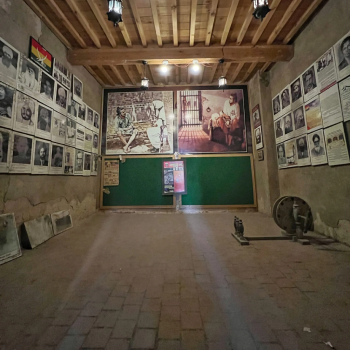
1907
Birthplace of a Revolutionary
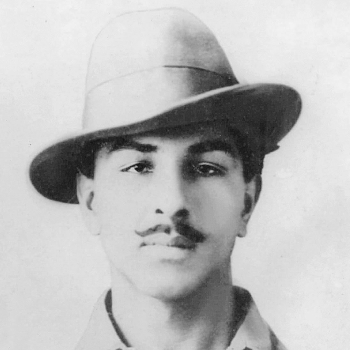
Late 1920s
The Iconic Revolutionary Portrait
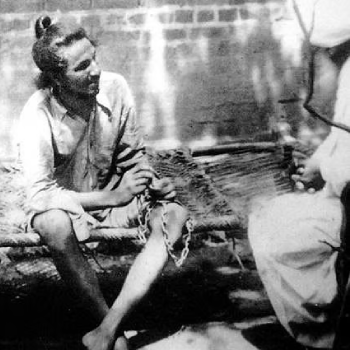
1928–1931
Rare Glimpses of a Martyr
Career Journey
Bhagat Singh’s path to becoming a legendary freedom fighter was marked by steady learning, courage, and bold actions. Joining various youth organizations allowed him to develop leadership skills and to inspire others. His vision was not just freedom from the British but a better, fairer society. This led him to join the Hindustan Socialist Republican Association (HSRA), where he and like-minded comrades worked to build a movement centered on social justice as well as political independence.
One of the most talked-about events in his life was the killing of police officer Saunders in December 1928. This was done as a form of protest against the death of Lala Lajpat Rai, who was severely injured by police during a protest and later died. Although Saunders was mistakenly targeted, the act was intended to send a strong message to the British government: the revolution was coming, and it would not be silenced.
In April 1929, Bhagat Singh, along with Batukeshwar Dutt, threw non-lethal bombs in the Central Legislative Assembly in Delhi. This was not an act of terrorism but a carefully planned protest meant to awaken the public to the urgent need for freedom. The bombing was intended to cause no casualties but to arouse political unrest and public debate. After their arrest, Bhagat Singh’s hunger strike in prison became a powerful symbol of resistance, highlighting the rights of political prisoners and exposing colonial injustice to the world.
The Impact
Three major milestones define Bhagat Singh’s monumental impact on India’s freedom struggle. First, the 1929 Assembly bombing gained international attention. It spread awareness of India’s fight for independence beyond its borders and inspired millions of Indian youth to join the nationalist movement. The courage to act boldly and publicly demonstrated the passion and seriousness of young Indians in demanding freedom.
Second, Bhagat Singh’s ideological leadership transformed the HSRA. He infused it with socialist ideas, extending the freedom struggle beyond political independence to include social and economic equality. This broadened the movement’s appeal and laid the foundation for future political developments in India, where justice and equality became integral parts of the nation’s vision.
Third, his hunger strike in jail drew significant public sympathy and highlighted the harsh conditions political prisoners faced. This act of self-sacrifice captivated the nation and international observers alike. Finally, his martyrdom on March 23, 1931, at the age of 23, sparked huge protests across India. Millions mourned his death and took courage from his unwavering spirit, cementing his legacy as Shaheed Bhagat Singh, a hero whose ideas continue to influence India’s path toward justice and freedom.
The Glory
Bhagat Singh did not receive any formal awards during his lifetime, as he died young and before India achieved independence. Yet, there is a continuing and powerful public demand for the Bharat Ratna, India’s highest civilian honor, to be bestowed upon him posthumously as recognition of his unparalleled dedication and sacrifice.
His true honors, however, reside in the memories of millions. Statues and memorials stand all over India, and his name is invoked as a symbol of courage, resistance, and patriotism. Schools, colleges, and public places bear his name, reminding every generation of the price paid for freedom and the sacrifices made by our forebears.
The Present
Though Bhagat Singh passed away in 1931, his legacy is kept alive through ongoing commemorations and cultural tributes. Every year on his birth and martyrdom anniversaries, ceremonies honor his life and ideals. Across India, new statues continue to be unveiled in his memory. Institutions and places named after him serve as centers of learning and nationalism, inspiring young Indians to dream of a just and free society.
In 2024 and beyond, Bhagat Singh’s spirit remains a guiding light for those committed to India’s progress and justice.
Legacy
Bhagat Singh believed deeply in revolutionary idealism, socialism, and justice. His famous slogan, “Inquilab Zindabad” (Long live the revolution), captured his vision of a free and fair India. He was an atheist who valued rational thought and believed that ideas must be stronger than violence. One of his most powerful quotes remains, “They may kill me, but they cannot kill my ideas,” which continues to inspire youth to stand firm for what is right.
Through his life and sacrifice, Bhagat Singh challenged Indian youth to use education for independent thinking and to unite courageously against oppression. He taught that true freedom comes not just from independence from foreign rule, but through building a society based on justice and equality for all. His philosophy remains a beacon for India’s future.
Conclusion
Bhagat Singh’s life is a testament to bravery, sacrifice, and unwavering commitment to freedom. From a young boy deeply moved by injustice to a national hero whose ideals shaped the course of India’s independence movement, his journey embodies the true spirit of revolution and patriotism. The story of Shaheed Bhagat Singh is not just history; it is a call to every Indian to remember, honor, and carry forward the fight for justice. His legacy endures in every heart that beats for a free and fair India.
FAQ's
For his bold acts against British rule and his ideological writings.
He was martyred at just 23.
Saunders assassination and Assembly bombing.
Socialism and complete independence.
It marks the martyrdom of Bhagat Singh, Rajguru, and Sukhdev.