Mother Teresa Biography – The Saint of the Poor Who Served Humanity

Mother Teresa

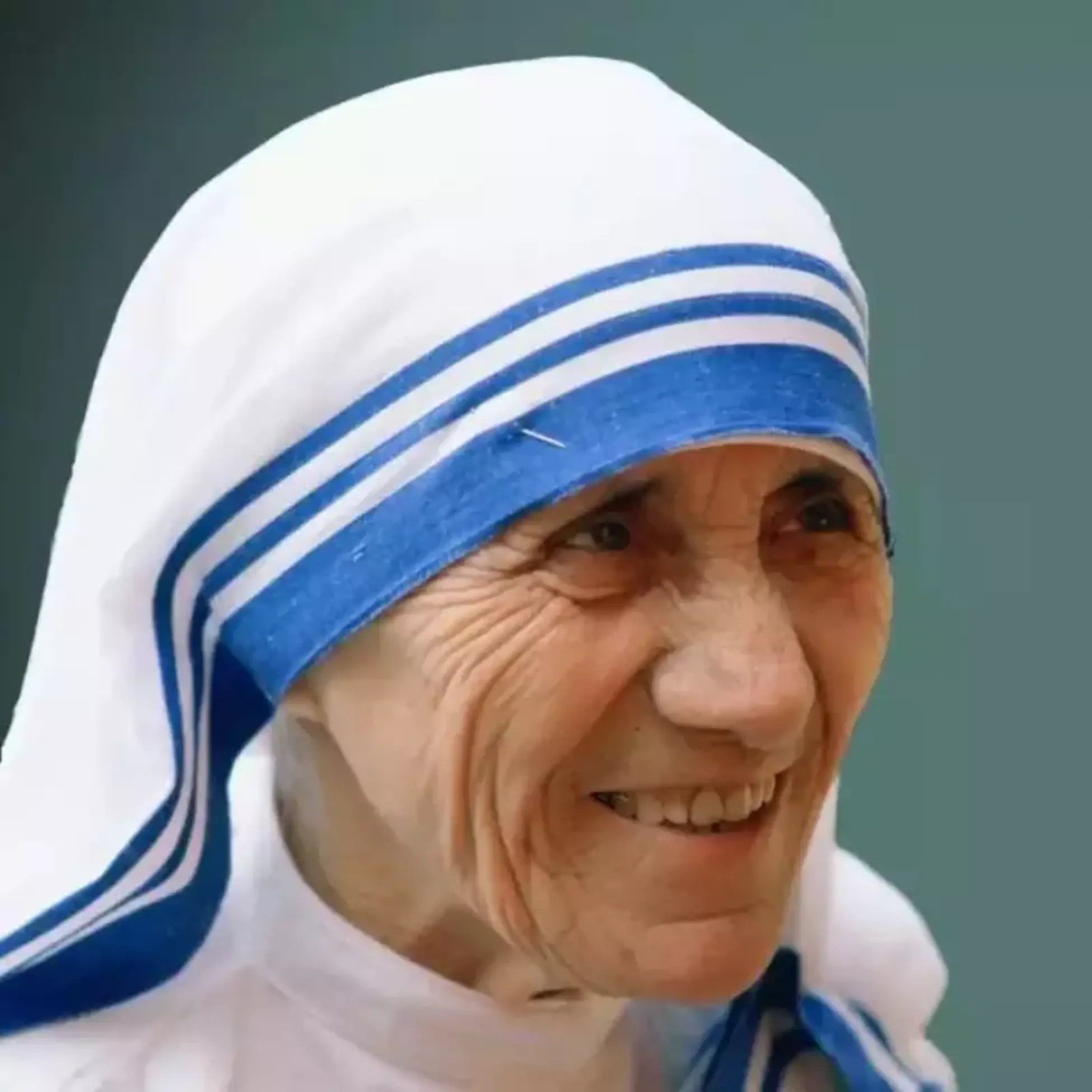
Mother Teresa devoted her life to compassion, service, and uplifting the downtrodden.

Quick Summary

Full Name: Anjezë Gonxhe Bojaxhiu (Mother Teresa)
Born: 26th August 1910, Skopje, Macedonia
Died: 5th September 1997, Kolkata, India
Profession: Catholic Nun, Missionary
Known As: “Saint Teresa of Calcutta”
Career Span: 1929 – 1997
Key Contributions:

  • Founded Missionaries of Charity in Kolkata.

  • Dedicated life to serving the poor, sick, and dying.

  • Awarded Nobel Peace Prize (1979) and Bharat Ratna (1980).

  • Canonized as a saint in 2016 by the Catholic Church.

Quote:
“Not all of us can do great things. But we can do small things with great love.” — Mother Teresa

Mother Teresa Biography

Among the greatest humanitarians the world has ever seen, Mother Teresa stands as a symbol of compassion, humility, and unconditional service. Known as the “Saint of the Gutters” and later canonized as Saint Teresa of Calcutta, she dedicated her life to the poor, sick, and dying.

The Mother Teresa biography is not just a story of faith; it’s a journey of extraordinary love and selflessness that continues to inspire millions around the globe.

Early Life & Childhood

Mother Teresa was born as Anjezë Gonxhe Bojaxhiu on 26 August 1910 in Skopje (now part of North Macedonia). She came from an Albanian family and grew up in a deeply religious household.

Her father, Nikollë Bojaxhiu, was a businessman and philanthropist, while her mother, Dranafile, was known for her kindness and charity. It was from her mother that young Anjezë inherited the values of compassion and service.

By the age of 12, she felt strongly drawn to a religious life. At 18, she left her home to join the Sisters of Loreto in Dublin, Ireland. From there, she was sent to India, where she began teaching at a convent school in Kolkata (then Calcutta).

Calling to Serve Humanity

While teaching at St. Mary’s School in Kolkata, Mother Teresa enjoyed a comfortable life. However, the extreme poverty and suffering outside the convent walls deeply moved her.

On 10 September 1946, during a train journey to Darjeeling, she experienced what she described as a “call within a call.” She felt God was urging her to leave the convent and serve the poorest of the poor directly.

This moment became the turning point of her life. After receiving permission from the Vatican, she stepped out in 1948, wearing a simple white sari with a blue border – the attire that became her lifelong identity.

Founding Missionaries of Charity

In 1950, Mother Teresa founded the Missionaries of Charity in Kolkata with just a handful of nuns. The mission was simple yet profound: “To care for the hungry, the naked, the homeless, the crippled, the blind, the lepers, and all those who feel unwanted, unloved, and uncared for in society.”

What began as a small initiative soon grew into a global organization. Today, Missionaries of Charity operates in over 130 countries, running orphanages, hospices, shelters, and schools.

Her work in Kolkata’s slums brought dignity to the dying, food to the hungry, and comfort to the abandoned. She became a mother to the helpless, embodying the true meaning of service.

Humanitarian Works & Global Impact

Mother Teresa’s humanitarian work expanded rapidly:

  • Homes for the dying and destitute – She set up “Nirmal Hriday” (Pure Heart), a home where the terminally ill received love and care.
  • Orphanages and shelters – She provided abandoned children with homes and education.
  • Care for lepers and the sick – She opened leprosy centers and hospitals where those shunned by society were treated with dignity.
  • International expansion – By the 1980s, Missionaries of Charity had spread worldwide, bringing hope to marginalized communities across continents.

Her work was not limited to India – she became a global figure of compassion, visiting war zones, famine-struck nations, and disaster-hit areas to provide relief.

Awards & Nobel Peace Prize

Mother Teresa’s tireless work earned her international recognition:

  • Nobel Peace Prize (1979) – For her efforts to overcome poverty and distress. She humbly accepted it “in the name of the poor.”
  • Bharat Ratna (1980) – India’s highest civilian award.
  • Templeton Prize (1973) and Magsaysay Award (1962) for her spiritual and humanitarian contributions.
  • Numerous honorary degrees and global honors.

When receiving the Nobel Prize, she famously said: “The poor don’t need our pity and sympathy. They need our love and compassion.”

Criticism & Challenges

Despite her immense popularity, Mother Teresa faced criticism. Some argued her work promoted suffering instead of addressing systemic poverty. Others questioned the quality of care in her homes.

She was also criticized for her strong religious beliefs and opposition to abortion. However, she remained steadfast in her conviction that every human life had dignity and value.

These criticisms did little to diminish her global influence. To millions, she remained a living saint.

Canonization & Sainthood

Mother Teresa passed away on 5 September 1997 in Kolkata. Her death was mourned across the globe, with India giving her a state funeral.

In 2003, she was beatified by Pope John Paul II and officially declared Saint Teresa of Calcutta by Pope Francis on 4 September 2016.

Her canonization recognized her life of heroic virtue and miracles attributed to her intercession. She became one of the most loved saints of modern times.

Legacy & Inspiration

Mother Teresa’s legacy continues through the Missionaries of Charity, which today has over 5,000 nuns serving in different parts of the world.

Her biography is not just the life story of a nun – it is a universal message of love, compassion, and selfless service. She proved that one individual, with unwavering faith and dedication, can change the lives of millions.

For countless people, she remains a guiding light of humanity. Schools, hospitals, charities, and streets across the world bear her name as a tribute to her extraordinary service.

Conclusion

The Mother Teresa biography reminds us that greatness lies not in wealth or power, but in the ability to serve others selflessly. Her life was a testimony to the power of love and compassion in healing broken lives.

She once said: “Not all of us can do great things. But we can do small things with great love.”

Today, Mother Teresa’s story continues to inspire new generations to rise above selfishness and dedicate themselves to the service of humanity.

FAQ's

For her humanitarian work and founding Missionaries of Charity.

Yes, in 1979 for Peace.