

Dr. B. R. Ambedkar reshaped modern India with his fight for equality, justice, and constitutional reforms.
Quick Summary
Full Name: Bhimrao Ramji Ambedkar
Born: 14th April 1891, Mhow, Central Provinces, British India (now Madhya Pradesh, India)
Died: 6th December 1956, New Delhi, India
Profession: Jurist, Economist, Social Reformer, Politician, Author
Known As: “Father of the Indian Constitution”
Career Span: 1913 – 1956
Key Contributions:
Principal architect of the Indian Constitution.
Champion of social justice, fought against caste discrimination and untouchability.
Founded political parties and movements to uplift marginalized communities.
Served as India’s first Law and Justice Minister.
Posthumously awarded Bharat Ratna (1990).
Quote:
“Cultivation of mind should be the ultimate aim of human existence.” — B. R. Ambedkar
Early Life of Dr. Babasaheb Bhimrao Ramji Ambedkar (B.R. Ambedkar)
Dr. Bhimrao Ramji Ambedkar, popularly known as Babasaheb Ambedkar, was born on 14 April 1891 in Mhow, Central Provinces (now in Madhya Pradesh). He was the fourteenth child of Ramji Maloji Sakpal and Bhimabai Sakpal.
Belonging to the Mahar caste, considered “untouchable” at the time, Ambedkar grew up facing harsh discrimination and social exclusion. Despite these challenges, his father, an army officer, valued education and encouraged his children to study.
Ambedkar’s early school years were marked by social humiliation. He was often forced to sit separately from upper-caste students, denied access to basic facilities, and made to endure untouchability. These experiences profoundly shaped his resolve to fight against caste-based inequalities.
Education – From Struggles to Excellence
Ambedkar’s thirst for knowledge was extraordinary. After completing his early education in Bombay (now Mumbai), he was among the few “untouchables” allowed to attend Elphinstone High School, where he excelled academically.
- In 1907, Ambedkar became the first from his community to pass the matriculation exam, marking a historic milestone.
- Supported by the progressive ruler of Baroda, Maharaja Sayajirao Gaekwad, he received a scholarship to pursue higher studies abroad.
- He earned a Bachelor’s degree in Economics and Political Science from Bombay University in 1912.
- Later, he went to Columbia University, New York, where he completed his M.A. in 1915 and a Ph.D. in Economics in 1927. His thesis, The Evolution of Provincial Finance in British India, showcased his deep economic insight.
- Ambedkar also studied at the London School of Economics (LSE), earning a D.Sc. in Economics. Additionally, he trained as a barrister at Gray’s Inn, London.
His academic brilliance made him one of the most highly educated Indians of his time.
Journey in Pictures

1889
Born into untouchability: Facing severe caste discrimination.

1907
Highly educated scholar: Pursuing degrees in law, economics
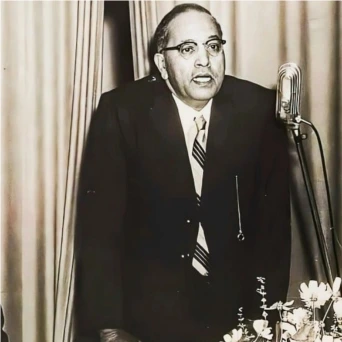
1930
Leader of Dalits: Fighting for their rights.

1947
Drafted Indian Constitution: Ensured social justice, equality
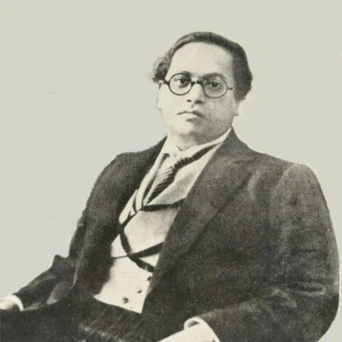
1955
First Law Minister: Advocating for legal reforms.
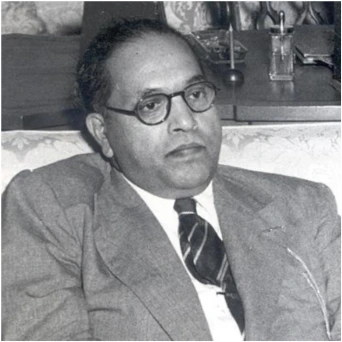
1964
Bharat Ratna (posthumous): India's highest civilian award.
Ambedkar’s Fight Against Social Discrimination
Returning to India in 1917, Ambedkar faced discrimination despite his prestigious degrees. He was denied basic respect and employment opportunities due to his caste identity.
Determined to fight caste oppression, Ambedkar started movements and organizations:
- Bahishkrit Hitakarini Sabha (1924): To promote education, socio-economic upliftment, and rights for the marginalized.
- Mahad Satyagraha (1927): A historic movement asserting Dalits’ right to access public water tanks, challenging untouchability.
- Temple Entry Movement: Advocated Dalits’ right to enter Hindu temples, a revolutionary demand at the time.
Through his fiery speeches, writings, and activism, Ambedkar became the most prominent leader of Dalits and oppressed communities in India.
Role in Indian Politics
Ambedkar’s political journey was deeply tied to the Indian freedom struggle, though his focus extended beyond independence – he envisioned social equality, justice, and human rights.
- In 1936, he founded the Independent Labour Party (ILP), which contested elections and gained representation in the Bombay Legislative Assembly.
- Ambedkar championed workers’ rights, women’s empowerment, and labor reforms.
- He was also a fierce critic of caste-based oppression within Indian society, urging that political freedom must be accompanied by social democracy.
His relationship with Mahatma Gandhi was marked by both ideological differences and eventual compromises, most notably during the Poona Pact of 1932, which negotiated political representation for Dalits.
Architect of the Indian Constitution
One of Ambedkar’s most historic contributions was as the Chairman of the Drafting Committee of the Indian Constitution after independence.
Ambedkar’s vision shaped India’s identity as a democratic republic based on equality, justice, and liberty. His key contributions included:
- Abolition of Untouchability (Article 17): A landmark provision granting dignity and equality to marginalized communities.
- Fundamental Rights: Ensuring equal rights irrespective of caste, religion, or gender.
- Reservation System: Advocating affirmative action for Scheduled Castes and Scheduled Tribes in education, jobs, and politics.
- Federal Structure: Designing a balance of powers between the Union and State governments.
- Social Justice Principles: Embedding equality as a core constitutional value.
On 26 January 1950, when India adopted the Constitution, Ambedkar’s role was celebrated as that of the principal architect of modern India.
Economic and Social Vision
Ambedkar was not only a social reformer but also a visionary economist. His writings and policies reflected a deep concern for inclusive growth:
- Advocated for industrialization to end India’s dependence on agriculture.
- Supported land reforms to improve rural livelihoods.
- Suggested banking reforms, labor protections, and women’s participation in the workforce.
- His paper Small Holdings in India and Their Remedies highlighted agricultural challenges that remain relevant today.
Ambedkar’s economic foresight placed him far ahead of his contemporaries.
Conversion to Buddhism – Spiritual Awakening
Towards the end of his life, Ambedkar grew increasingly disillusioned with Hinduism’s rigid caste system. After years of studying various religions, he found Buddhism to embody equality, compassion, and rationality.
On 14 October 1956, Ambedkar, along with over 500,000 followers, embraced Buddhism at a historic ceremony in Nagpur. This event, known as the Dalit Buddhist Movement, marked one of the largest mass conversions in history.
Ambedkar’s conversion was not just spiritual but also political – a declaration of liberation from caste oppression.
Writings and Publications
Writings and Publications
Ambedkar was a prolific writer, using his pen as a weapon against social injustice. His notable works include:
- Annihilation of Caste (1936): A revolutionary critique of Hindu orthodoxy.
- The Problem of the Rupee (1923): Influenced India’s financial policies.
- Thoughts on Linguistic States (1955): Advocated for reorganization of states on linguistic lines.
- Buddha and His Dhamma (1957): His final work, presenting Buddhist philosophy for modern times.
These writings continue to inspire scholars, activists, and social reformers across the globe.
Legacy in Frames

Published influential books.

Influenced the RBI's formation.

Advocated for women's rights.

Led movements against discrimination.
Awards and Achievements
- Bharat Ratna (1990): Posthumously awarded India’s highest civilian honor.
- Recognized globally as a champion of human rights, equality, and social justice.
- Revered as the “Father of the Indian Constitution.”
- His birthday, 14 April, is celebrated as Ambedkar Jayanti, a national holiday and a day of pride for millions.
The Legacy of Jawaharlal Nehru
Dr. Ambedkar passed away on 6 December 1956, leaving behind a legacy of courage, vision, and social justice.
His influence extends beyond India – he is celebrated as one of the greatest social reformers in world history. His fight against casteism resonates with global struggles against discrimination, inequality, and racism.
Today, statues of Ambedkar stand tall across India, libraries and universities are named in his honor, and his ideas continue to inspire movements for equality and justice.
Ambedkar’s legacy is not confined to history; it lives in the Constitution of India, in every movement for social justice, and in the dreams of millions who strive for dignity and equality.
Conclusion
The Dr. B. R. Ambedkar biography is the story of a man who rose from oppression to shape the destiny of a nation. A jurist, economist, political leader, and social reformer, Ambedkar devoted his life to building a just and inclusive India.
From drafting the Constitution to leading a mass spiritual revolution, his work continues to define the principles of democracy and equality. Dr. Ambedkar remains an eternal inspiration for those who believe in justice, liberty, and human dignity.
FAQ's
Because he was the Chairman of the Drafting Committee that framed the Indian Constitution.
He fought against caste discrimination and promoted education, equality, and human rights.
Yes, posthumously in 1990.