

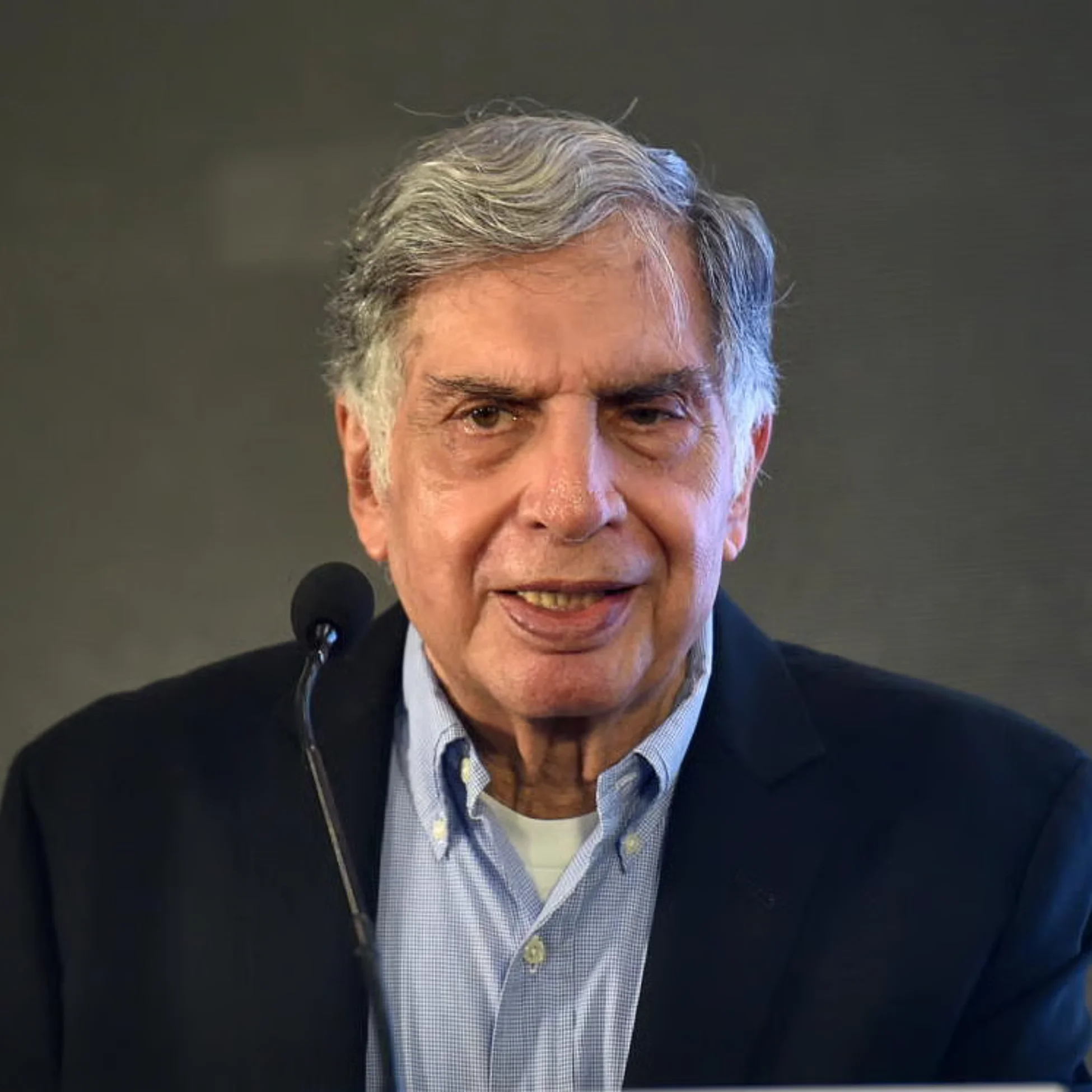
Ratan Tata, India’s business icon, redefined corporate excellence with innovation, global expansion, and social responsibility.
Quick Summary
Full Name: Ratan Naval Tata
Born: 28th December 1937, Mumbai, Maharashtra, India
Profession: Industrialist, Business Leader, Philanthropist
Known As: “Captain of Indian Industry,” “Tata Group Icon”
Career Span: 1962 – Present
Key Contributions:
Chairman of Tata Group (1991–2012, interim 2016–2017), leading its global expansion.
Oversaw landmark acquisitions like Jaguar Land Rover, Tetley, and Corus.
Pioneered affordable innovations like the Tata Nano car and Tata Swach water purifier.
Renowned for philanthropy, contributing significantly to education, healthcare, and rural development.
Recipient of Padma Vibhushan (2008) and Padma Bhushan (2000) for contributions to trade and industry.
Quote:
“I don’t believe in taking right decisions. I take decisions and then make them right.” — Ratan Tata
Early Life of Ratan Tata
Ratan Naval Tata was born on 28 December 1937 in Mumbai, into one of the most respected and influential business families in India – the Tata family. Despite being born into wealth and privilege, Ratan Tata’s childhood was not without challenges. His parents, Naval Tata and Sooni Tata, separated when he was just a child, and he was largely raised by his grandmother, Lady Navajbai Tata.
From a very young age, Ratan Tata displayed traits of discipline, humility, and a sense of responsibility. He studied at Campion School in Mumbai before moving to Cathedral and John Connon School. Later, he pursued his higher education in the United States at Cornell University, where he studied Architecture and Structural Engineering. His exposure to life abroad shaped his global outlook, which he would later bring into his business vision for India.
Early Career and Entry into Tata Group
Ratan Tata did not directly enter the corporate boardroom of the Tata empire. Instead, he began his career in 1961 by joining the Tata Steel division. Unlike many who expected him to start at the top, Ratan Tata chose to begin from the bottom. He worked alongside blue-collar employees, even shoveling limestone and managing blast furnaces.
This hands-on experience taught him the importance of understanding business operations from the ground up. It also earned him the respect of workers and laid the foundation for his leadership style, which emphasized empathy and connection with employees.
Rise to Leadership – Chairman of Tata Group
In 1991, Ratan Tata succeeded J.R.D. Tata as the Chairman of Tata Sons and took charge of the Tata Group at a critical time. The Indian economy was opening up due to liberalization, and foreign competition was entering the market. Many questioned whether Ratan Tata could lead the group into the new global era.
However, he quickly proved his critics wrong. Under his leadership, the Tata Group grew from a largely India-focused business into a global conglomerate. During his tenure, the group’s revenues increased more than 40 times, and profits grew by over 50 times.
Iconic Business Achievements
Acquisition of Global Brands
Ratan Tata believed that Indian companies could stand shoulder to shoulder with global giants. His bold decisions reflected this vision:
- In 2000, Tata Tea acquired Tetley, a British brand.
- In 2007, Tata Steel acquired Corus, one of Europe’s largest steel companies.
- In 2008, Tata Motors acquired Jaguar Land Rover (JLR) from Ford, turning around the brand into a global success story.
These acquisitions not only expanded Tata’s footprint worldwide but also placed India firmly on the global business map.
Launch of Tata Nano
One of Ratan Tata’s most ambitious projects was the Tata Nano, introduced in 2008. Marketed as the world’s cheapest car, it aimed to make automobile ownership accessible to millions of Indian families.
Although the Nano did not achieve the commercial success expected, it remains a testament to Ratan Tata’s vision of innovation for the masses.
Ratan Tata’s Leadership Style
Ratan Tata’s leadership style is often described as humble, visionary, and people-oriented. Unlike many business leaders, he never flaunted his wealth or power. Instead, he led with quiet confidence and integrity.
He strongly believed in ethical business practices, corporate governance, and values-driven leadership. Under his guidance, the Tata Group became a symbol of trust and credibility.
Philanthropy and Social Work
One of the most defining aspects of Ratan Tata’s biography is his dedication to philanthropy. The majority of Tata Sons’ profits are directed into charitable trusts such as the Sir Dorabji Tata Trust and the Sir Ratan Tata Trust.
These trusts have funded initiatives in education, healthcare, rural development, and scientific research. Some notable contributions include:
- Establishing Tata Memorial Hospital, one of India’s leading cancer treatment centers.
- Supporting IITs, IISc, and several universities with research grants.
- Contributing to global causes such as healthcare and disaster relief.
In 2010, the Tata Trusts donated $50 million to Harvard Business School, marking one of the largest donations by an Indian organization to a foreign university.
Awards and Recognition
Ratan Tata has received numerous awards and honors for his contributions to business and society:
- Padma Bhushan (2000) and Padma Vibhushan (2008) – among India’s highest civilian honors.
- Honorary Knight Commander of the Order of the British Empire (KBE) in 2009.
- Honorary doctorates from prestigious universities such as Cambridge and Ohio State.
- Consistently ranked among the world’s most respected business leaders.
Ratan Tata – Life After Retirement
Ratan Tata retired as chairman of Tata Sons in December 2012, handing over leadership to Cyrus Mistry. However, he continued to remain active as Chairman Emeritus of Tata Sons and played a guiding role in the group.
After Mistry’s removal, Ratan Tata once again stepped in as interim chairman in 2016, showcasing his commitment to the stability of the group.
In recent years, Ratan Tata has been actively investing in startups. He has supported innovative Indian companies such as Ola, Paytm, Snapdeal, and Urban Ladder, showing his continued faith in India’s young entrepreneurs.
Personal Life of Ratan Tata
Despite his towering public presence, Ratan Tata has always maintained a private personal life. He never married, though he once revealed in an interview that he came close to marrying but circumstances prevented it.
He is known for his love of cars, architecture, and animals. Ratan Tata is also very popular on social media, where he shares inspirational messages and connects with the younger generation.
Legacy of Ratan Tata
The Ratan Tata biography is not just a story of business success but of values, ethics, and humanity. He transformed the Tata Group into a global powerhouse while never losing sight of the principle that businesses exist not only to create wealth but also to serve society.
His life stands as an inspiration for leaders, entrepreneurs, and ordinary citizens alike. Ratan Tata represents the best of Indian business – courage, vision, humility, and compassion.
Conclusion
The biography of Virat Kohli is not just the story of a cricketer—it’s the journey of a young boy from Delhi who rose to become one of the greatest batsmen in the world. With his unmatched records, leadership qualities, and passion for the game, Virat Kohli stands tall as a legend of Indian cricket and a role model for generations to come.
FAQ's
He is an industrialist, former chairman of the Tata Group, and a philanthropist.
He is known for leading Tata Group to global success, pioneering innovations like the Tata Nano, and his philanthropic work.
He has received the Padma Vibhushan, Padma Bhushan, and numerous international business awards.
He became chairman in 1991 and served until 2012, with an interim role in 2016–2017.
He supports education, healthcare, rural development, and disaster relief through Tata Trusts and personal initiatives.