From a tea-seller to India’s longest-serving Prime Minister after Nehru, Narendra Modi embodies determination, vision, and transformative leadership
Quick Summary
Full Name: Narendra Damodardas Modi
Born – Died: 17 September 1950, Vadnagar, Gujarat
Tenure(s) in Office: Prime Minister of India (2014–present), Chief Minister of Gujarat (2001–2014)
Political Party: Bharatiya Janata Party (BJP), associated with Rashtriya Swayamsevak Sangh (RSS)
Key Contributions:
Economic reforms: GST, Make in India, Digital India
Foreign policy: Act East, stronger US/Israel ties
Social initiatives: Swachh Bharat Abhiyan, Jan Dhan Yojana
Infrastructure & technology push
Quote: “Sabka Saath, Sabka Vikas, Sabka Vishwas”
Introduction: A Force of Change
Narendra Modi, the current and 14th Prime Minister of India, has redefined leadership in Indian politics with his vision, determination, and relentless pursuit of progress. Since taking office in 2014, Modi has led India through numerous transformative reforms, elevating its global standing while emphasizing development, innovation, and national pride. His journey from humble beginnings as a tea seller to the highest office in the land is a testament to his perseveranceand deep connection with the people of India.
This comprehensive profile delves into Narendra Modi’s personal and political journey,leadership, and the policies that have shaped the country under his administration. By covering
key milestones and addressing frequently searched questions, this page will serve as an authoritative source for all readers.
Early Life and Education
Born on 17th September 1950 in Vadnagar, Gujarat, Narendra Damodardas Modi came from a modest family. His father, Damodardas Mulchand Modi, ran a small tea stall, which young
Narendra helped manage. Growing up in a family of six children, Modi developed a deep sense of responsibility and discipline from an early age.
Modi’s education was not conventional. As a teenager, he joined the Rashtriya Swayamsevak Sangh (RSS), where he honed his leadership and organizational skills. His early association with the RSS laid the foundation for his future role in Indian politics. Despite limited formal education, Modi later earned a Master’s degree in Political Science from Gujarat University, reflecting his intellectual curiosity and determination to learn.
Key Facts:
- Born: 17th September 1950, Vadnagar, Gujarat
- Education: Master’s in Political Science, Gujarat University
- Early Associations: Rashtriya Swayamsevak Sangh (RSS)
- First Political Role: Chief Minister of Gujarat (2001-2014)
Journey in Pictures

1950
Childhood in Vadnagar
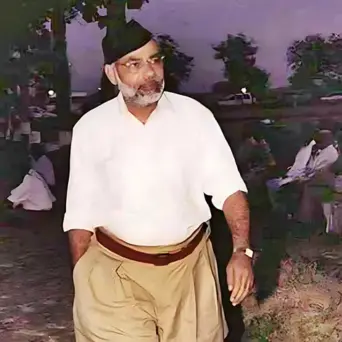
1980
As an RSS pracharak
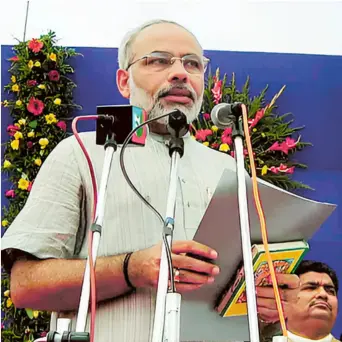
2001
Sworn in as CM of Gujarat
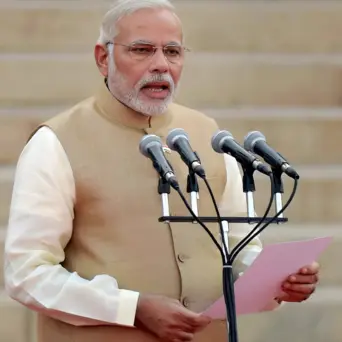
2014
Taking oath as PM of India
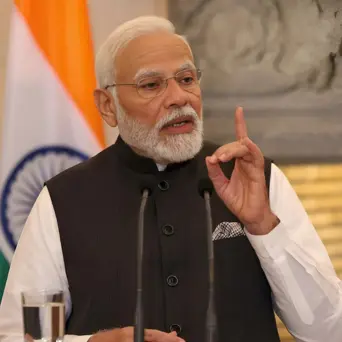
2016
Demonetization speech
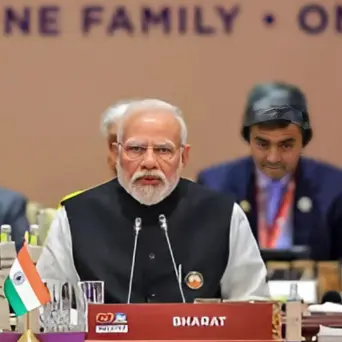
2023
G20 Summit hosted in New Delhi
Rise to Political Prominence: The Gujarat Chief Minister Years
Narendra Modi’s political career took off when he became the Chief Minister of Gujarat in 2001. Under his leadership, Gujarat transformed into one of India’s most industrialized and economically developed states. Modi’s governance style emphasized infrastructure development, industrial growth, and agricultural reforms. The Vibrant Gujarat Summit, launched under his leadership, attracted significant foreign investment and positioned Gujarat as a major economic hub.
During his tenure as Chief Minister, Modi introduced innovative programs like the Jyotigram Yojana, aimed at providing uninterrupted electricity to rural areas. His leadership was marked
by efficiency, fast-tracking development projects, and reducing bureaucratic delays.
However, his tenure was not without controversy, particularly in relation to the 2002 Gujarat riots, which led to intense political scrutiny. Despite the challenges, Modi emerged stronger,
winning successive elections and reinforcing his position as a decisive leader.
Key Achievements as Gujarat CM:
- Jyotigram Yojana: Focus on rural electrification.
- Vibrant Gujarat Summit: Boosted investment in Gujarat.
- Infrastructure Development: Modernized cities and expanded roads and highways.
Prime Ministerial Tenure: Transforming India
Narendra Modi became the Prime Minister of India in 2014 following a decisive victory in the general elections, with his party, the Bharatiya Janata Party (BJP), winning a majority. His
re-election in 2019 solidified his status as a leader with mass appeal and political acumen. Modi’s tenure has been transformative, characterized by his ambitious reform agenda and strong foreign policy initiatives.
1. Economic Reforms and Initiatives
One of Modi’s most significant initiatives was the launch of Make in India, aimed at boosting manufacturing and creating jobs. Other key programs include Digital India, designed to enhance the country’s digital infrastructure, and the Start-Up India initiative, which encourages entrepreneurship and innovation.
His government also implemented the Goods and Services Tax (GST) in 2017, unifying India’s fragmented tax system and making the country a single market. The Jan Dhan Yojana, aimed at financial inclusion, brought millions of Indians into the formal banking system.
Key Economic Policies:
- Make in India: Promoting domestic manufacturing.
- GST Implementation: Simplifying the tax structure.
- Digital India: Pushing for digital transformation.
- Start-Up India: Encouraging innovation and startups.
2. Social Welfare and Inclusion Programs
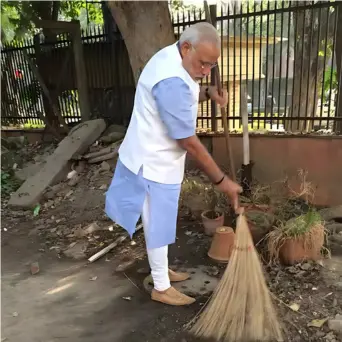
Modi’s administration has placed significant emphasis on welfare schemes aimed at improving the lives of ordinary citizens. The Swachh Bharat Abhiyan, a nationwide campaign to promote
cleanliness, and the Ujjwala Yojana, which provides free LPG connections to poor households, are two major examples.
In 2020, the Ayushman Bharat scheme was launched, providing health coverage to over 50 crore Indians, making it one of the largest government healthcare programs in the world.
Key Welfare Programs:
- Swachh Bharat Abhiyan: Cleanliness and sanitation campaign.
- Ayushman Bharat: Largest health insurance scheme in the world.
- Ujjwala Yojana: Providing free LPG connections to underprivileged families.
3. Foreign Policy and Global Diplomacy
Modi’s foreign policy is characterized by active engagement with the world, enhancing India’s position on the global stage. His Neighborhood First policy aimed at strengthening ties with neighboring countries, while the Act East policy focused on strengthening relations with Southeast Asia.
Modi has also focused on improving relations with major global powers like the United States, Russia, and Japan. He has been instrumental in making India a key player in forums like the
G20, BRICS, and QUAD.
Key Fact:
Modi’s foreign visits have been numerous, and his Howdy Modi event in the U.S. in 2019 drew over 50,000 Indian-Americans, showcasing his global influence.
Key Controversies and Challenges
Despite his popularity, Modi’s tenure has also faced challenges. The Demonetization of 2016, aimed at curbing black money, was heavily debated, with critics arguing about its economic impact. Similarly, the Citizenship Amendment Act (CAA), which led to widespread protests, became a focal point for national debate.
The COVID-19 pandemic posed another significant challenge for the Modi government, particularly regarding the lockdown and the strain on the healthcare system. However, the vaccination drive under Modi’s leadership became one of the largest and fastest in the world.
Recent Developments: Latest Facts and Figures
1. G20 Presidency: India, under Modi’s leadership, held the G20 presidency in 2023, hosting world leaders in New Delhi and reinforcing India’s role in global governance.
2. Digital Transactions: India’s Unified Payments Interface (UPI), a cornerstone of the Digital India initiative, has recorded over 8 billion transactions per month as of 2023, making India one of the largest digital transaction economies globally.
3. Chandrayaan-3 Success: Modi’s leadership in promoting space research culminated in the success of Chandrayaan-3 in August 2023, placing India among a select group of nations with a successful lunar landing.
Legacy in Frames
Space Pioneer: First Indian-born woman in space
Inspiration: Symbol of dreams beyond boundaries

Scientific Spirit: Embodied curiosity and courage
Everlasting Legacy: Scholarships and institutions in her name
Modi in Contemporary Context
Narendra Modi is viewed as a transformative yet polarizing figure in Indian politics. Supporters hail his vision of a “New India” driven by technology, infrastructure, and cultural pride, while critics question his handling of democratic freedoms and inclusivity. Globally, he has established India as a key player on the world stage, symbolizing the rise of modern India.
Narendra Modi - The Architect of a New India
Narendra Modi’s leadership has ushered in a new era for India, marked by bold reforms, a focus on infrastructure, digital transformation, and a renewed sense of national pride. His policies have sought to position India as a global economic power, while ensuring social welfare for all.
As we continue to monitor Modi’s contributions, India Ki Shaan celebrates his role as a transformative leader and visionary statesman who is shaping modern India’s destiny on the global stage.
FAQ's
Modi holds a Master’s degree in Political Science from Gujarat University.
Modi's leadership in Gujarat was marked by the Jyotigram Yojana, significant infrastructure development, and the initiation of the Vibrant Gujarat Summit.
His key economic initiatives include Make in India, GST, Digital India, and Start-Up India.
Ayushman Bharat is a health insurance program providing coverage to over 50 crore citizens, making it one of the largest such initiatives globally.
Modi’s rise began as the Chief Minister of Gujarat, where his governance and reforms transformed the state’s economy. He later led the BJP to victory in the 2014 General Elections, becoming Prime Minister.
His notable achievements include the GST reform, Make in India, Ayushman Bharat, Digital India, and Swachh Bharat Abhiyan.
Modi’s foreign policy focuses on active engagement, strengthening relationships with global powers, and promoting India’s influence in international forums like the G20 and BRICS.