


Quick Summary
Full Name: Indira Priyadarshini Gandhi
Born – Died: 19 November 1917 – 31 October 1984
Tenure(s) in Office: Prime Minister of India (1966–1977, 1980–1984)
Political Party: Indian National Congress
Key Contributions:
Green Revolution (food self-sufficiency)
Nationalization of major banks (1969)
Victory in 1971 Bangladesh Liberation War
Strengthening India’s international standing
Notable Quote: “Forgiveness is a virtue of the brave.”
Introduction: A Force of Change
Indira Gandhi, India’s first and only female Prime Minister, is remembered as one of the most powerful and influential political figures in the country’s history.
Her leadership, spanning multiple terms, was marked by both visionary reforms and controversial decisions. Known as the “Iron Lady of India,” she reshaped the political, economic, and social landscape of India.
In this detailed exploration, we delve into her life, her rise to political prominence, her key policies, challenges she faced, and the legacy she left behind.
Early Life and Education
Indira Gandhi was born on 19th November 1917 in Allahabad, British India, into a family
deeply entrenched in India’s independence movement. As the daughter of Jawaharlal Nehru, India’s first Prime Minister, Indira grew up witnessing the political struggles of the time, which shaped her own political ambitions.
She studied at Santiniketan in India, before moving to Europe for higher education, where she attended Oxford University. Her upbringing was defined by her proximity to India’s most
important political leaders, including her father and Mahatma Gandhi. Indira’s family
background gave her unique exposure to leadership and the independence movement, deeply influencing her worldview.
Key Facts:
- Born: 19th November 1917, Allahabad, British India
- Education: Santiniketan (India), Oxford University (UK)
- Father: Jawaharlal Nehru
- Political Ideology: Socialism, Nationalism
Journey in Pictures

1917
Childhood with Nehru in Allahabad

1959
Becoming Congress President
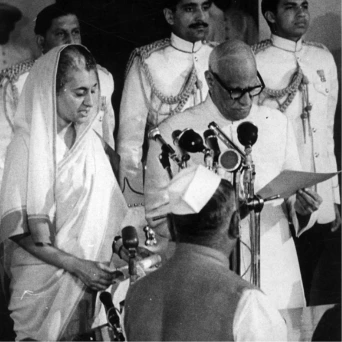
1966
Sworn in as Prime Minister

1971
Leading the nation during the 1971 Bangladesh War

1984
Final public appearances before 1984 assassination
Political Journey and Role in India’s Freedom Struggle
Indira Gandhi’s entry into active politics began early as she worked closely with her father,
Jawaharlal Nehru, during his time as Prime Minister. After Nehru’s death in 1964, India’s
political landscape shifted, and Indira was elected as the Congress Party President in 1959.
In 1966, following the sudden death of then-Prime Minister Lal Bahadur Shastri, Indira Gandhi was chosen to lead India as Prime Minister. Initially perceived as a weak leader by many within the Congress, she quickly dispelled that notion by asserting her authority and implementing sweeping reforms. Her early decisions set the tone for her tenure as a decisive and formidable leader.
Major Events Leading to Her Rise:
- Became the Congress Party President in 1959.
- Served as Minister of Information and Broadcasting under Shastri’s government.
- Chosen as the Prime Minister of India in 1966.
Key Policies and Reforms
Indira Gandhi’s tenure was marked by some of the most impactful reforms and decisions in modern Indian history. Her socialist ideology and strong leadership resulted in major shifts in India’s economy, foreign policy, and political framework.
1. Green Revolution
One of Indira Gandhi’s earliest successes was the Green Revolution. With widespread food shortages in India, Indira promoted the use of new agricultural techniques, which led to an unprecedented increase in food production. This transformation made India self-sufficient in grain production and ended the cycle of famines that had plagued the country.
2. Nationalization of Banks
In 1969, one of her boldest moves was the nationalization of 14 major banks. The move was aimed at ensuring that the banking sector served the needs of the poor and rural India. This decision was met with criticism from some industrialists but was a landmark step toward India’s financial inclusion.
3. 1971 Bangladesh Liberation War
Indira Gandhi’s leadership during the 1971 Bangladesh Liberation War remains one of her defining moments. She provided strong diplomatic and military support to the Bengali independence movement in East Pakistan, leading to the creation of Bangladesh. The Indian military’s decisive victory over Pakistan solidified her position as a powerful global leader.
Key Fact:
The 1971 Indo-Pak war ended with India’s decisive victory, resulting in the creation of Bangladesh. Over 90,000 Pakistani soldiers surrendered, marking one of the largest surrenders since World War II.
4. Emergency (1975-1977)
In 1975, Indira Gandhi declared a state of emergency across India, following a court ruling that found her guilty of electoral malpractices. The Emergency period (1975-1977) remains one of the most controversial phases of her political career. Civil liberties were curtailed, political opposition was imprisoned, and strict censorship was imposed on the press. While she justified it as necessary for national security and economic stability, the Emergency faced widespread criticism and led to her temporary electoral defeat in 1977.
5. Operation Blue Star (1984)
One of the most tragic and controversial events of Indira Gandhi’s political career was Operation Blue Star. In 1984, she ordered the Indian Army to remove Sikh militants holed up in the Golden Temple, Amritsar. While the operation successfully eliminated the militant threat, it led to significant civilian casualties and widespread anger within the Sikh community. Tragically, this decision led to Indira’s assassination on 31st October 1984 by her Sikh bodyguards, who sought revenge for the military operation.
Assassination and Legacy
On 31st October 1984, Indira Gandhi was assassinated by her Sikh bodyguards, Satwant Singh and Beant Singh, in retaliation for Operation Blue Star. Her death shocked the nation, and massive riots followed, leading to further bloodshed and political turmoil. Despite the controversy surrounding her leadership, Indira Gandhi’s legacy as one of India’s most powerful and transformative Prime Ministers remains intact.
Impact on Modern India
- Economic Reforms: Her policies of bank nationalization and economic redistribution left a lasting imprint on India’s financial sector.
- International Standing: Indira’s leadership during the Bangladesh War elevated India’s global stature.
- Women’s Leadership: As the first female Prime Minister of India, she broke the glass ceiling for women in Indian politics, inspiring future generations of women leaders.
Latest Developments:
- In 2023, several political and academic institutions paid tribute to Indira Gandhi on the 40th anniversary of her assassination, recognizing her role in shaping modern India.
- Her legacy continues to influence the policies of the Indian National Congress, with her grandson Rahul Gandhi frequently invoking her vision in party campaigns.
Legacy and Impact on Modern India
Indira Gandhi’s legacy is defined by bold reforms, from the Green Revolution to bank nationalization, which transformed India’s economy. As the nation’s first woman Prime Minister, she inspired generations, while her controversial decisions like the Emergency continue to shape debates on democracy and governance.
Key Contributions to Modern India:
- Economic Reforms: Bank nationalization and socialist policies expanded financial inclusion.
- Agriculture: The Green Revolution transformed India from a famine-prone nation to a food-secure state.
- Women in Politics: As the first female PM, she broke barriers and inspired generations of women leaders.
- Foreign Policy: Strengthened India’s voice globally, especially after the 1971 victory.
- Controversies: The Emergency (1975–77) and Operation Blue Star (1984) remain debated but showcase her complex leadership.
Legacy in Frames

Indira’s statue in Victoria garden

Indira Gandhi Memorial Museum, New Delhi
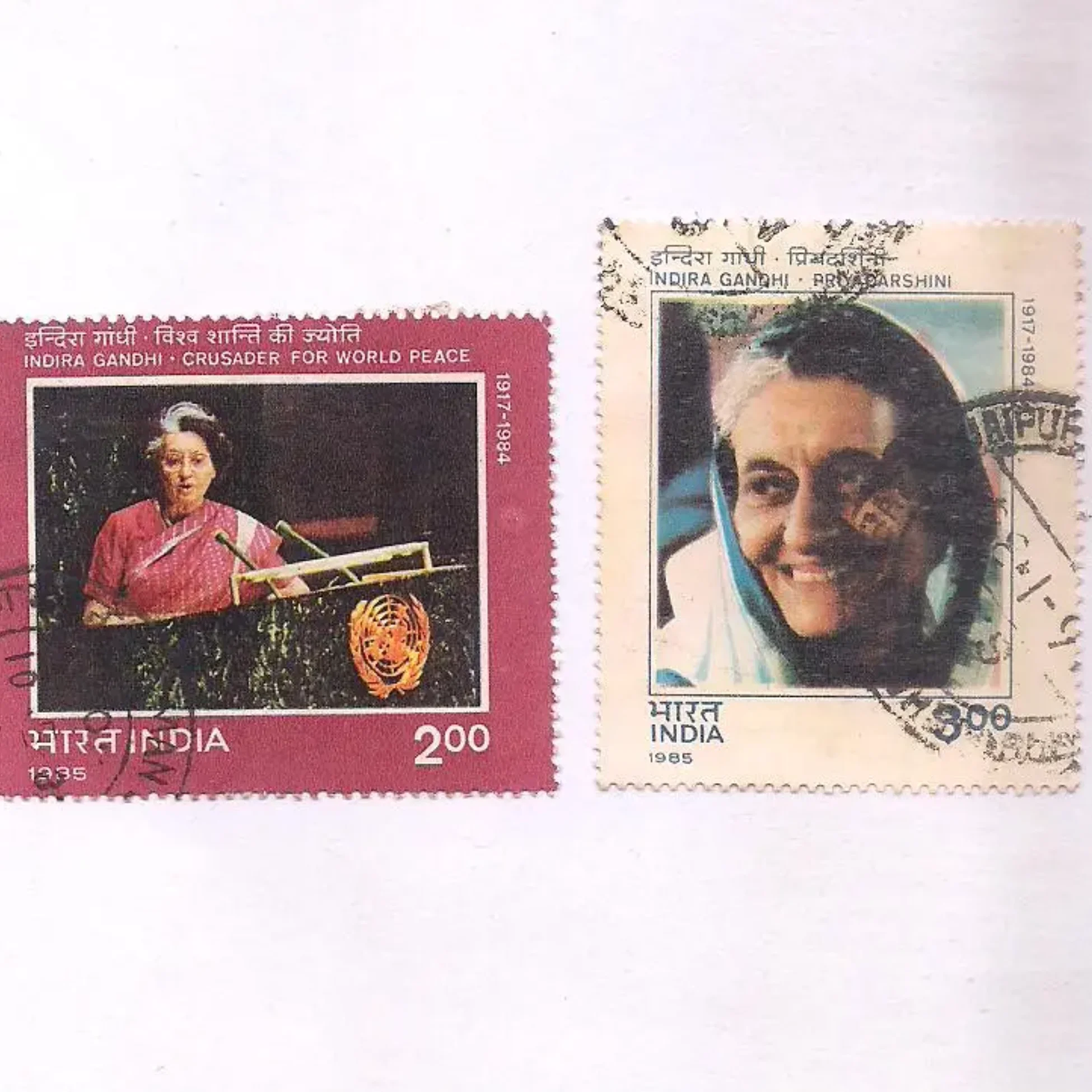
Postage stamps & commemorative coins issued in her honor

Documentaries/films based on her leadership
Indira Gandhi in Contemporary Context
Latest Developments:
- Political Influence: Her legacy continues in the Congress Party, with leaders like Sonia Gandhi and Rahul Gandhi invoking her vision.
- Academic Interest: Universities & researchers often revisit her role in shaping 20th-century India.
- Public Debate: Her policies (banking, agriculture, foreign relations) are still discussed in Indian politics.
- Global Symbol: She remains one of the most recognized female leaders in post-colonial history.
Indira Gandhi's Enduring Legacy
Indira Gandhi remains a towering figure in Indian political history. Her courage in making bold decisions, whether in times of war or peace, her dedication to improving the lives of millions, and her indomitable spirit, continue to inspire people today. While her career had its controversies, her contributions to India’s growth and her status as a pioneering female leader remain a source of pride for the nation.
This page on Indira Gandhi celebrates her as an embodiment of India’s strength and resilience.
Explore more profiles of India’s political legends in our Politics category.
FAQ's
Indira Gandhi was chosen as Prime Minister after the untimely death of Lal Bahadur Shastri in 1966. Initially perceived as a compromise candidate, she soon established her leadership with strong reforms and decisions.
Indira faced internal dissent from senior Congress leaders, who initially underestimated her. She had to assert her leadership while navigating factionalism within the party.
The Emergency was a 21-month period from 1975 to 1977 when Indira Gandhi imposed authoritarian rule, suspending civil liberties and suppressing political dissent.
Indira declared the Emergency following a court ruling that invalidated her election victory, and citing threats to national security and public order, she took extraordinary measures to maintain power.
Indira Gandhi earned the title due to her strong, assertive leadership style, particularly during the 1971 Bangladesh War and her decision to impose the Emergency in 1975.
Indira Gandhi is known for her role in the Green Revolution, nationalizing banks, leading India to victory in the 1971 Bangladesh War, and initiating social and economic reforms.
Her bank nationalization and agricultural policies reshaped India's economy, promoting financial inclusion and self-reliance in food production.
Operation Blue Star, while successful in eliminating the militant threat in Punjab, led to widespread anger among the Sikh community and directly resulted in Indira Gandhi’s assassination in 1984.