1918
Kheda
Helped organise a major peasant campaign in Gujarat.
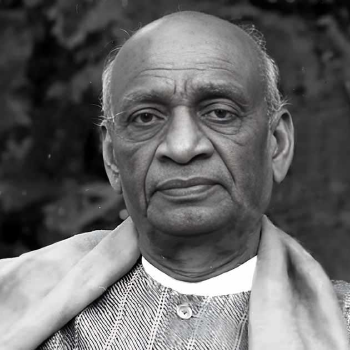
Lawyer, mass organiser and senior Congress leader who became independent India’s first Deputy Prime Minister and Home Minister and played a leading role in integrating princely states.
Vallabhbhai Patel was born in Gujarat in 1875 and trained as a lawyer. His political involvement deepened after he came into contact with Mahatma Gandhi and joined campaigns against colonial policies.
His reputation as an organiser grew through movements including Kheda and especially the Bardoli satyagraha of 1928, after which the title ‘Sardar’ became strongly associated with him.
After independence in 1947, Patel became Deputy Prime Minister and Home Minister. Working closely with V. P. Menon and other officials, he played a leading role in bringing most princely states into the Indian Union.
Vallabhbhai Patel was born on 31 October 1875.
Patel helped organise peasants seeking revenue relief.
His leadership greatly expanded his national reputation.
Patel presided over the Karachi session of the Indian National Congress.
He became Deputy Prime Minister and Home Minister.
Patel and the States Department led the accession and consolidation process.
Patel died on 15 December 1950.
At independence, British paramountcy over hundreds of princely states ended, creating an urgent political challenge. Patel provided political leadership while V. P. Menon and the States Department handled much of the detailed negotiation and administration.
The process combined persuasion, constitutional instruments, political pressure and, in a few cases, the use of force. Its outcome helped create the territorial shape of the Indian Union.
Bardoli • Integration • Nation-BuildingHelped organise a major peasant campaign in Gujarat.
Led the satyagraha that established his reputation as ‘Sardar’.
Became one of the organisation’s strongest administrators.
Served in independent India’s first national government.
Oversaw major security and administrative challenges.
Played a leading role in accession and political integration.
The integration of princely states was not a single act and cannot be credited to one individual alone. Patel’s political leadership worked alongside V. P. Menon, civil servants, rulers and other national leaders.
Some accessions were straightforward; others required intense pressure or military action, making the process historically complex.
Patel’s reputation remains strongly linked with national unity and administrative firmness.
He is one of the central figures through whom the challenges of India’s first years of independence are understood.
Biographical reference on Patel’s political career and integration role.
View source →Institution dedicated to preserving Patel’s life, documents and public legacy.
View source →Government portal with official commemorative material on Sardar Vallabhbhai Patel.
View source →He was born on 31 October 1875 in Nadiad, Gujarat.
The title became strongly associated with him after his leadership during the Bardoli satyagraha of 1928.
He served as India’s first Deputy Prime Minister and Home Minister.
He provided political leadership to the accession process and worked closely with V. P. Menon and the States Department.
He died on 15 December 1950.
Help us improve the archive by suggesting reliable information or another Indian personality worth documenting.