1842
Queen of Jhansi
Became Rani Lakshmibai after marrying Gangadhar Rao.
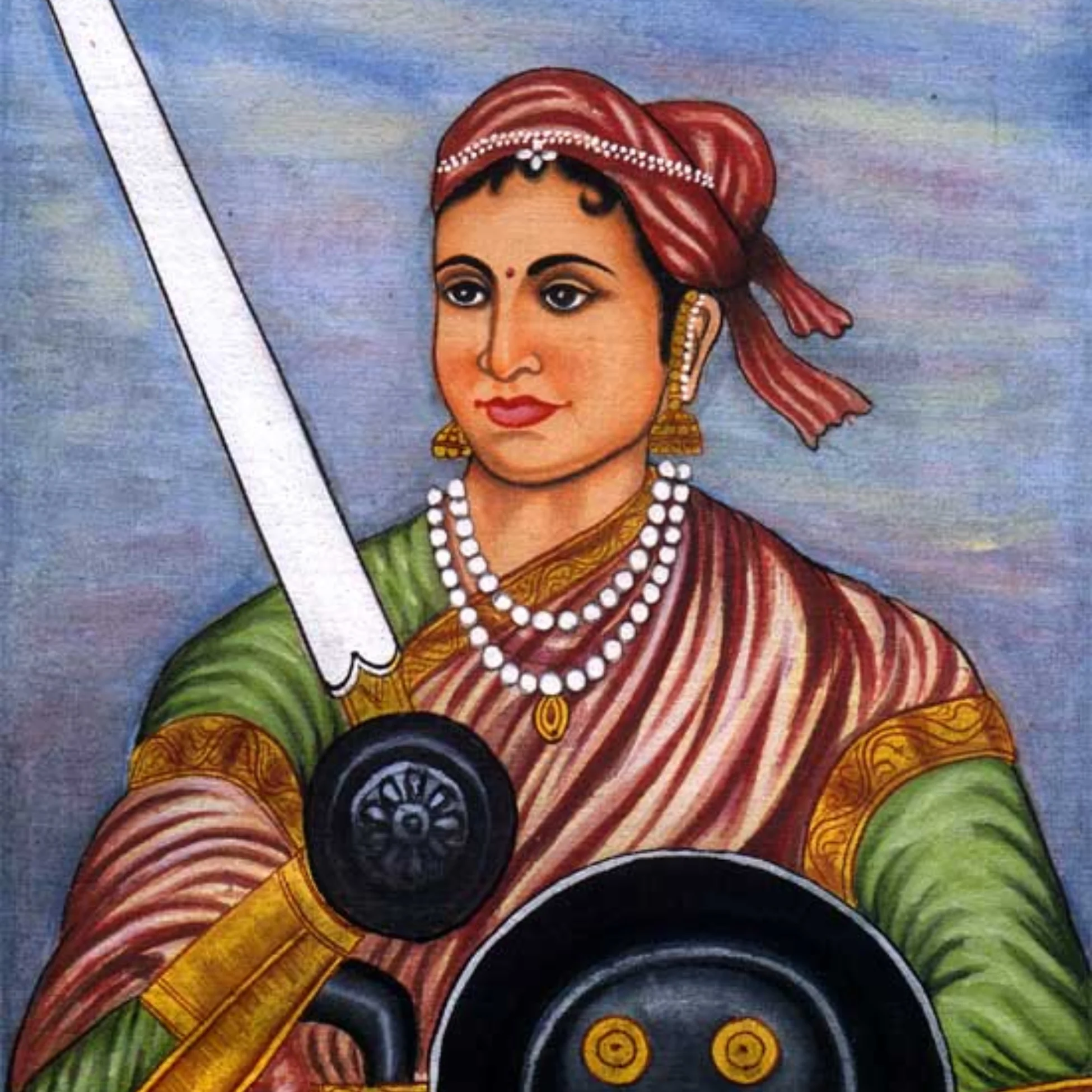
Ruler and military leader whose defence of Jhansi during the uprising of 1857 made her one of the most enduring symbols of resistance in Indian history.
Rani Lakshmi Bai was born Manikarnika Tambe in Varanasi in 1828. After marrying Maharaja Gangadhar Rao of Jhansi, she became Lakshmibai, Rani of Jhansi.
Following the Maharaja’s death, the East India Company refused to recognise the adopted heir for succession and annexed Jhansi under the Doctrine of Lapse.
During the uprising of 1857–58, Lakshmibai emerged as a military and political leader. After the British assault on Jhansi, she escaped, joined other rebel forces and was killed near Gwalior in June 1858.
Manikarnika Tambe was born on 19 November 1828.
She married the Maharaja of Jhansi and became Rani Lakshmibai.
After the Maharaja’s death, the British rejected the adopted heir’s succession.
The wider rebellion transformed the succession dispute into armed conflict.
Lakshmibai led the defence as British forces attacked the city.
After leaving Jhansi, she continued fighting alongside other rebel leaders.
Lakshmibai died near Gwalior.
Lakshmibai’s historical importance comes from the convergence of royal authority, colonial annexation and armed rebellion in one dramatic story.
Her death in battle gave the uprising one of its most powerful female symbols, and later poetry and nationalist memory expanded her reputation far beyond Jhansi.
Jhansi • 1857 Uprising • Women’s LeadershipBecame Rani Lakshmibai after marrying Gangadhar Rao.
Jhansi was annexed after a succession dispute.
Assumed a central role as rebellion spread.
Led resistance during the British siege.
Escaped and continued fighting around Kalpi and Gwalior.
Became one of India’s most recognised symbols of courage and resistance.
Lakshmibai’s life has been retold through nationalist poetry, oral traditions, school histories and films.
Some dramatic details in later stories are difficult to verify, so a careful biography should distinguish well-documented events from legend.
Few individuals from the uprising have remained as visible in public memory as Rani Lakshmi Bai.
Her name continues to symbolise courage, anti-colonial resistance and women’s political agency.
Biographical reference on the Rani of Jhansi and her role in the 1857 uprising.
View source →Government-supported repository for Indian history, culture and heritage.
View source →Official archival institution preserving records connected to the colonial period.
View source →She was born Manikarnika Tambe.
The East India Company refused to recognise the adopted heir under the Doctrine of Lapse.
She became a political and military leader in Jhansi and fought British forces during the uprising.
She was killed in battle near Gwalior on 18 June 1858.
She became one of the most enduring symbols of courage, resistance and women’s leadership in Indian history.
Help us improve the archive by suggesting reliable information or another Indian personality worth documenting.