1938
Congress Leadership
Became president of the Indian National Congress.
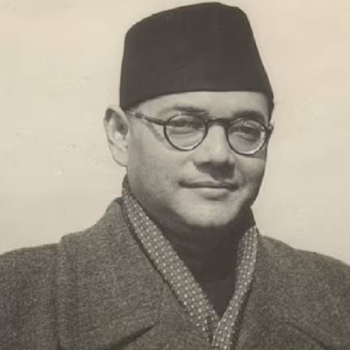
Senior nationalist leader who broke with the Congress high command, led the Indian National Army and formed the Provisional Government of Azad Hind during the Second World War.
Subhas Chandra Bose was born in Cuttack in 1897 and was educated in India and Britain. Although he qualified for the Indian Civil Service, he resigned before building a career in the colonial administration and returned to nationalist politics.
Bose rose rapidly in the Indian National Congress and was elected president in 1938 and again in 1939. Strategic disagreements with Gandhi and other senior leaders eventually led him to resign and form the Forward Bloc.
During the Second World War he escaped British surveillance, travelled through Europe and later reached Southeast Asia, where he assumed leadership of the Indian National Army and announced the Provisional Government of Azad Hind.
Subhas Chandra Bose was born on 23 January 1897.
He resigned from the ICS path and entered nationalist politics.
Bose was elected president of the Indian National Congress.
After re-election and major strategic conflict, he resigned from the presidency.
Bose left British surveillance and travelled abroad in search of support.
He took leadership of the Indian National Army and announced a provisional government.
Bose was officially reported to have died after an air crash in Taihoku on 18 August.
Bose believed Britain’s vulnerability during the Second World War created an opportunity that should be used through international alliances and military action.
That approach differed fundamentally from Gandhian nonviolence and remains central to both admiration and debate around his legacy.
INA • Azad Hind • Armed NationalismBecame president of the Indian National Congress.
Created a new political platform after breaking with the Congress high command.
Escaped India and sought foreign support for independence.
Took command of the Indian National Army.
Headed the Provisional Government of Free India.
Became one of the most powerful symbols of militant nationalism.
Bose’s attempt to secure support from Axis powers remains one of the most controversial aspects of his career.
Understanding his strategy requires holding together two facts: his uncompromising commitment to Indian independence and the deeply problematic international alliances he was willing to pursue.
The INA trials generated strong public sympathy in India after the war and helped keep Bose’s image politically powerful.
He remains one of the most widely remembered nationalist leaders outside the Gandhian tradition.
Biographical reference on Bose’s Congress career, INA leadership and wartime activities.
View source →Institution dedicated to preserving archives and material connected with Subhas Chandra Bose.
View source →Government-supported repository for Indian historical and cultural material.
View source →He was born on 23 January 1897 in Cuttack.
He faced major strategic disagreements with Gandhi and other senior Congress leaders after his re-election in 1939.
The INA was an armed force that Bose led in Southeast Asia during the Second World War.
It was the Provisional Government of Free India announced under Bose’s leadership in 1943.
He was officially reported to have died after an air crash on 18 August 1945.
Help us improve the archive by suggesting reliable information or another Indian personality worth documenting.