Progressive Art
Modern Movement
Became associated with the Progressive Artists’ Group.
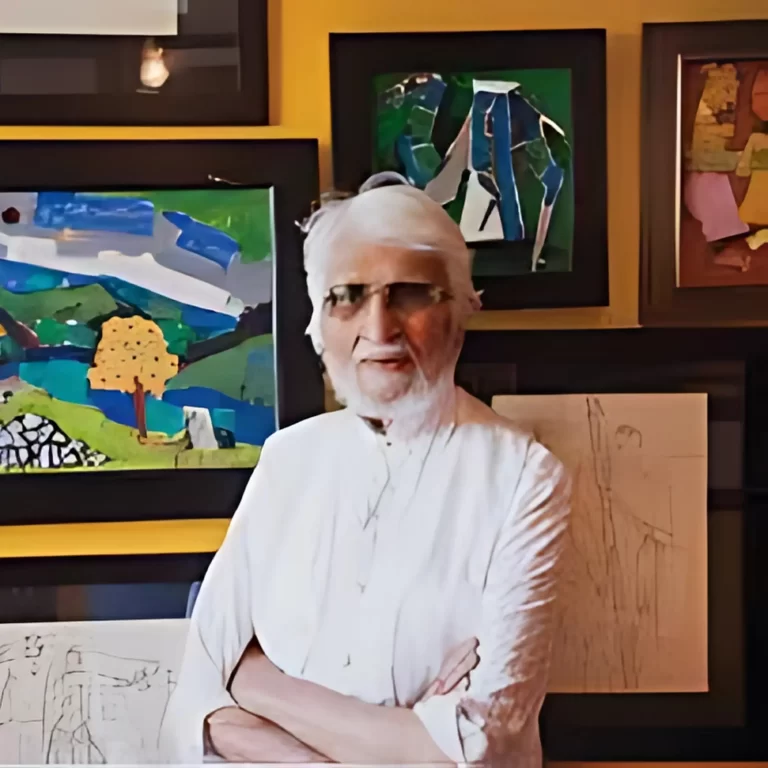
One of India’s most internationally recognised modern painters, known for bold lines, dynamic figures and an enormous body of work spanning mythology, cities, cinema and national life.
Maqbool Fida Husain was born in Pandharpur in 1915 and spent part of his youth in Indore. After moving to Bombay, he supported himself by painting cinema hoardings and designing furniture and toys while developing his own visual language.
Husain became associated with the Progressive Artists’ Group, which sought new approaches to Indian art after independence. His paintings drew on mythology, rural and urban life, horses, women, cinema and political imagery.
His career brought international exhibitions and major recognition, but later works also generated intense controversy and legal disputes. He spent his final years outside India and died in London in 2011.
M. F. Husain was born in present-day Maharashtra.
He painted cinema hoardings and commercial art while developing his own style.
Husain became associated with the Progressive Artists’ Group and post-independence modernism.
His exhibitions expanded across India and abroad.
Husain received a major civilian honour for his contribution to art.
He received India’s second-highest civilian award.
Legal cases and protests over some paintings contributed to his decision to live abroad.
Husain died on 9 June 2011.
Husain developed a style that could move rapidly between myth, history, popular culture and everyday life. His strong lines and simplified figures made his paintings immediately recognisable.
That ability to combine Indian subjects with modernist form helped make him one of the most visible artists associated with post-independence Indian art.
Modernism • Mythology • Visual StorytellingBecame associated with the Progressive Artists’ Group.
Commercial painting helped shape his speed and scale.
Dynamic horses became one of his most recognised recurring subjects.
His interest in cinema extended beyond painting.
Recognised nationally for his artistic contribution.
Received one of India’s highest civilian honours.
Some of Husain’s later representations of religious and national imagery triggered protests, legal cases and threats.
Those controversies are part of his biography and raise continuing questions about artistic freedom, offence and the public life of art.
Husain remains one of the most recognisable names in Indian modern art, both for the scale of his work and the controversies surrounding it.
His paintings continue to be exhibited, collected and debated across India and internationally.
Biographical reference on Husain’s life and artistic career.
View source →India’s national museum network for modern and contemporary art.
View source →Government-supported repository for Indian visual art and cultural heritage.
View source →He was born on 17 September 1915 in Pandharpur.
He was known for modernist paintings featuring bold lines, figures, mythology, horses and scenes from Indian life.
Yes. He became closely associated with the group and the development of post-independence Indian modernism.
He received the Padma Bhushan in 1973 and the Padma Vibhushan in 1991.
He died in London on 9 June 2011.
Help us improve the archive by suggesting reliable information or another Indian personality worth documenting.