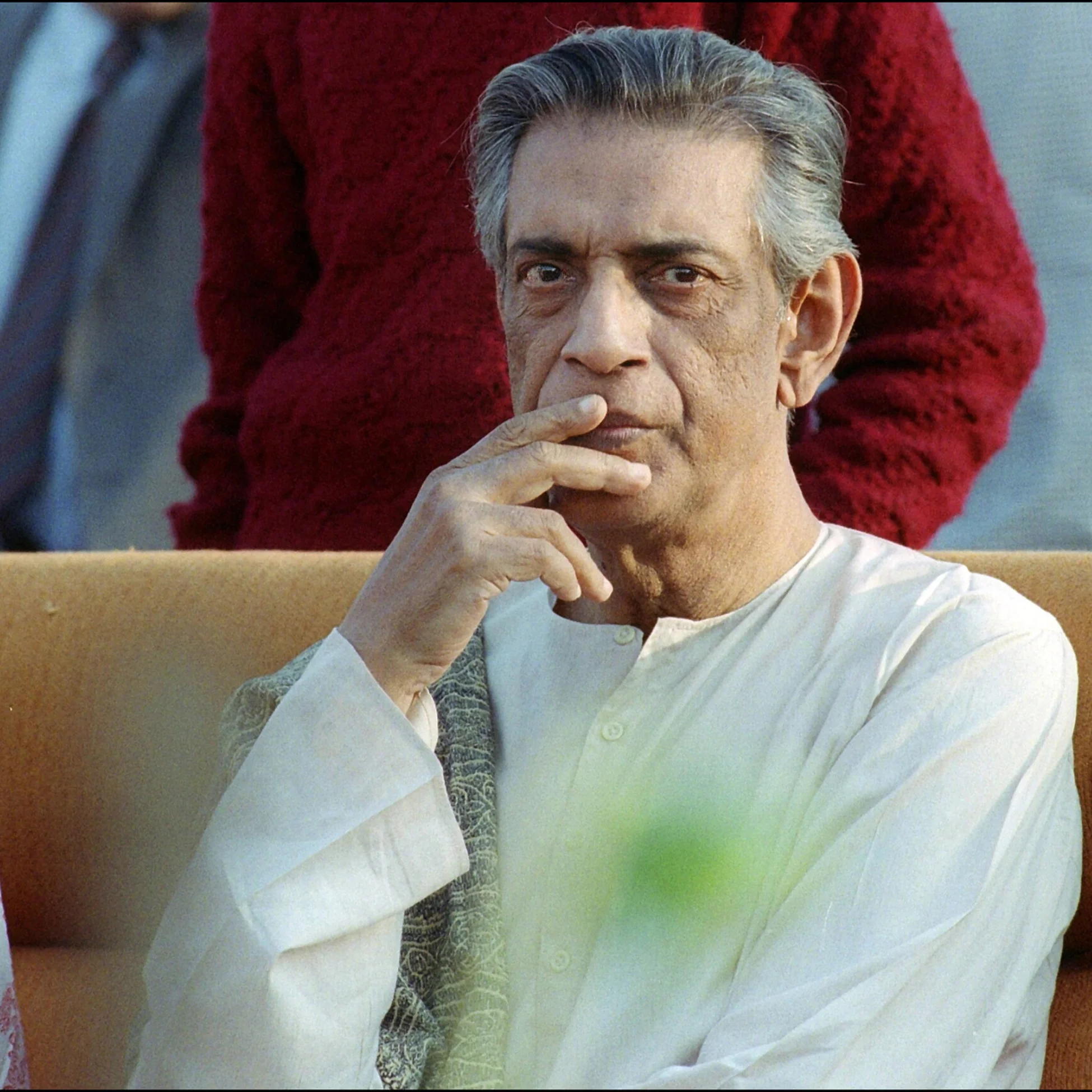
Satyajit Ray Biography – The Maestro Who Redefined Indian Cinema

Satyajit Ray

Satyajit Ray, India’s cinematic genius, mesmerized the world with his storytelling, films, and cultural vision.

Quick Summary

Full Name: Satyajit Ray
Born: 2nd May 1921, Kolkata, Bengal Presidency, British India (now West Bengal, India)
Died: 23rd April 1992, Kolkata, India
Profession: Filmmaker, Screenwriter, Author, Illustrator, Music Composer
Known As: “Master of Indian Cinema,” “Ray of Realism”
Career Span: 1955 – 1992
Key Contributions:

  • Renowned filmmaker who revolutionized Indian cinema with his humanistic storytelling.

  • Created iconic films like Pather Panchali, Aparajito, Apur Sansar, and the Feluda series.

  • Awarded an Academy Honorary Award (1992) for lifetime achievement in cinema.

  • Authored numerous books, designed film posters, and composed music for his films.

  • Influenced generations of filmmakers globally, blending realism with artistic finesse.

Quote:
“A film is never really good unless the camera is an eye in the head of a poet.” — Satyajit Ray

Early Life of Satyajit Ray

Satyajit Ray was born on 2 May 1921 in Calcutta (now Kolkata), into a family deeply rooted in literature and art. His father, Sukumar Ray, was a renowned writer of nonsense rhymes and a pioneer of Bengali literature. Tragically, Sukumar passed away when Satyajit was only two years old, leaving his mother, Suprabha Ray, to raise him.

Ray’s upbringing was shaped by his family’s creative legacy. His grandfather, Upendrakishore Ray Chowdhury, was a distinguished writer, publisher, and painter. Growing up in such an environment, young Satyajit developed a fascination with storytelling, sketching, and cinema.

Ray studied at Ballygunge Government High School and later pursued economics at Presidency College, Calcutta. However, his true passion lay in the arts. He later joined Visva-Bharati University in Santiniketan, founded by Nobel laureate Rabindranath Tagore. Here, he was introduced to Indian classical art, philosophy, and culture – elements that would deeply influence his cinematic vision.

Filmmaking Career – The Early Steps

Satyajit Ray did not start as a filmmaker. His career began in advertising, where he worked as a graphic designer at D.J. Keymer. His sharp eye for visuals and creativity soon made him one of the most sought-after illustrators. Ray also designed book covers and created illustrations for his grandfather’s publishing house, Signet Press.

It was during this period that Ray’s interest in films deepened. He co-founded the Calcutta Film Society in 1947, which introduced him to international classics by directors such as Charlie Chaplin, Sergei Eisenstein, Jean Renoir, and John Ford. This exposure gave Ray an understanding of global cinema while inspiring him to tell stories rooted in Indian reality.

His turning point came when he assisted French director Jean Renoir during the making of The River in Calcutta in 1950. Ray also traveled to London in 1950, where he watched Vittorio De

Sica’s Bicycle Thieves – a neorealist masterpiece that convinced him to make a film in India with authentic characters and real locations.

The Apu Trilogy – Ray’s Magnum Opus

Ray’s debut film, Pather Panchali (Song of the Little Road), released in 1955, changed Indian cinema forever. Based on Bibhutibhushan Bandyopadhyay’s novel, the film depicted the struggles of a poor rural family through the eyes of young Apu.

Despite severe financial challenges, Ray persisted with his vision. He shot the film with a mostly amateur cast and crew, often using natural light and real locations. The film’s raw realism, poetic visuals, and heartfelt storytelling won global acclaim.

Encouraged by its success, Ray continued Apu’s story in two sequels:

  • Aparajito (The Unvanquished) – 1956
  • Apur Sansar (The World of Apu) – 1959

Together, these films became known as The Apu Trilogy, which established Ray as a master filmmaker. The trilogy earned several international awards, including the Best Human Document at the Cannes Film Festival.

Satyajit Ray’s Cinematic Style

Ray’s films were characterized by realism, humanism, and simplicity. He avoided melodrama and instead focused on ordinary people, their struggles, emotions, and relationships. His attention to detail, subtle storytelling, and ability to capture the beauty of everyday life made his cinema timeless.

He was influenced by both Indian culture and Western film techniques, blending them into a unique style. His films often carried strong social messages while remaining deeply personal.

Beyond the Apu Trilogy – Other Masterpieces

While the Apu Trilogy brought him fame, Ray’s career spanned nearly four decades, producing over 37 films, including features, documentaries, and shorts. Some of his most acclaimed works include:

  • Charulata (1964): A story of loneliness and unfulfilled love, often considered Ray’s personal favorite.
  • Jalsaghar (The Music Room, 1958): A poignant portrayal of the decline of zamindars (landlords).
  • Devi (The Goddess, 1960): A bold exploration of blind faith and superstition.
  • Shatranj Ke Khilari (The Chess Players, 1977): Ray’s only full-length Hindi feature, set against the backdrop of British annexation of Awadh.
  • Goopy Gyne Bagha Byne (1969): A fantasy musical film that captured the imagination of children and adults alike.


Ray was not only a filmmaker but also a scriptwriter, editor, music composer, and calligrapher. He composed the background score for most of his films, showcasing his multifaceted genius.

Satyajit Ray as a Writer and Illustrator

Beyond cinema, Ray was a prolific writer, particularly in Bengali literature. He created memorable fictional characters such as:

  • Feluda: A sharp detective, often compared to Sherlock Holmes.
  • Professor Shonku: A brilliant scientist who embarked on sci-fi adventures.


His short stories and novels remain popular among readers of all ages. Ray also illustrated many of his books, displaying his artistic versatility.

Philanthropy and Social Work

One of the most defining aspects of Ratan Tata’s biography is his dedication to philanthropy. The majority of Tata Sons’ profits are directed into charitable trusts such as the Sir Dorabji Tata Trust and the Sir Ratan Tata Trust.

These trusts have funded initiatives in education, healthcare, rural development, and scientific research. Some notable contributions include:

  • Establishing Tata Memorial Hospital, one of India’s leading cancer treatment centers.
  • Supporting IITs, IISc, and several universities with research grants.
  • Contributing to global causes such as healthcare and disaster relief.

In 2010, the Tata Trusts donated $50 million to Harvard Business School, marking one of the largest donations by an Indian organization to a foreign university.

Awards & Achievements

  • Bharat Ratna (1992): India’s highest civilian honor.
  • Dadasaheb Phalke Award (1985): For his lifetime contribution to Indian cinema.
  • Academy Honorary Award (1992): Ray became the first Indian filmmaker to receive an Oscar, recognizing his profound impact on world cinema.
  • Padma Bhushan (1965) and Padma Vibhushan (1976): For his service to arts and cinema.
  • Multiple international awards, including at Cannes, Berlin, Venice, and the British Academy of Film and Television Arts (BAFTA).

Legacy of Satyajit Ray

Satyajit Ray passed away on 23 April 1992, just days after receiving his honorary Oscar. His death marked the end of an era, but his films continue to inspire generations of filmmakers and audiences worldwide.

Ray’s influence can be seen in the works of directors like Martin Scorsese, Akira Kurosawa, Wes Anderson, and Christopher Nolan, who have praised his storytelling and cinematic vision.

In India, Ray is celebrated as the father of parallel cinema, proving that films could be artistic, socially relevant, and globally appreciated. His blend of realism and humanism set the foundation for future filmmakers who wanted to tell authentic Indian stories.

Conclusion

The Satyajit Ray biography is not just the story of a filmmaker but of a visionary who transformed Indian cinema. From the rural lanes of Bengal to the world stage of Hollywood, Ray’s journey remains a symbol of passion, dedication, and creativity.

He was not just an Academy Award-winning filmmaker but also a writer, illustrator, and cultural ambassador of India. His films continue to move hearts, reminding us that cinema, at its best, is about humanity itself.

FAQ's

He was a filmmaker, writer, composer, and artist, considered one of the greatest directors in Indian and world cinema.

His most famous films include Pather Panchali, Aparajito, Apur Sansar, and Charulata.

Yes, he received the Academy Honorary Award in 1992 and numerous other international honors.

Yes, he wrote novels, short stories, and created the famous detective series Feluda.

He left a lasting impact on global cinema, inspiring filmmakers with his humanistic approach and artistic excellence.