
1
Former Chairman of ISRO
Former Chairman of ISRO forms part of K. Sivan’s wider contribution to Indian science, technology or public life.
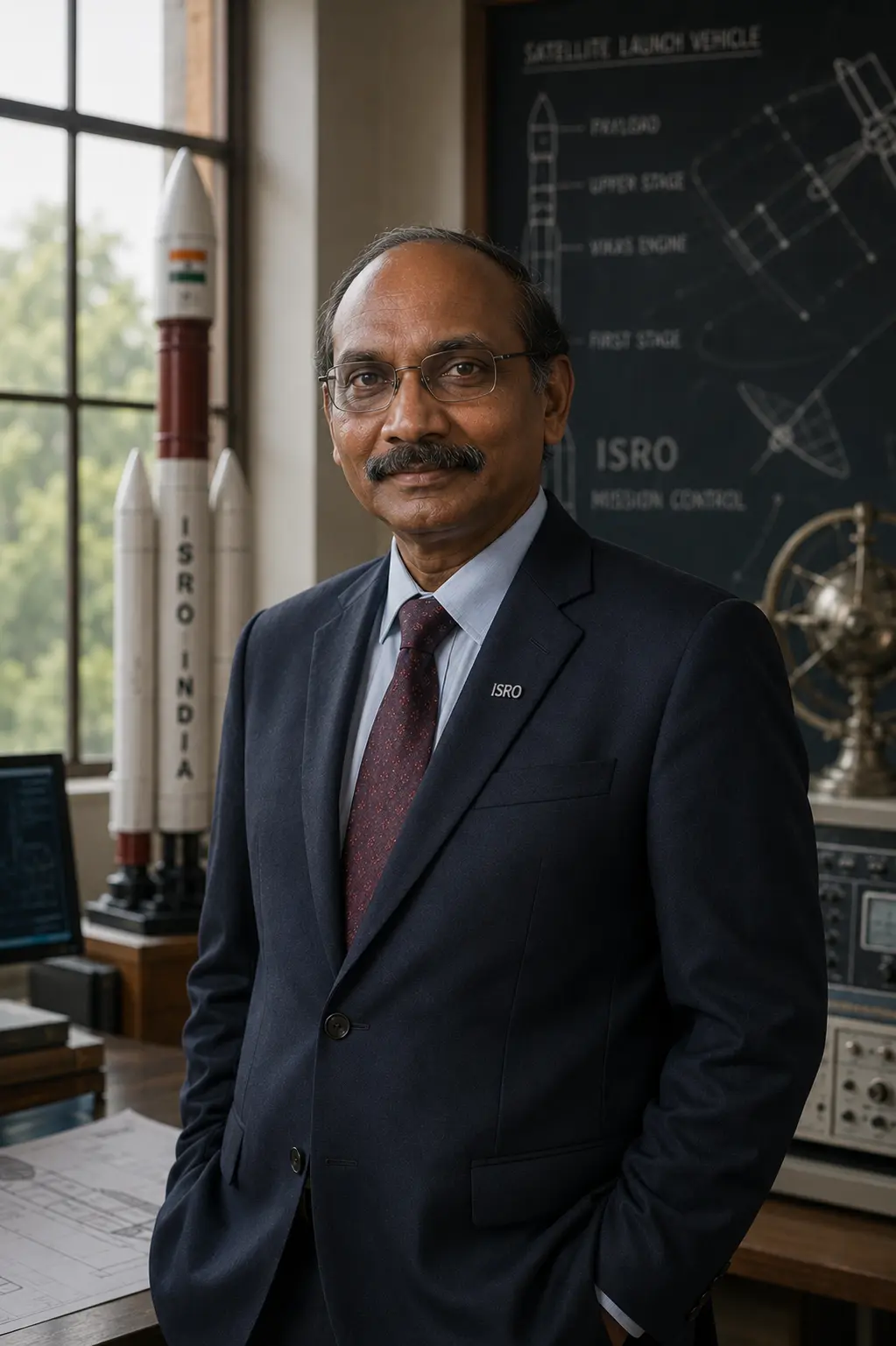
Known for launch-vehicle engineering and mission leadership, Sivan’s career reflects India’s long institutional tradition of building complex space capability through public-sector science.
In a world where dreams are often overshadowed by reality, K. Sivan stands tall as a beacon of hope and inspiration. His journey from a small town to becoming a leading figure in India's space missions is a testament to perseverance, innovation, and the power of imagination.
K. Sivan, popularly known as the \"Rocket Man of India,\" is a renowned aerospace engineer and the former chairman of the Indian Space Research Organisation (ISRO). He played a pivotal role in various significant space missions, including the Chandrayaan and Mangalyaan projects. His contributions have not only placed India on the global space map but have also inspired countless young minds to dream big and pursue careers in science and technology.
K. Sivan was born in a modest household in Kothavara, a small village in Kerala, India. He was the son of a farmer and grew up witnessing the struggles of his family. Despite the limited resources, his parents emphasized the importance of education. From a young age, Sivan showed a keen interest in science and technology. He was curious about how things worked and often spent hours reading books and tinkering with simple gadgets.
Sivan grew up in a farming family in Kanyakumari district and pursued engineering through a modest educational path.
He began working in India’s space programme and specialised in launch-vehicle design and trajectory engineering.
Sivan contributed to mission planning, guidance and launch-vehicle development during the rise of PSLV.
He became director of the Vikram Sarabhai Space Centre, one of ISRO’s key launch-vehicle institutions.
Sivan took over as chairman of ISRO and Secretary of the Department of Space.
He led ISRO during the ambitious lunar mission, including the Vikram lander attempt.
After decades inside the programme, he concluded his term with a reputation rooted in launch systems and mission management.
Sivan became widely known during Chandrayaan-2, but his deeper contribution was technical and institutional: decades of work on launch trajectories, vehicle design and mission planning. His career illustrates how ISRO develops leaders from within long-running engineering programmes.
Science • Innovation • IndiaFormer Chairman of ISRO forms part of K. Sivan’s wider contribution to Indian science, technology or public life.
Former Director of Vikram Sarabhai Space Centre forms part of K. Sivan’s wider contribution to Indian science, technology or public life.
Major career in launch-vehicle engineering forms part of K. Sivan’s wider contribution to Indian science, technology or public life.
Leadership during Chandrayaan-2 forms part of K. Sivan’s wider contribution to Indian science, technology or public life.
Contribution to PSLV/GSLV mission planning forms part of K. Sivan’s wider contribution to Indian science, technology or public life.
Symbol of upward mobility through public science forms part of K. Sivan’s wider contribution to Indian science, technology or public life.
Sivan became widely known during Chandrayaan-2, but his deeper contribution was technical and institutional: decades of work on launch trajectories, vehicle design and mission planning. His career illustrates how ISRO develops leaders from within long-running engineering programmes.
His public story resonates because it combines technical achievement with a rural, first-generation educational journey. Within India’s space programme, he represents continuity between foundational launch-vehicle work and increasingly ambitious planetary missions.
Official institutional history and leadership records.
View source →Launch-vehicle centre associated with Sivan’s leadership.
View source →Government of India space administration.
View source →Institutional context for Sivan’s higher studies.
View source →Known for launch-vehicle engineering and mission leadership, Sivan’s career reflects India’s long institutional tradition of building complex space capability through public-sector science.
Former Chairman of ISRO, Former Director of Vikram Sarabhai Space Centre, Major career in launch-vehicle engineering.
His public story resonates because it combines technical achievement with a rural, first-generation educational journey. Within India’s space programme, he represents continuity between foundational launch-vehicle work and increasingly ambitious planetary missions.
ISRO Chairman, Chandrayaan-2, Completion of chairmanship.
Help us improve the archive by suggesting reliable information or another Indian personality worth documenting.