

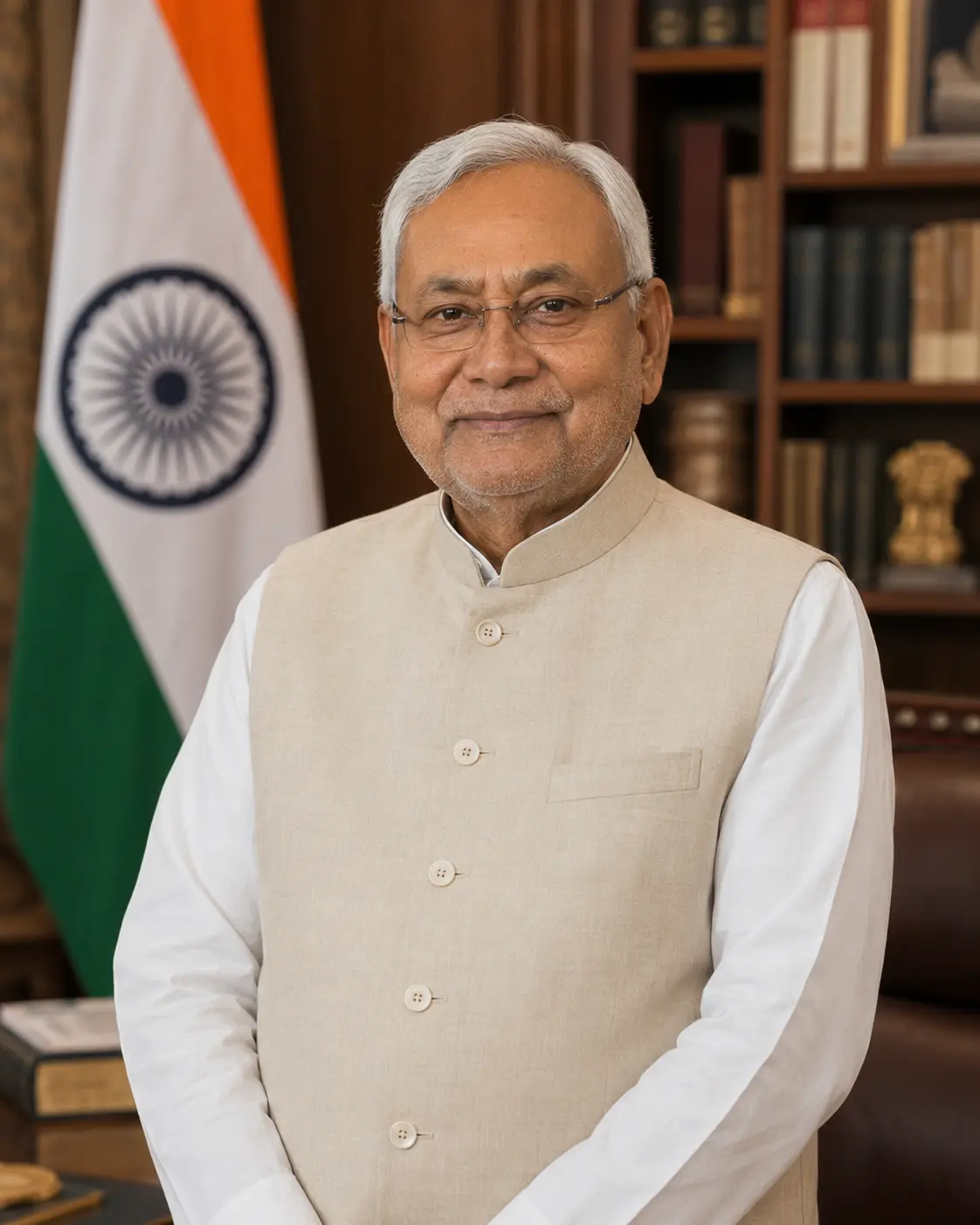
Nitish Kumar’s journey from a small village to becoming one of India’s most influential politicians is a tale of resilience, determination, and a vision for a better society. Through thick and thin, he has carved a path that resonates with millions, embodying the aspirations of the common man.
Introduction
Nitish Kumar is a prominent Indian politician, best known for his role as the Chief Minister of Bihar. His leadership has transformed the state’s governance and development landscape. He is recognized for his focus on education, infrastructure, and social justice, making him a significant figure in Indian politics.
Quick Summary
- Full Name: Nitish Kumar
- Born: March 1, 1951, in Bakhtiarpur, Bihar, India
- Profession: Politician
- Known As: Chief Minister of Bihar
- Career Span: Active in politics since the late 1970s
- Key Contributions:
- Improved education and health care in Bihar
- Focused on infrastructure development
- Pioneered social reforms for marginalized communities
- Introduced schemes for women’s empowerment
- Promoted agricultural development and rural welfare
- Strengthened law and order in the state
- Advocated for federal support for Bihar’s growth
- Quote: “Development is the only way to change the society.”
Early Life & Background
Nitish Kumar was born into a modest family in Bakhtiarpur, a small town in Bihar. His father, a farmer, and his mother, a homemaker, instilled strong values of hard work and education in him. Growing up in Bihar during a time of political upheaval, he witnessed firsthand the struggles of the common people, which would later influence his political ideology.
As a child, Nitish was curious and determined. He attended local schools, where he excelled in his studies. His early education was marked by a thirst for knowledge and a desire to understand the world around him. He often engaged in debates with his classmates about social issues, demonstrating his budding interest in politics.
In his teenage years, Nitish was deeply influenced by the social movements of the time. The idea of fighting for the rights of the oppressed resonated with him. His family encouraged him to pursue higher education, leading him to Patna University, where he studied political science. Here, he became actively involved in student politics, which set the stage for his future career.
How It All Started
Nitish Kumar’s journey into politics began during his college years. Inspired by the leaders of the Jayaprakash Narayan movement, he became involved in student activism, advocating for democratic reforms and social justice. He was drawn to the idea of creating a just society where everyone had equal opportunities.
In the late 1970s, he joined the Janata Party, which was a significant political force at the time. His dedication and leadership qualities soon caught the attention of senior leaders. He actively participated in agitations and campaigns, gaining valuable experience in grassroots mobilization. Nitish’s early days in politics were marked by intense struggles, as he often faced opposition from established political players.
His first major breakthrough came when he was elected to the Lok Sabha in 1989. This victory was not just a personal achievement; it was a step forward for the people of Bihar who had long been deprived of effective representation. Nitish used this platform to voice the concerns of his constituents, focusing on issues like education, poverty, and regional development.
Throughout the 1990s, he faced numerous challenges, including political instability and internal party conflicts. However, his resolve never wavered. He continued to work at the grassroots level, connecting with the people and understanding their needs. His efforts led to his appointment as the Union Minister for Railways in 2001, further solidifying his position in Indian politics.
Despite facing setbacks, including the loss of elections, Nitish Kumar’s perseverance never faltered. He learned from each experience, refining his strategies and deepening his commitment to the welfare of Bihar. His ability to engage with the public, listen to their grievances, and provide solutions became his hallmark.
In 2005, his hard work paid off when he became the Chief Minister of Bihar. This role was not just a political position for Nitish; it was an opportunity to implement the changes he had always envisioned. He focused on governance reforms, improving infrastructure, and enhancing education, proving to the people that change was possible.
Nitish Kumar’s early political journey was characterized by a deep connection with the people of Bihar. His ability to empathize with their struggles, combined with his unwavering commitment to development, laid the foundation for his long and impactful career in politics. He emerged not just as a leader but as a symbol of hope for many, showcasing that with dedication and vision, one can transform a society.
Career Journey
Early Career
Nitish Kumar’s political journey began in the early 1970s when he was still a student at Patna University. His early exposure to politics came through student activism. He was influenced by the socialist movements led by leaders like Jayaprakash Narayan. In 1974, he actively participated in the Bihar movement against the then Chief Minister, earning recognition for his organizational skills and ability to mobilize support. This experience laid the foundation for his future political career.
In 1977, Nitish Kumar entered politics formally when he became a member of the Janata Party. He contested the Lok Sabha elections and won from the Barh constituency in Bihar. His initial years were characterized by a deep commitment to grassroots issues. He focused on local governance and community development, establishing himself as a leader who understood the needs of the common people.
Breakthrough Phase
The breakthrough moment in Nitish Kumar’s career came in 1989 when he became a member of the Rajya Sabha, the upper house of India’s Parliament. During this period, he held various key positions, including that of a minister in the government of Bihar. His tenure was marked by a strong focus on infrastructure development and education. He was instrumental in implementing policies aimed at improving the state’s transportation networks and education system.
In 1996, Nitish Kumar made a significant move by joining the Bharatiya Janata Party (BJP). This alliance proved pivotal for his political trajectory. He was appointed as the Union Minister for Railways in 1999 under the NDA government. His leadership in this role was transformative; he initiated a number of reforms that improved efficiency and service delivery within the Indian Railways. His effort to enhance railway safety and modernize infrastructure earned him widespread acclaim.
Peak Career
Nitish Kumar’s peak career phase began in 2005 when he became the Chief Minister of Bihar for the first time. Assumed under challenging circumstances, Bihar was grappling with issues of lawlessness and poor governance. His leadership style was pragmatic, focusing on restoring law and order while also implementing development policies. His ‘seven resolves’ plan aimed at improving governance and delivery of services to the citizens, which resonated with the population.
His government focused intensely on education reform. The government launched schemes like ‘Siksha Yojana’ which emphasized quality education and infrastructure in schools. By improving literacy rates, especially among women, he aimed to change the socio-economic landscape of Bihar. Under his leadership, Bihar saw significant economic growth, and many industries began to invest in the state, attracted by the improving infrastructure.
In 2010, Nitish Kumar won a remarkable mandate, securing a majority for his party, the Janata Dal (United) or JD(U), in the assembly elections. His re-election was seen as a validation of his policies. The people of Bihar recognized his efforts in transforming the state’s image from one of crime and corruption to one of development and governance.
However, his journey wasn’t without controversies. In 2013, he faced a significant challenge when the BJP, his ally, chose Narendra Modi as its prime ministerial candidate. Kumar opposed this decision, leading to a split in the alliance. This was a turning point for him as he sought to reposition his party in the political landscape. He aligned with the Rashtriya Janata Dal (RJD) and the Indian National Congress, a move that surprised many but showcased his political acumen and ability to adapt.
Later Career
In 2015, under the Grand Alliance, Nitish Kumar again became Chief Minister after a hard-fought election. His government focused on social justice, women’s empowerment, and anti-corruption. This phase saw significant investments in health care and education, aiming to uplift the marginalized sections of society. His leadership during these years was characterized by a focus on social welfare programs, including the successful implementation of the ‘Bihar Student Credit Card Scheme’ that aimed to provide financial assistance for higher education.
However, in 2017, Kumar made a surprising move by resigning from the Grand Alliance and forming a government with the BJP again. This decision was met with mixed reactions. Supporters praised his strategic thinking, while critics accused him of abandoning his principles. Nevertheless, he managed to maintain his position and continued to drive development initiatives in the state.
As of 2020, Nitish Kumar’s leadership has continued to evolve, with a strong focus on combating the COVID-19 pandemic’s impact on Bihar. His government has implemented numerous measures to support the economy and protect public health. His political journey exemplifies resilience and the ability to navigate through changing political landscapes while keeping the development of Bihar at the forefront.
Major Achievements
- First term as Chief Minister of Bihar in 2005; known for restoring law and order.
- Implemented the ‘Seven Resolves’ program focusing on governance and services.
- Significant improvements in the education sector, boosting literacy rates.
- Initiated infrastructure development projects that attracted investment to Bihar.
- Served as Union Minister for Railways, introducing reforms that enhanced service delivery.
- Launched the Bihar Student Credit Card Scheme to support higher education.
- Successfully led multiple assembly elections, demonstrating sustained public support.
- Fostered alliances with various political parties to ensure stable governance.
What Makes Them Special
Nitish Kumar is known for his pragmatic leadership style. He possesses a unique ability to connect with the common people, often emphasizing their issues in his speeches and initiatives. His focus on education and infrastructure shows his understanding of the long-term needs of a developing state. He is a skilled negotiator, evident in his ability to form alliances with diverse political parties to ensure the stability of his government. Kumar’s commitment to social justice reflects in his policies that aim at upliftment of the marginalized, showcasing his vision for an inclusive society.
Challenges & Struggles
Throughout his career, Nitish Kumar has faced numerous challenges. His split with the BJP in 2013 was a significant moment, leading to questions about his future political viability. Critics often pointed out the issues of caste politics in Bihar, challenging his governance style. Additionally, his alliance with the RJD was met with skepticism given the latter’s controversial past. The political landscape of Bihar is dynamic, and Kumar has faced criticism for his shifting alliances. However, he has shown resilience by adapting to changing political climates while maintaining a focus on Bihar’s development.
Legacy & Impact
Nitish Kumar is remembered as a significant leader in Indian politics, especially in Bihar. His contributions to governance reform and social justice have had a lasting impact. He is known for implementing strong policies on education, health, and infrastructure, which have improved the lives of many in Bihar.
His focus on good governance and anti-corruption measures has inspired future generations of leaders. Kumar’s efforts have influenced various groups, including the youth, women, and farmers, showing them the power of dedicated leadership. His work has also set a standard for political accountability in the region.
Personal Life
Nitish Kumar was born on March 1, 1951, in Bihar. He is married and has a daughter. Outside of politics, he enjoys reading and is passionate about social issues. His down-to-earth lifestyle reflects his commitment to the people’s welfare.
Interesting Facts
- Nitish Kumar studied at Patna University, where he became involved in student politics.
- He is known for his disciplined work ethic and punctuality.
- Kumar has served as the Chief Minister of Bihar multiple times.
- He was a member of the Janata Party before forming his own party.
- Nitish is often referred to as the ‘Sushasan Babu’ or ‘Good Governance Man’ for his focus on effective governance.
- He has a keen interest in history and literature.
- Kumar played a critical role in Bihar’s economic development in recent years.
Frequently Asked Questions
Who is Nitish Kumar?
Nitish Kumar is an Indian politician and the Chief Minister of Bihar, known for his leadership and governance reforms.
Why is Nitish Kumar famous?
He is famous for his contributions to Bihar’s development and as a prominent figure in Indian politics.
What are their achievements?
Nitish Kumar has achieved significant reforms in education, health, and infrastructure in Bihar.
What is their background?
He began his political career in the 1970s as a student activist and later became a key leader in Bihar and the national political arena.
How many times has Nitish Kumar been Chief Minister?
Nitish Kumar has served as the Chief Minister of Bihar several times since 2005.
What is Nitish Kumar’s approach to governance?
His approach focuses on good governance, transparency, and anti-corruption measures.
Is Nitish Kumar involved in social issues?
Yes, he is actively involved in addressing social issues, particularly education and women’s empowerment.
Conclusion
Nitish Kumar’s journey from a student activist to a prominent political leader showcases his dedication to public service. His contributions to Bihar’s development and governance reform have left a significant mark on the state and beyond. As he continues to lead, his life story serves as an inspiration for many, emphasizing the importance of integrity and commitment in politics.