

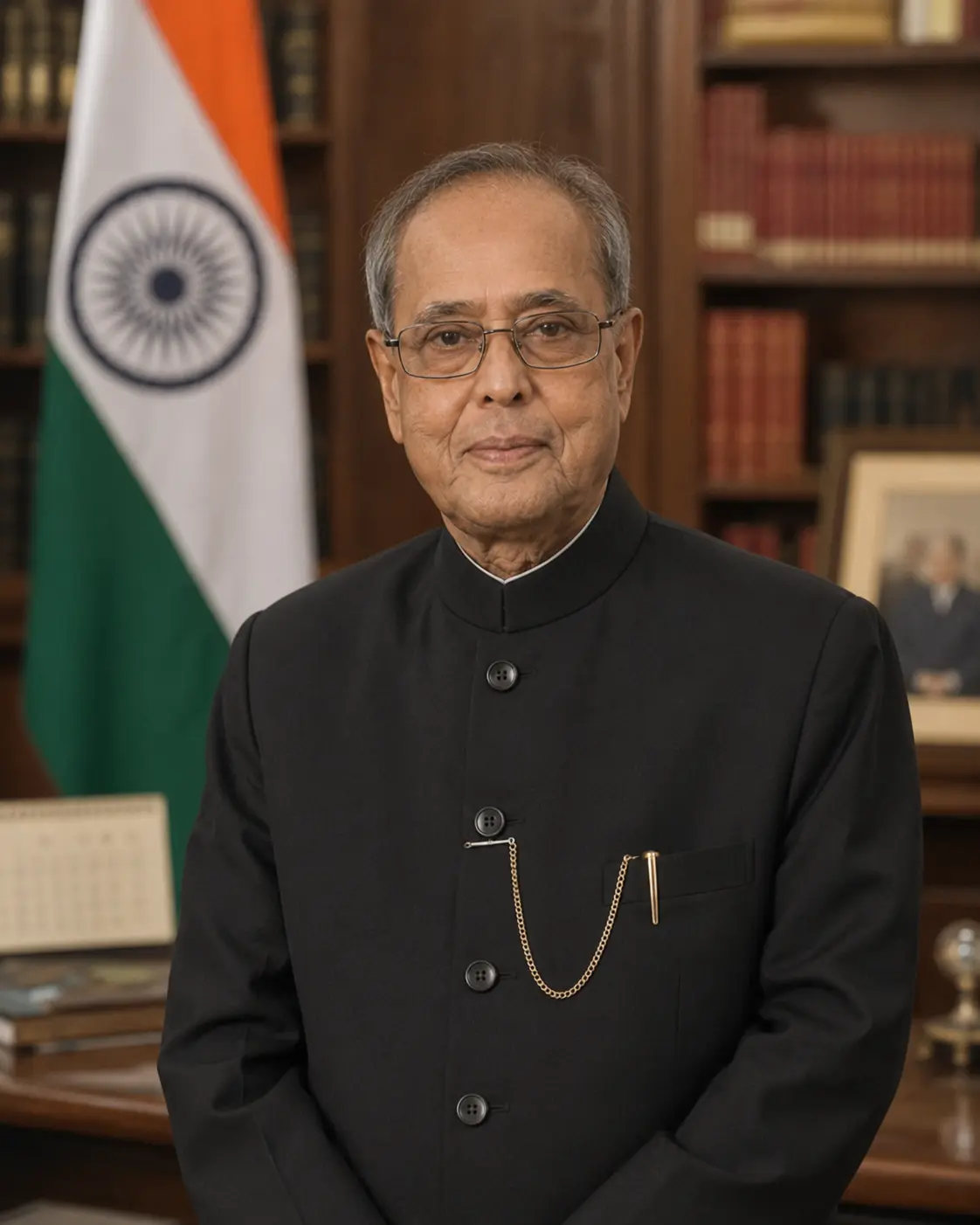
Pranab Mukherjee’s journey from a small village to the highest office in India is a testament to resilience, intellect, and dedication. His life’s work has left an indelible mark on Indian politics and governance.
Introduction
Pranab Mukherjee was a distinguished Indian politician and statesman who served as the 13th President of India from 2012 to 2017. Known for his extensive experience in various government roles, he played a significant part in shaping modern India’s policy framework. His contributions to the Indian economy, foreign affairs, and social justice have made him a respected figure in Indian politics.
Quick Summary
- Full Name: Pranab Mukherjee
- Born: December 11, 1935, Kirnahar, West Bengal, India
- Profession: Politician, Statesman
- Known As: President of India (2012-2017)
- Career Span: Over five decades in public service
- Key Contributions:
- Served as Finance Minister during critical economic reforms
- Played a key role in the formulation of the National Policy on Education
- Instrumental in India’s foreign policy initiatives
- Advocated for social welfare programs for marginalized communities
- Contributed to the establishment of the Goods and Services Tax (GST)
- Strengthened India’s ties with various countries
- Promoted economic growth through fiscal measures
- “The greatest challenge before us is to create a better world for all.” – Pranab Mukherjee
Early Life & Background
Pranab Mukherjee was born in a small village called Kirnahar in West Bengal. He came from a family deeply rooted in politics and education. His father, late Kamada Kinkar Mukherjee, was a freedom fighter and a prominent politician in the Indian National Congress. Growing up in this environment, Pranab was naturally exposed to discussions about the country’s future and the importance of education.
As a child, Pranab was known for his curious nature and keen intellect. He often spent time reading books and engaging in debates with his peers. His family valued education, and this had a significant influence on his early life. Pranab attended the local school, where he excelled in his studies and showed a particular interest in history and politics. This passion for learning laid the foundation for his future endeavors.
His early education was marked by a thirst for knowledge. He later went on to study at the University of Calcutta, where he graduated with a degree in political science. It was during these formative years that he began to understand the complexities of governance and the impact of policy decisions on people’s lives.
How It All Started
Pranab Mukherjee’s journey into politics began during his college years. In the early 1960s, he became involved in student politics, inspired by leaders who fought for India’s independence. He was particularly influenced by the ideals of Mahatma Gandhi and Jawaharlal Nehru. These figures instilled in him a belief that politics could be a tool for social change and development.
After completing his education, Pranab joined the Indian National Congress party in 1969. His first significant role came when he was elected as a member of the Rajya Sabha, the upper house of India’s Parliament. This opportunity allowed him to express his views on critical issues and learn the intricacies of political processes. His ability to articulate thoughts clearly and connect with the public caught the attention of senior leaders within the party.
In his early political career, Pranab faced various challenges. The political landscape was turbulent, and he often found himself pitted against opponents who were more experienced. However, he persevered, working diligently to understand the needs of his constituents. He spent time listening to their concerns and advocating for their rights, which earned him respect and recognition.
One pivotal moment in his career came when he was appointed as the Deputy Minister for Industrial Development in the early 1970s. This role allowed him to work closely with industries, giving him insights into economic policies and development strategies. He learned how the government could facilitate growth and create opportunities for people. His work in this position laid the groundwork for his future roles as a finance minister.
Over the years, Pranab developed a network of mentors who guided him. He often spoke about the influence of leaders like Indira Gandhi, who played a crucial role in shaping his understanding of governance. His interactions with experienced politicians helped him navigate the complexities of Indian politics.
Despite facing several setbacks, including political rivalries and shifts in party dynamics, Pranab remained committed to serving the people. His determination paid off when he was appointed as the Finance Minister in 1982. This marked the beginning of a new chapter in his life, where he could implement policies that would have a lasting impact on the nation’s economy.
As he took on more significant responsibilities, Pranab Mukherjee’s reputation as a skilled politician grew. His ability to handle crises, negotiate agreements, and implement reforms made him an indispensable figure in the Indian government. Each step he took was a reflection of his commitment to improving the lives of citizens and shaping a better future for India.
Career Journey
Early Career
Pranab Mukherjee’s political journey began in the early 1960s when he joined the Indian National Congress, inspired by the ideals of Mahatma Gandhi and Jawaharlal Nehru. He started his career as an officer in the Indian Administrative Service (IAS) but soon transitioned into politics. His first major role came in 1969 when he became an aide to then Finance Minister Indira Gandhi. This opportunity allowed him to observe the workings of the Indian government up close.
In 1973, Mukherjee was elected to the Lok Sabha (the lower house of India’s Parliament) for the first time. His initial years were spent learning the ropes of parliamentary procedures and understanding the complexities of governance. He quickly gained a reputation for his sharp intellect and was known for his ability to grasp intricate economic issues, an area that would later define his contributions to India.
Breakthrough Phase
The 1980s marked a significant turning point in Pranab Mukherjee’s career. In 1982, he was appointed as the Minister of Finance, a role that came with immense challenges. The Indian economy was facing severe issues, including high inflation and a balance of payments crisis. Mukherjee, under the guidance of Prime Minister Indira Gandhi, implemented important financial reforms. His efforts during this period laid the groundwork for India’s future economic policies.
In 1984, after Indira Gandhi’s assassination, Mukherjee played a crucial role in stabilizing the Congress party during a tumultuous time. His ability to navigate political waters earned him respect among his peers. He also returned to the Finance Ministry in 1985, where he was instrumental in introducing the landmark 1985 tax reforms, which aimed at simplifying the tax structure and boosting economic growth.
Peak Career
Pranab Mukherjee’s peak career phase began in the 1990s when he was appointed as the Minister of External Affairs in 1995. This marked a significant elevation in his political stature. During his tenure, he dealt with critical foreign policy issues, including improving relations with the United States and addressing challenges in neighboring countries like Pakistan and China. His diplomatic skills were evident as he managed complex negotiations.
In 2004, he was appointed as the Minister of Defence, where he oversaw significant military reforms and modernization efforts in India. His time in this position was marked by the successful induction of new technologies and strategies into the Indian Armed Forces. Following this, he became the Minister of Finance again in 2009, during which he played a pivotal role in steering the Indian economy through the global recession. His initiatives in 2009, including stimulus packages, helped revive the economy, showcasing his adeptness in handling fiscal policies during crises.
In 2012, Mukherjee reached the pinnacle of his political journey when he was elected as the 13th President of India. His presidency was characterized by an emphasis on social justice and a commitment to inclusive development. Mukherjee worked tirelessly to uphold the Constitution and maintain the democratic fabric of the nation. His addresses to the nation often stressed themes of unity and national pride, resonating with the citizens of India.
Later Career
After serving as President, Pranab Mukherjee retired from active politics in 2017. However, his influence did not wane. He remained a revered figure in Indian politics. In 2018, he received the Bharat Ratna, India’s highest civilian award, reflecting his significant contributions to the nation. Mukherjee’s post-presidency years saw him engaging in public speaking and writing, where he shared his rich experiences and insights on governance, democracy, and social issues. His autobiography, “The Turbulent Years,” offers a glimpse into the political landscape of India and his personal journey.
Even after retirement, Mukherjee’s wisdom and knowledge were sought after by political leaders and institutions. His legacy continues to inspire future generations of politicians and policymakers in India.
Major Achievements
- Served as the 13th President of India (2012-2017).
- Held the position of Finance Minister multiple times, significantly influencing India’s economic policy.
- Played a pivotal role in economic reforms during the 1980s and 1990s.
- Instrumental in India’s successful navigation through the global financial crisis in 2008-2009.
- Received the Bharat Ratna, India’s highest civilian award, in 2019.
- Authored several books, including his autobiography “The Turbulent Years,” providing insights into Indian politics.
- Served as Minister of Defence and Minister of External Affairs, showcasing versatility in governance.
- Promoted social justice and inclusive development during his presidency.
What Makes Them Special
Pranab Mukherjee is known for his exceptional intellect and deep understanding of economic and political issues. His analytical skills helped him craft effective policies that addressed some of India’s most pressing challenges. Mukherjee was a master negotiator, adept at building consensus among diverse political factions. His calm demeanor and respectful approach made him a trusted figure, both within the Congress party and among opposition leaders.
His leadership style was characterized by patience and inclusiveness, often encouraging dialogue and cooperation. Mukherjee’s ability to listen and empathize set him apart in a world of often divisive politics. He advocated for transparency and accountability in governance, earning the respect of citizens and fellow politicians alike. His speeches were known for their eloquence, often reminding Indians of their shared heritage and responsibilities.
Challenges & Struggles
Throughout his career, Pranab Mukherjee faced numerous challenges. He dealt with political opposition and criticism, especially during his early years in the Congress party. His tenure as a finance minister was marked by skepticism over his reform measures, with opponents questioning their effectiveness. However, Mukherjee remained resilient, using criticism as a motivation to refine his policies and strategies.
His journey was not without personal losses either. The assassination of Indira Gandhi and later political shifts posed significant emotional and professional challenges. Nevertheless, Mukherjee’s ability to persevere through these hardships is a testament to his strength of character. He often reflected on these struggles, using them to inspire others to overcome their challenges.
Even as President, he faced the difficult task of maintaining the balance between the government and the opposition amidst rising tensions in Indian politics. His calm approach and commitment to democratic principles helped navigate these turbulent waters, ensuring that the office of the President remained a symbol of unity and integrity for the nation.
Legacy & Impact
Pranab Mukherjee is remembered as one of India’s most respected politicians. His significant contributions to the country’s economic reforms helped steer India towards a more stable and modern economy. Mukherjee played a vital role during critical financial periods, especially as Finance Minister in the 1980s and 1990s. His influence extended beyond his tenure; he set standards for fiscal management that continue to guide future leaders.
As President of India from 2012 to 2017, Mukherjee emphasized the importance of inclusive growth, education, and social justice. His leadership inspired many young politicians and policymakers. He also shaped the narrative around governance, advocating for transparency and accountability.
His work left a lasting impact on various groups, including economic planners, students, and many aspiring politicians. Mukherjee’s legacy is a blend of dedication to public service and a commitment to India’s development.
Personal Life
Pranab Mukherjee was born on December 11, 1935, in West Bengal, India. He comes from a family with a strong political background. He is married to Suvra Mukherjee, and they have three children. Mukherjee enjoyed reading and was passionate about history and literature. Despite his political career, he maintained a humble and down-to-earth lifestyle, committed to serving the people of India.
Interesting Facts
- Pranab Mukherjee was awarded the Bharat Ratna, India’s highest civilian award, in 2019.
- He was the only Finance Minister to present the Union Budget on three occasions in a row.
- Mukherjee played a key role in India’s economic liberalization in the 1990s.
- He served in various ministerial roles, including External Affairs and Defence.
- His autobiography, “The Coalition Years: 1996-2012,” reflects on his extensive political experience.
- He was a member of the Rajya Sabha, the upper house of Parliament, for many years.
- Mukherjee was known for his deep understanding of constitutional law and governance.
Frequently Asked Questions
Who is Pranab Mukherjee?
Pranab Mukherjee is a prominent Indian politician who served as the 13th President of India from 2012 to 2017.
Why is Pranab Mukherjee famous?
He is famous for his impactful role in India’s economic reforms and for his leadership as President.
What are their achievements?
His key achievements include significant economic reforms, serving in multiple ministerial roles, and receiving the Bharat Ratna.
What is their background?
Born in West Bengal, Mukherjee had a long political career starting in the 1960s, representing the Indian National Congress.
What is Pranab Mukherjee’s contribution to India?
He contributed to financial stability, economic liberalization, and enhancing governance standards in India.
What did Pranab Mukherjee advocate for as President?
As President, he advocated for inclusive growth, education, and social justice.
Did Pranab Mukherjee write any books?
Yes, he authored several books, including his autobiography, detailing his political journey and insights.
Conclusion
Pranab Mukherjee’s life story is one of dedication, resilience, and impact. From his beginnings in politics to becoming the President of India, his journey reflects his commitment to the country’s development. His achievements in economic reforms and governance have set a benchmark for future leaders. Mukherjee’s legacy inspires generations to serve with integrity and strive for a better India.