1919
Jallianwala Bagh
The massacre became a defining reference point in his political life.

Indian revolutionary who assassinated former Punjab lieutenant-governor Michael O’Dwyer in London in 1940 and linked his action directly to colonial repression in Punjab.
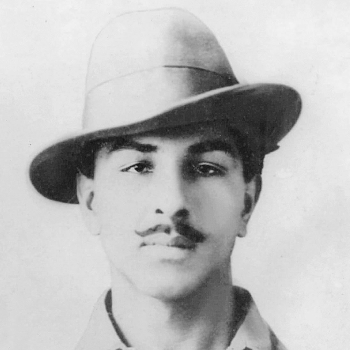
Udham Singh was born in Sunam in Punjab in 1899 and lost his parents at a young age. He spent part of his childhood in the Central Khalsa Orphanage in Amritsar.
The Jallianwala Bagh massacre of 1919 became central to his later political identity. Over the following years Singh travelled internationally and became involved with anti-colonial networks.
On 13 March 1940 he shot Michael O’Dwyer at Caxton Hall in London. O’Dwyer had been lieutenant-governor of Punjab during the period of the massacre. Singh was tried, convicted and executed on 31 July 1940.
Udham Singh was born on 26 December 1899.
After losing his parents, he lived at the Central Khalsa Orphanage in Amritsar.
The massacre became a defining event in his political consciousness.
Singh moved through several countries and maintained anti-colonial contacts.
He assassinated Michael O’Dwyer in London.
Singh was convicted in Britain.
He was hanged at Pentonville Prison.
Singh presented the assassination of O’Dwyer as retribution for colonial repression in Punjab and for the political climate surrounding the 1919 massacre.
His story shows how the memory of state violence could continue to shape revolutionary politics more than two decades later.
Jallianwala Bagh • Caxton Hall • Revolutionary MemoryThe massacre became a defining reference point in his political life.
Moved across several countries while remaining involved in anti-colonial activity.
Assassinated Michael O’Dwyer in London.
Used his trial to express anti-colonial views.
Was hanged at Pentonville Prison.
His remains were returned to India decades later.
Singh’s use of assassination places his story within the difficult history of revolutionary violence.
Understanding his actions requires context about Jallianwala Bagh, colonial repression and the political meaning Singh himself attached to his act.
Udham Singh remains closely associated with remembrance of Jallianwala Bagh and with revolutionary resistance to British rule.
His remains were repatriated to India in 1974, reinforcing his status as a martyr in public memory.
Biographical reference on Singh and the Caxton Hall assassination.
View source →Government-supported cultural repository for Indian history and the freedom movement.
View source →Official archive preserving records from the colonial era.
View source →He was born on 26 December 1899 in Sunam, Punjab.
He assassinated Michael O’Dwyer, the former lieutenant-governor of Punjab.
It took place at Caxton Hall in London on 13 March 1940.
He was executed at Pentonville Prison on 31 July 1940.
Singh presented the massacre and colonial repression in Punjab as central motivations for his later action.
Help us improve the archive by suggesting reliable information or another Indian personality worth documenting.