
1
Padma Bhushan recipient
Padma Bhushan recipient is part of Rajinikanth’s wider contribution to Indian entertainment and culture.
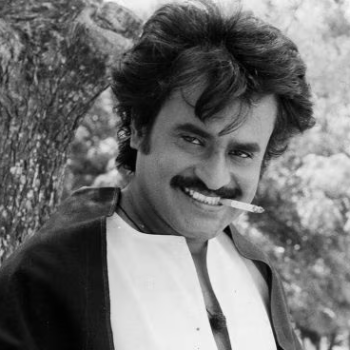
With unmistakable style, screen charisma and a career spanning decades, Rajinikanth grew from supporting roles into a cultural phenomenon whose popularity reaches far beyond Tamil cinema.
From bus conductor to global cinema icon — Rajinikanth’s rise is a story of talent, charisma, and destiny.
The story begins in a Marathi family, where young Shivaji Rao Gaikwad faced life's adversities from an early age. The profound impact of poverty cast a long shadow, and the early loss of his mother left an indelible mark, shaping his character with an enduring sense of perseverance. To support himself and his family, he embraced a myriad of odd jobs – the physical sensation of carrying heavy rice sacks as a coolie, the rhythmic hum of a carpenter's saw, the bustling energy of an office boy. Each task, each bead of sweat on his brow, served as a formative experience, instilling in him a grit and determination that would define his future. Even in these early years, a love for acting sparked within him, nurtured by performances at Ramakrishna Math and further honed during his education at APS Public School.
Before the silver screen beckoned, a young Shivaji Rao Gaikwad became a familiar, captivating presence on the routes of the Bangalore Transport Service (BTS). As a bus conductor, he wasn't just collecting fares; he was performing. Commuters often spoke of his unique style – the effortless flick of coins, the rapid issuance of tickets, the engaging mannerisms that turned a mundane transaction into a moment of memorable charisma. This was his informal acting school, a daily stage where he observed human nature and honed his ability to captivate an audience. The decision to join the Madras Film Institute marked a pivotal turn. It was there that his raw talent caught the discerning eye of the legendary director K. Balachander. It was Balachander who not only discovered the star within but also christened him 'Rajinikanth' and sagely advised him to learn Tamil, a language that would soon carry his voice to millions. His early film career was challenging; starting with 'Apoorva Raagangal', he often found himself in supporting or antagonistic roles. Financial struggles were constant, criticism was sharp, and rejections were frequent companions on his path. Yet, he persevered, and his breakthrough finally arrived in 1976 with the films 'Anthuleni Katha' and 'Moondru Mudichu', signaling the dawn of a new star.
Born Shivaji Rao Gaekwad into a Marathi family and faced financial hardship in his early years.
He worked for the Bangalore Transport Service, where his energetic mannerisms were already memorable to passengers.
K. Balachander introduced him to Tamil cinema and gave him the name Rajinikanth.
Distinctive mannerisms and screen presence quickly pushed him from supporting roles to leading-man status.
The film became a defining mass-cinema landmark and reinforced his superstar image.
The science-fiction blockbuster expanded his reach in a new technological era of Indian cinema.
India’s highest cinema honour recognised his long contribution to the industry.
Rajinikanth’s gestures, pauses, dialogue rhythm and physical confidence turned ordinary screen actions into signature moments. That style became central to his mass appeal, but underneath it sat a career built on strong timing, character work and a willingness to reinvent his screen image.
Indian Entertainment • Craft • LegacyPadma Bhushan recipient is part of Rajinikanth’s wider contribution to Indian entertainment and culture.
Padma Vibhushan recipient is part of Rajinikanth’s wider contribution to Indian entertainment and culture.
Dadasaheb Phalke Award recipient is part of Rajinikanth’s wider contribution to Indian entertainment and culture.
Star of landmark films including Baashha and Enthiran is part of Rajinikanth’s wider contribution to Indian entertainment and culture.
Major influence on Tamil popular culture is part of Rajinikanth’s wider contribution to Indian entertainment and culture.
One of Indian cinema’s most recognisable global stars is part of Rajinikanth’s wider contribution to Indian entertainment and culture.
Rajinikanth’s gestures, pauses, dialogue rhythm and physical confidence turned ordinary screen actions into signature moments. That style became central to his mass appeal, but underneath it sat a career built on strong timing, character work and a willingness to reinvent his screen image.
His journey from working-class beginnings to extraordinary stardom became part of his public mythology. Across generations, he has remained a symbol of aspiration, humility and the uniquely participatory culture of Tamil film fandom.
Government of India civilian honours records.
View source →India’s highest cinema recognition.
View source →Indian film awards and career recognition.
View source →Indian cinema honours and festival context.
View source →With unmistakable style, screen charisma and a career spanning decades, Rajinikanth grew from supporting roles into a cultural phenomenon whose popularity reaches far beyond Tamil cinema.
Padma Bhushan recipient, Padma Vibhushan recipient, Dadasaheb Phalke Award recipient.
His journey from working-class beginnings to extraordinary stardom became part of his public mythology. Across generations, he has remained a symbol of aspiration, humility and the uniquely participatory culture of Tamil film fandom.
Baashha, Enthiran, Dadasaheb Phalke Award.
Help us improve the archive by suggesting reliable information or another Indian personality worth documenting.